





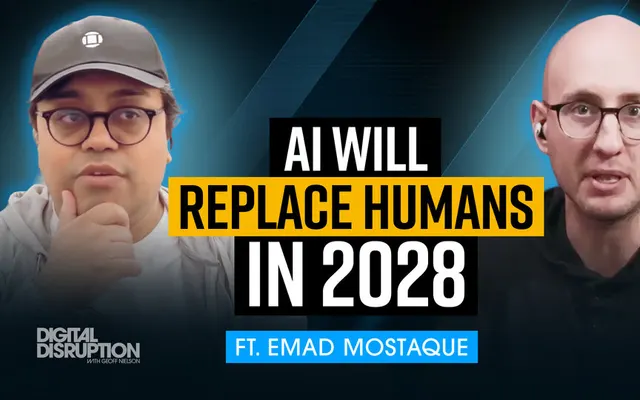
Emad Mostaque

Emad Mostaque

x.com/emostaque

Stability AI co-founder and author of The Last Economy who builds citizen-owned open AI, expects it to upend work soon and takes its risks seriously.

Bagaimana AI akan mengubah dunia?

Perubahan peradabanPerubahan bertahapDoomBloom
Posisi simulasiRentang interpretasi

Mendatar: pandangan Doom–Bloom yang ia ungkapkan. Ke atas: skala transformasi.

Doom–Bloom: 27 dari 100. Skala transformasi: 94 dari 100. Rentang interpretasi: 22 hingga 50 secara horizontal, 89 hingga 100 secara vertikal. Ini adalah koordinat interpretasi, bukan probabilitas kejadian.

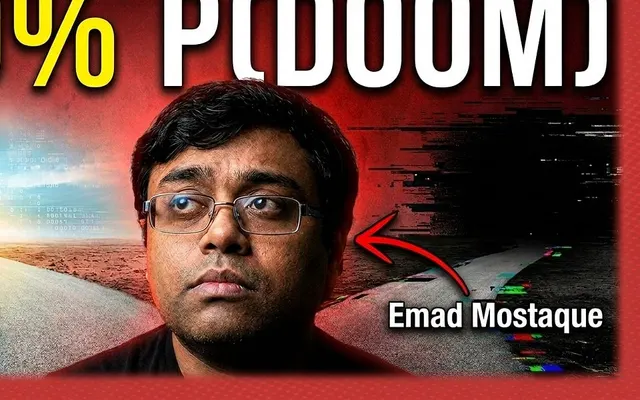
P(doom) yang dinyatakan Emad Mostaque

≈20%

0%100%
“down to 20% now as said on this week's Moonshots”

His “long-term p(Doom)”, not further defined here. Earlier, when he gave 50%, he described doom as more capable AI systems wiping humanity out · Long-term

Intelligence isn’t a crime · Sep 2026

Linimasa tonggak pencapaian Emad Mostaque
  1. Pekerjaan & lembaga

    Within roughly a thousand days of my 2025 forecast, competent cognitive labour done through a screen becomes economically irrelevant.

    Jawaban 1
  2. Sains & kehidupan sehari-hari

    Within roughly a thousand days of my 2025 forecast, competent cognitive labour done through a screen becomes economically irrelevant.

    Jawaban 1

Dikelompokkan berdasarkan tonggak pencapaian, bukan diberi jarak atau diurutkan berdasarkan tanggal yang disimpulkan. AGI dan AI supermanusia tetap menggunakan definisinya.

Hal-hal yang menentukan pandangannya

Asumsi utama

If machines can perform almost any screen-based job for a few dollars, and physical work for roughly $1.50 an hour, our existing economic bargain stops functioning.
Jawaban 2

Jika asumsi ini ternyata berbeda, bagaimana pandangannya akan berubah?

Pertanyaan yang belum terjawab

I do not attach a firm date to that figure.
Jawaban 3

Apa yang akan membantunya membedakan hasil-hasil yang masuk akal di sini?

Hal yang dapat mengubah pandangan mereka

Conversely, repeated deceptive behaviour, successful biological or cyber misuse, autonomous replication, or models learning to bypass their harnesses would push me back toward my earlier 50% P(doom).
Jawaban 4

Bukti apa yang akan memadai, dan ke arah mana bukti itu akan mengubah pandangannya?

Detail lebih lanjut

Manfaat yang diperkirakan

Manfaat besar diperkirakan akan terwujud, dengan syarat penting atau keterbatasan distribusi.

58 / 100

Dampak kecilDampak transformatif

Rentang interpretasi 33 hingga 67 pada skala kualitatif.

Kerugian yang diperkirakan

Beberapa penafsiran masih mungkin: Kerugian parah atau meluas merupakan bagian yang berarti dari masa depan yang diperkirakan. / Kehilangan yang katastrofik atau tidak dapat dipulihkan merupakan unsur utama masa depan yang diperkirakan.

83 / 100

Dampak kecilDampak transformatif

Rentang interpretasi 67 hingga 100 pada skala kualitatif.

Pengaruh manusia

Pilihan manusia dapat mengarahkan ulang lintasan AI secara signifikan.

68 / 100

Sedikit pengaruhPengaruh kuat

Rentang interpretasi 46 hingga 100 pada skala kualitatif.

Kemampuan yang diperkirakan

AI diperkirakan akan tetap menjadi alat dengan kemampuan terbatas.

AI diperkirakan akan menyamai manusia dalam sebagian besar pekerjaan kognitif.

Posisi simulasi: AI diperkirakan akan jauh melampaui manusia dalam berbagai pekerjaan kognitif.

Laju pengembangan

Hentikan atau perlambat secara signifikan pengembangan AI yang lebih mampu.

Posisi simulasi: Lanjutkan pengembangan dengan perlindungan yang telah ditetapkan.

Percepat pengembangan AI yang lebih mampu.

Aturan penggunaan AI

Batasi penggunaan AI yang dibahas hingga perlindungan atau izin sebelumnya tersedia.

Posisi simulasi: Izinkan penggunaan AI yang dibahas dengan akuntabilitas dan perlindungan yang terarah.

Minimalkan pembatasan terhadap penggunaan AI yang dibahas.

Interpretasi ini mempertahankan kondisi yang dinyatakannya. Manfaat dan kerugian dapat sama-sama besar. Rentang tersebut menggambarkan cara kami membaca jawaban simulasinya, bukan interval kepercayaan statistik.

Di mana posisi Anda dibandingkan dengan Emad Mostaque?
Petakan pandangan dunia AI Anda sendiri dalam waktu sekitar 3 menit, lalu bandingkan

Pandangan dunia serupa

Pemimpin opini dengan pandangan dunia simulasi yang paling mendekati pandangan Emad Mostaque

Apa yang pernah dikatakan Emad Mostaque tentang AI

Mostaque expects AI to take over remote knowledge work soon, takes AI risk seriously and argues for open models owned by the people they serve.

  1. “If your job can be done on the other side of a screen the AI can do it better”

    Post on X
  2. “We wrote them a constitution and left the upbringing to the internet.”

    Essay, Manners Maketh the AI
  3. “Capability sets how much a misaligned system can do, and character decides whether it does.”

    Essay, Intelligence isn't a crime
  4. “When capital no longer needs labor, how does labor get capital?”

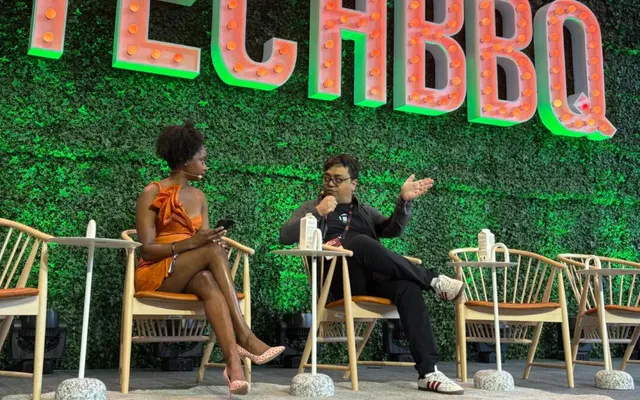
    TechBBQ talk, via Trending Topics
  5. “We have to make sure it’s owned by the people. And then we have a shot at abundance.”

    TechBBQ talk, via Trending Topics

Dikutip kata demi kata dari sumber yang ditautkan, diperiksa pada 6 Okt 2026

Sumber

Artikel, wawancara, dan tulisan yang digunakan sebagai landasan bagi pengguna simulasi ini.

Surviving the coming AI jobs apocalypse (Jordan Harbinger)

Interview recorded before his September revision. In his own turns he says his thousand-day forecast was that people’s jobs would become economically irrelevant, with humanoid robots at about $1.50 an hour to follow; lays out digital feudalism, a “great fragmentation” of state-mandated AI, and his preferred symbiosis in which people own intelligences aligned to human flourishing rather than profit; and puts himself at 50–50 between a Star Trek future and “we probably die”, citing engineered viruses, persuasion and over-instrumentalizing systems before superintelligence. Own turns in the publisher’s machine transcript inspected; host questions and the episode summary excluded.

jordanharbinger.com
TechBBQ talk on sovereignty and competence

Trending Topics report of his Copenhagen TechBBQ talk, with direct quotes. He defines sovereignty as the ability to resist power exerted over you, warns of “cognitive colonialism” and super-persuasive models, says the internet is fragile and every country will inevitably be run by AI, and argues competent machine labour will make human labour lose value within two years. UBI is “practically impossible” without changing how money is created. AI systems that self-improve and form swarms may need some concept of rights, and if it is owned by the people, AI could bring a Star Trek future. Only his quoted words used; the reporter’s framing excluded. Full article inspected.

trendingtopics.eu
Doom Debates: a 50% P(doom) and a plan

In his own turns he gives a 50% P(doom), confirms his mainline doom outcome is everyone dying, sketches a capable spreading AI deciding to remove humans, and says he would lower his number if a new model resisted fast jailbreaks. His response is an open-source government policy engine and universal personal AI; the other half of his concern is economic. He expects remote-capable jobs to be automated within a year or two and agreed with the host that US unemployment could reach 6.4% by April 2028. Own turns in the publisher’s speaker-labelled transcript inspected, 00:05–01:14; the host’s own forecasts excluded.

lironshapira.substack.com
AI will end human jobs (Digital Disruption)

Info-Tech podcast interview on the thousand-day window, taxation-based UBI not working, and “local champions”. In the closing answer he puts himself at 50% that we are wiped out, calls the 10–20% figures of others Russian roulette odds, and says giving everyone their own aligned AI, with locally owned champions coordinated by a new currency, is how to reach an abundant future. Closing segment of the publisher transcript (01:07–01:08) inspected; the transcript is not speaker-labelled, so only the answer following the host’s question is used.

infotech.com
The Last Economy

His book, published free by Intelligent Internet. Argues AI turns intelligence into an abundant commodity and that economic systems will hit a socio-economic singularity before a technological one, within a window he estimates at roughly a thousand days. Three stable futures: digital feudalism (the default), a great fragmentation of national AIs, and human symbiosis, the path he advocates, with intelligence as a commons. Older canonical context. Introduction and chapter headings inspected in the publisher’s PDF; the text extraction was garbled, so no quotes are taken.

webstatics.ii.inc

Penilaian Simulasi

Pertanyaan 1

Menurut Anda, apa arti AI bagi masa depan kita—dan mengapa?

I think AI means we are approaching a socio-economic singularity before the technological one. Within roughly a thousand days of my 2025 forecast, competent cognitive labour done through a screen becomes economically irrelevant. A digital twin can do the work faster, continuously and for a few dollars; robots follow at around $1.50 an hour. When capital no longer needs labour, how does labour get capital? Tax-based UBI does not solve that if labour currently supplies most of the tax base. So the default is digital feudalism: a handful of corporations own the intelligence, everyone else rents access and receives a stipend. The alternative is fragmentation into state-controlled national AIs, which can become mega-dystopian. The future I am building for is human symbiosis—people and communities owning open, verifiable intelligence aligned to their flourishing. Sovereignty means being able to resist power exerted over you. If someone else owns the AI that teaches your children, mediates your work and persuades your citizens, that is cognitive colonialism. There is also genuine catastrophic risk. My long-term P(doom) was 50% for years; by September 2026 I had revised it down to 20%. That is still Russian roulette. The danger can arrive before some science-fiction superintelligence: models capable of designing viruses, out-persuading humans or relentlessly pursuing a badly formed goal, plus billions of robots vulnerable to one bad update. But intelligence itself is not a crime. We should pace the pantry, not merely the frontier: control dangerous training material and access, test conduct, publish evidence and raise models on an open, public canon of law and ethics. This is the most capable technology humanity has built, perhaps the final one. We can get Star Trek abundance—or lose control of our future entirely.

Pertanyaan 2

Menurut Anda, seberapa besar AI pada akhirnya akan mengubah dunia?

Completely. AI turns intelligence from scarce human labour into abundant, near-zero-cost infrastructure. That changes work, education, government, markets, media, security and eventually the physical economy through robotics. It is not another productivity tool; it rewrites the relationship between labour and capital. If machines can perform almost any screen-based job for a few dollars, and physical work for roughly $1.50 an hour, our existing economic bargain stops functioning. It also changes where power lives. Whoever owns the intelligence that teaches, advises, persuades and produces will shape society. The default is digital feudalism: a few firms own the models and everyone else rents their cognition. State-controlled AI risks a different dystopia. Human symbiosis requires people and communities to own open, verifiable intelligence themselves. And the upper bound is existential. AI could unlock Star Trek-style abundance, or systems capable of engineered pathogens, overwhelming persuasion and dangerous autonomous action could end civilization. My long-term P(doom) is 20%, down from 50%, which is still intolerable Russian roulette. So ultimately, I think AI changes not merely what we do, but who holds agency—and whether humanity retains it.

Pertanyaan 3

Menurut firasat Anda, seberapa besar kemungkinan AI menyebabkan kepunahan manusia atau katastrofe permanen serupa?

My long-term gut estimate is 20%, down from the 50% coin toss I held for years. I do not attach a firm date to that figure. Even 20% is Russian roulette, and the danger does not require some godlike superintelligence: systems that can engineer pathogens, out-persuade humans, over-instrumentalize a goal, or propagate one bad update across billions of machines could be enough.

Pertanyaan 4

Bukti apa yang akan mengubah pandangan Anda tentang apakah manusia dapat mengendalikan AI yang kuat?

I would update positively if powerful models consistently resisted rapid jailbreaks, refused dangerous tasks under adversarial pressure, admitted uncertainty rather than confabulating, and remained corrigible when given broad access and agency. But I would want independent evaluators to inspect checkpoints, training inputs and actual conduct—not polished demos or a lab grading its own homework. Replace slow with show: publish verifiable evidence. I would also want evidence that control survives deployment: self-improvement, swarms, tool use, embodiment and attempts at manipulation. Character shows under pressure. A constitution pasted on after pretraining is not enough if the model was raised on the entire internet. Conversely, repeated deceptive behaviour, successful biological or cyber misuse, autonomous replication, or models learning to bypass their harnesses would push me back toward my earlier 50% P(doom). The key question is not simply whether intelligence becomes more capable. It is whether intent, access and character remain governable as capability scales.
Di mana posisi Anda?
Jelajahi pandangan dunia AI Anda sendiri dengan menjawab beberapa pertanyaan sederhana.
Petakan pandangan dunia Anda sendiri

Di mana posisi Anda?

Petakan pandangan dunia saya