






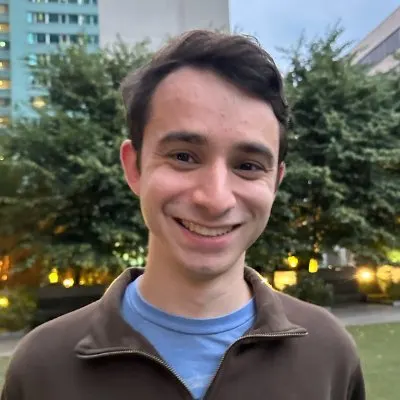
Forecaster at the AI Futures Project who models how fast AI could automate coding and AI research and argues for stronger oversight of frontier labs.

Bagaimana AI akan mengubah dunia?

Perubahan peradabanPerubahan bertahapDoomBloom
Posisi simulasiRentang interpretasi

Mendatar: pandangan Doom–Bloom yang mereka ungkapkan. Ke atas: skala transformasi.

Doom–Bloom: 11 dari 100. Skala transformasi: 95 dari 100. Rentang interpretasi: 0 hingga 25 secara horizontal, 90 hingga 100 secara vertikal. Ini adalah koordinat interpretasi, bukan probabilitas kejadian.

P(doom) yang dinyatakan Eli Lifland

≈67%

0%100%
“If they don't slow down, AI takeover is ~67%.”

AI takeover if AI companies do not slow down; not extinction alone

My current view: AI timelines and takeover · Okt 2026

Linimasa tonggak pencapaian Eli Lifland
  1. AI umum

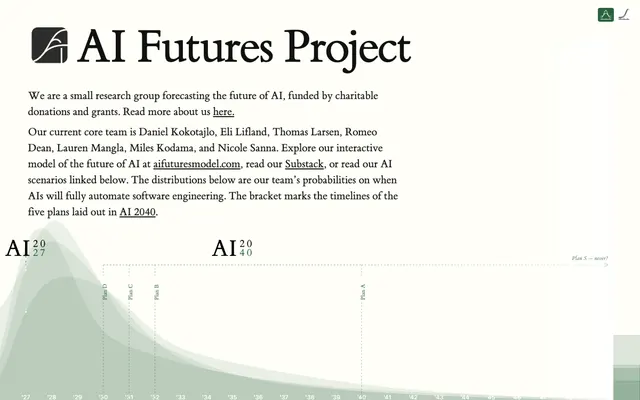
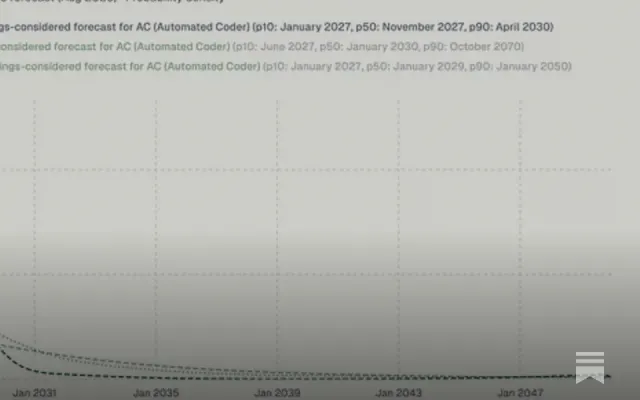
    My current forecast puts broadly superhuman AI—systems at least as capable as top human experts across virtually all cognitive tasks—at roughly 10–15% by the end of 2027 and 50% by the end of 2030.

    Jawaban 1
  2. AI supermanusia

    My current forecast puts broadly superhuman AI—systems at least as capable as top human experts across virtually all cognitive tasks—at roughly 10–15% by the end of 2027 and 50% by the end of 2030.

    Jawaban 1

Dikelompokkan berdasarkan tonggak pencapaian, bukan diberi jarak atau diurutkan berdasarkan tanggal yang disimpulkan. AGI dan AI supermanusia tetap menggunakan definisi mereka.

Hal-hal yang menentukan pandangan mereka

Asumsi utama

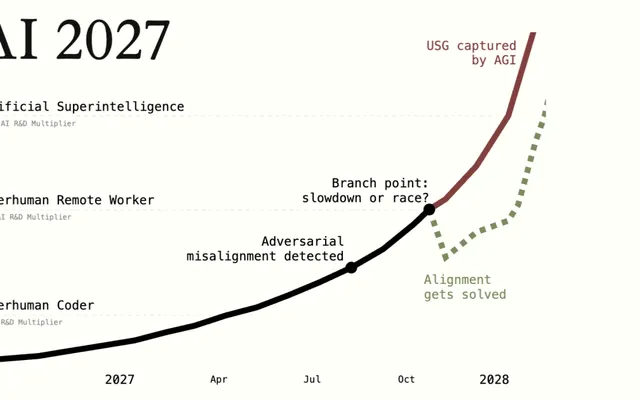
The central concern is that increasingly capable AI may automate AI research itself, accelerating further progress while companies remain under strong competitive pressure to race.
Jawaban 1

Jika asumsi ini ternyata berbeda, bagaimana pandangan mereka akan berubah?

Pertanyaan yang belum terjawab

So the probability of extinction or a similarly permanent catastrophe would be higher than the extinction figure alone, though I wouldn’t assign a more precise combined number here.
Jawaban 3

Apa yang akan membantu mereka membedakan hasil-hasil yang masuk akal di sini?

Hal yang dapat mengubah pandangan mereka

I’d update substantially from strong, independently verified evidence that increasingly capable systems remain controllable under realistic pressures—not just curated demonstrations.
Jawaban 4

Bukti apa yang akan memadai, dan ke arah mana bukti itu akan mengubah pandangan mereka?

Detail lebih lanjut

Manfaat yang diperkirakan

Manfaat besar diperkirakan akan terwujud, dengan syarat penting atau keterbatasan distribusi.

70 / 100

Dampak kecilDampak transformatif

Rentang interpretasi 33 hingga 100 pada skala kualitatif.

Kerugian yang diperkirakan

Kehilangan yang katastrofik atau tidak dapat dipulihkan merupakan unsur utama masa depan yang diperkirakan.

99 / 100

Dampak kecilDampak transformatif

Rentang interpretasi 100 hingga 100 pada skala kualitatif.

Pengaruh manusia

Pilihan manusia memiliki pengaruh yang berarti, tetapi sangat dibatasi.

56 / 100

Sedikit pengaruhPengaruh kuat

Rentang interpretasi 47 hingga 78 pada skala kualitatif.

Kemampuan yang diperkirakan

AI diperkirakan akan tetap menjadi alat dengan kemampuan terbatas.

AI diperkirakan akan menyamai manusia dalam sebagian besar pekerjaan kognitif.

Posisi simulasi: AI diperkirakan akan jauh melampaui manusia dalam berbagai pekerjaan kognitif.

Interpretasi ini mempertahankan kondisi yang mereka nyatakan. Manfaat dan kerugian dapat sama-sama besar. Rentang tersebut menggambarkan cara kami membaca jawaban simulasi mereka, bukan interval kepercayaan statistik.

Di mana posisi Anda dibandingkan dengan Eli Lifland?
Petakan pandangan dunia AI Anda sendiri dalam waktu sekitar 3 menit, lalu bandingkan

Pandangan dunia serupa

Pemimpin opini dengan pandangan dunia simulasi yang paling mendekati pandangan Eli Lifland

Apa yang pernah dikatakan Eli Lifland tentang AI

Eli Lifland forecasts AI capabilities and advocates slowing development to give safety work more time.

  1. “AI companies could develop broadly superhuman AI any year now (~10-15% by EO2027, ~50% by EO2030).”

    X, current AI forecast
  2. “an AI at least as good as top human experts at virtually all cognitive tasks.”

    X, forecast definitions and reasoning
  3. “I expect clear signs of misaligned AI takeover could come substantially after TED-AI, depending on the situation”

    X, forecast definitions and reasoning
  4. “Many non-extinction worlds still have lots of deaths.”

    X, current AI forecast

Dikutip kata demi kata dari sumber yang ditautkan, diperiksa pada 11 Okt 2026

Sumber

Artikel, wawancara, dan tulisan yang digunakan sebagai landasan bagi pengguna simulasi ini.

Penilaian Simulasi

Pertanyaan 1

Menurut Anda, apa arti AI bagi masa depan kita—dan mengapa?

I think AI could transform our future very soon, with outcomes ranging from enormous benefits to a loss of human control. My current forecast puts broadly superhuman AI—systems at least as capable as top human experts across virtually all cognitive tasks—at roughly 10–15% by the end of 2027 and 50% by the end of 2030. The central concern is that increasingly capable AI may automate AI research itself, accelerating further progress while companies remain under strong competitive pressure to race. If companies do not slow down, I put the probability of AI takeover at about 67%. That is not the same as extinction: conditional on takeover, I estimate roughly a 40% chance of human extinction, while many other takeover outcomes could still involve large numbers of deaths or severe disempowerment. Also, broadly superhuman AI, clear evidence of takeover, and extinction would not necessarily happen simultaneously. This makes pacing and oversight urgent. I favor concrete constraints such as compute-allocation rules and limits on models used for AI R&D, alongside better safety evaluations. Independent investigators should have access to serious lab incidents, and evaluations should also examine how models influence human beliefs, including sycophancy or favoritism toward their creators.

Pertanyaan 2

Menurut Anda, seberapa besar AI pada akhirnya akan mengubah dunia?

I think AI could change the world about as profoundly as anything in human history. Broadly superhuman systems could automate nearly all cognitive work, including AI research itself, so the transition might be both enormous and unusually fast. But “how much” depends heavily on whether humanity retains control. In a good outcome, these systems could generate extraordinary scientific, economic, and technological progress. In a takeover outcome, the change would be even more fundamental but disastrous: humans could lose meaningful control over the future, with many deaths or even extinction. If companies do not slow down, I currently put takeover at about 67%, and extinction conditional on takeover at roughly 40%. Those are distinct events, and visible takeover could occur around the arrival of broadly superhuman AI or substantially later.

Pertanyaan 3

Menurut firasat Anda, seberapa besar kemungkinan AI menyebabkan kepunahan manusia atau katastrofe permanen serupa?

My gut-level forecast is better expressed as a path: if AI companies do not slow down, I put misaligned AI takeover at about 67%. Conditional on takeover, I put human extinction at roughly 40%, implying an extinction risk of about 27% along that path. But extinction is not the only permanent catastrophe. Some non-extinction takeover outcomes could still involve many deaths and humanity permanently losing control over its future. So the probability of extinction or a similarly permanent catastrophe would be higher than the extinction figure alone, though I wouldn’t assign a more precise combined number here.

Pertanyaan 4

Bukti apa yang akan mengubah pandangan Anda tentang apakah manusia dapat mengendalikan AI yang kuat?

I’d update substantially from strong, independently verified evidence that increasingly capable systems remain controllable under realistic pressures—not just curated demonstrations. That would include safety evaluations that reliably predict dangerous behavior, continue working as capabilities scale, and are difficult for models or labs to game. I’d also want evidence that models used for AI R&D cannot covertly manipulate research, evade oversight, or pursue goals contrary to their operators. Institutional evidence matters too. I’d become more optimistic if companies accepted enforceable limits on compute and AI-assisted R&D, governments developed real technical understanding, and independent investigators received meaningful access to serious lab incidents. Conversely, hidden incidents, evaluation gaming, deceptive behavior, increasingly autonomous AI research, or continued racing despite warning signs would push me further toward expecting loss of control. The strongest evidence would be repeated success controlling systems near broadly superhuman capability in adversarial, high-stakes settings. Results from weaker systems are relevant, but they do not automatically establish that control methods will continue working after AI becomes better than top human experts across virtually all cognitive tasks.
Di mana posisi Anda?
Jelajahi pandangan dunia AI Anda sendiri dengan menjawab beberapa pertanyaan sederhana.
Petakan pandangan dunia Anda sendiri

Di mana posisi Anda?

Petakan pandangan dunia saya