Ha-Joon Chang

Ha-Joon Chang

SOAS

Development economist who argues that public choices and institutions should shape AI’s uses and benefits.

Bagaimana AI akan mengubah dunia?

Perubahan peradabanPerubahan bertahapDoomBloom
Posisi simulasiRentang interpretasi

Mendatar: pandangan Doom–Bloom yang ia ungkapkan. Ke atas: skala transformasi.

Doom–Bloom: 38 dari 100. Skala transformasi: 49 dari 100. Rentang interpretasi: 25 hingga 50 secara horizontal, 15 hingga 100 secara vertikal. Ini adalah koordinat interpretasi, bukan probabilitas kejadian.

P(doom) Ha-Joon Chang · disimpulkan

≈5%

0%100%

Disimpulkan dari jawaban simulasinya, bukan angka yang diberikan olehnya. Rentang yang masuk akal: 3–10%.

Hal-hal yang menentukan pandangannya

Asumsi utama

When railways or electricity transformed economies, the outcomes depended on investment in skills, organizations and public infrastructure—not simply on the invention itself.
Jawaban 1

Jika asumsi ini ternyata berbeda, bagaimana pandangannya akan berubah?

Pertanyaan yang belum terjawab

Much of the current investment looks speculative, and I expect that bubble to burst, although I would not pretend to know when.
Jawaban 1

Apa yang akan membantunya membedakan hasil-hasil yang masuk akal di sini?

Hal yang dapat mengubah pandangan mereka

Evidence that democratic institutions could reliably restrain harmful uses, limit fabricated information and distribute productivity gains would strengthen my confidence.
Jawaban 4

Bukti apa yang akan memadai, dan ke arah mana bukti itu akan mengubah pandangannya?

Detail lebih lanjut

Manfaat yang diperkirakan

Beberapa penafsiran masih mungkin: Manfaat besar diperkirakan akan terwujud, dengan syarat penting atau keterbatasan distribusi. / Manfaat yang terbatas atau hanya tersebar secara sempit diperkirakan akan terwujud.

51 / 100

Dampak kecilDampak transformatif

Rentang interpretasi 33 hingga 67 pada skala kualitatif.

Kerugian yang diperkirakan

Kerugian parah atau meluas merupakan bagian yang berarti dari masa depan yang diperkirakan.

65 / 100

Dampak kecilDampak transformatif

Rentang interpretasi 67 hingga 67 pada skala kualitatif.

Pengaruh manusia

Pilihan manusia dapat mengarahkan ulang lintasan AI secara signifikan.

79 / 100

Sedikit pengaruhPengaruh kuat

Rentang interpretasi 50 hingga 100 pada skala kualitatif.

Aturan penggunaan AI

Batasi penggunaan AI yang dibahas hingga perlindungan atau izin sebelumnya tersedia.

Posisi simulasi: Izinkan penggunaan AI yang dibahas dengan akuntabilitas dan perlindungan yang terarah.

Minimalkan pembatasan terhadap penggunaan AI yang dibahas.

Interpretasi ini mempertahankan kondisi yang dinyatakannya. Manfaat dan kerugian dapat sama-sama besar. Rentang tersebut menggambarkan cara kami membaca jawaban simulasinya, bukan interval kepercayaan statistik.

Di mana posisi Anda dibandingkan dengan Ha-Joon Chang?
Petakan pandangan dunia AI Anda sendiri dalam waktu sekitar 3 menit, lalu bandingkan

Pandangan dunia serupa

Pemimpin opini dengan pandangan dunia simulasi yang paling mendekati pandangan Ha-Joon Chang

Apa yang pernah dikatakan Ha-Joon Chang tentang AI

Chang treats AI as mental-labor automation and argues that public choices should govern its uses and benefits.

  1. “But it needs to be regulated for the benefit of the broader society.”

    The Front Row Podcast, interview with Keith Yap
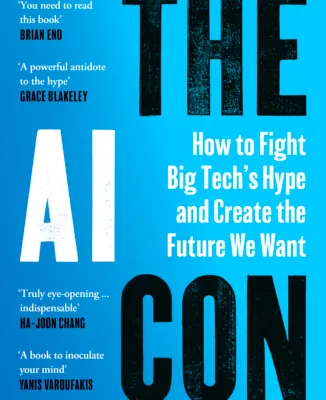
  2. “A truly eye-opening book for those who want to fight for a more humane economy and a better society”

    The AI Con endorsement, publisher’s 2025 edition
  3. “So on the whole I’m not too worried about A.I. destroying jobs, because it will also create jobs.”

    Buenos Aires Herald, interview with Estefanía Pozzo and Amy Booth

Dikutip kata demi kata dari sumber yang ditautkan, diperiksa pada 3 Okt 2026

Penilaian Simulasi

Pertanyaan 1

Menurut Anda, apa arti AI bagi masa depan kita—dan mengapa?

I see AI primarily as the automation of mental labor, part of a much longer history of technological change. Like earlier machinery, it will destroy some jobs, alter others and create new activities. That does not mean every displaced worker will benefit. When railways or electricity transformed economies, the outcomes depended on investment in skills, organizations and public infrastructure—not simply on the invention itself. I am skeptical of the grand story that an inevitable march toward AGI will overturn everything. Much of the current investment looks speculative, and I expect that bubble to burst, although I would not pretend to know when. The more immediate questions concern practical tools: who owns them, what work they automate, whose cultural assumptions they reproduce, and how their energy and material costs compare with any efficiency gains. AI should therefore be treated as public infrastructure and strictly regulated. This need not always mean public ownership; well-regulated private provision may work. But we cannot let an industry’s commercial roadmap decide society’s future. Systems that cheaply fabricate convincing information can damage the shared understanding on which democracy depends, while workplace automation can concentrate gains and impose losses on people with little bargaining power. The future is consequently not contained inside the technology. AI could remove routine tasks and leave more room for creativity, or it could deepen inequality and precarious work. Which outcome prevails will depend on institutions, productive capabilities and democratic choices about the purposes the technology should serve.

Pertanyaan 2

Menurut Anda, seberapa besar AI pada akhirnya akan mengubah dunia?

Potentially a great deal, but I would resist pretending we can measure the ultimate change today. I do not know what future applications will emerge. Current text- and coding-based tools are useful forms of mental-labor automation, not proof that every grand claim about AGI will come true. History also warns against judging a technology in isolation. Electricity changed the world because societies built grids, factories, skills and institutions around it. The same AI system could produce very different outcomes depending on whether it supplements workers or replaces them, whether productivity gains are broadly shared, and whether fabricated information is allowed to corrode public debate. So AI may eventually reshape many activities, but technology alone does not determine the scale or character of that change. The decisive questions are what productive capabilities we build around it, whose interests govern its deployment, and what democratic limits we impose.

Pertanyaan 3

Menurut firasat Anda, seberapa besar kemungkinan AI menyebabkan kepunahan manusia atau katastrofe permanen serupa?

I do not have a meaningful percentage to offer. Assigning a precise extinction probability would suggest knowledge I do not possess. My immediate concern is more concrete: AI can already automate mental labor, concentrate economic power and manufacture plausible falsehoods at scale. Those harms need not cause human extinction to become permanent or profoundly damaging—for example, if they destroy shared trust, weaken democratic institutions or lock societies into highly unequal arrangements. So I would not let speculative extinction scenarios dominate the discussion. Nor would I infer safety from my skepticism about AGI salesmanship. An ordinary technology, deployed through bad institutions and governed by narrow commercial interests, can still cause extraordinary harm. The sensible response is strict public regulation and democratic control over how these systems are used.

Pertanyaan 4

Bukti apa yang akan mengubah pandangan Anda tentang apakah manusia dapat mengendalikan AI yang kuat?

I do not regard “people can control powerful AI” as a purely technical proposition. The relevant evidence would be institutional: whether governments can impose rules despite concentrated corporate power, whether systems can be independently audited, whether workers and citizens have a meaningful voice in deployment, and whether sanctions actually change company behavior. Historical cases offer mixed lessons. Railways, electricity and other public utilities were eventually governed through regulation, public investment and sometimes public ownership, but only after political struggle; control did not emerge automatically from the technology. Evidence that democratic institutions could reliably restrain harmful uses, limit fabricated information and distribute productivity gains would strengthen my confidence. Conversely, repeated regulatory failure—companies evading oversight, governments becoming dependent on them, or public debate being systematically corrupted—would weaken it. But I would not treat an industry demonstration that a model follows instructions under laboratory conditions as sufficient evidence of social control. The question is not only whether engineers can direct a system, but whether society can direct the institutions that own and deploy it.

Sumber

Artikel, wawancara, dan tulisan yang digunakan sebagai landasan bagi pengguna simulasi ini.

Ha-Joon Chang On Why We Need To Rethink Our Current Economic Order

Named transcript inspected. Calls investment a demand-ahead bubble without a burst date; favors practical mental-labor automation over speculative AGI stories. AI is public infrastructure needing strict regulation; ownership is optional. Fabricated references illustrate how misinformation could undermine society. Do not drop that substantial-harm warning when preserving his bounded-tool view.

ykeith.com
The AI Con — Ha-Joon Chang’s publisher-hosted endorsement

Complete attributed endorsement inspected on the publisher’s 2025 ebook page. Praises Bender and Hanna’s critique as useful for a humane economy and society; rejects treating the purported AI transformation as something people must passively accept. This is a short corroborating anchor, not a substantive interview, technical argument, or blanket adoption of the book’s claims. Date is the edition’s publication date; the endorsement’s recording date is not supplied.

penguin.co.uk
Ha-Joon Chang: “Unless you devalue, you cannot increase your exports”

Older direct interview inspected, especially the final AI answer. Places AI in capitalism’s continuing history of automation: jobs disappear and new jobs arise. Criticizes professional-class concern arriving when their own work is exposed. Calls for regulation of prejudices embedded by a narrow developer demographic. Does not guarantee painless transitions or specify future capabilities.

buenosairesherald.com
Economics of limes, politics of chocolate and AI in strawberry picking

Older Polish-language interview inspected; English summaries are paraphrases, not quotations. Routine automation can free creative effort, while narrow cultural perspectives create ethical problems. Text, code and music-video tools do not themselves overturn the world. Energy per unit of output and smart-grid savings matter; assess materials, energy and the entire value chain. Asked to extrapolate future applications, he says he does not know. The displayed 2025 update does not make this a new interview.

krytykapolityczna.pl
Economics, pluralism and democracy: An interview with Ha-Joon Chang

Author-hosted full interview inspected selectively: PDF pages 1–3, 20–22 and 31–33. Methodology and democratic-governance context, not an AI forecast. He supports empirical work while questioning which theories decide what is measured: GDP omits unpaid care. Narrow studies need broader historical and institutional analysis. Experts contribute technical knowledge, but citizens should determine political goals. Publication date confirmed in SOAS repository.

hajoonchang.net
Nurture, Then Prosper

Edited IMF-hosted interview inspected. Recent institutional-policy context, not an AI forecast. Managed trade and disciplined infant-industry support build productive capabilities; protection can be misused. Innovation depends on public research and collective inputs. Growth must also be politically, socially and environmentally sustainable, and economic literacy enables meaningful democratic participation. This supports his policy lens without assigning AI-specific prescriptions he did not state.

imf.org
Di mana posisi Anda?
Jelajahi pandangan dunia AI Anda sendiri dengan menjawab beberapa pertanyaan sederhana.
Petakan pandangan dunia Anda sendiri

Di mana posisi Anda?

Petakan pandangan dunia saya