Arvind Narayanan

Arvind Narayanan

x.com/random_walker

Computer scientist who studies how AI spreads through society, expects substantial but gradual change and favors resilience and liability rules.

Bagaimana AI akan mengubah dunia?

Perubahan peradabanPerubahan bertahapDoomBloom
Posisi simulasiRentang interpretasi

Mendatar: pandangan Doom–Bloom yang ia ungkapkan. Ke atas: skala transformasi.

Doom–Bloom: 59 dari 100. Skala transformasi: 69 dari 100. Rentang interpretasi: 50 hingga 75 secara horizontal, 64 hingga 75 secara vertikal. Ini adalah koordinat interpretasi, bukan probabilitas kejadian.

P(doom) Arvind Narayanan · disimpulkan

≈6%

0%100%

Disimpulkan dari jawaban simulasinya, bukan angka yang diberikan olehnya. Rentang yang masuk akal: 3–12%.

Linimasa tonggak pencapaian Arvind Narayanan
  1. Pekerjaan & lembaga

    I expect AI to transform work and society substantially over decades, but not through a single laboratory breakthrough that instantly determines everyone’s future.

    Jawaban 1

Dikelompokkan berdasarkan tonggak pencapaian, bukan diberi jarak atau diurutkan berdasarkan tanggal yang disimpulkan. AGI dan AI supermanusia tetap menggunakan definisinya.

Hal-hal yang menentukan pandangannya

Asumsi utama

Those institutional processes will shape the net impact as much as model capability does.
Jawaban 2

Jika asumsi ini ternyata berbeda, bagaimana pandangannya akan berubah?

Pertanyaan yang belum terjawab

Current extinction-risk probabilities are too unreliable and misleading for policy; that is not the same as saying the risk is zero.
Jawaban 4

Apa yang akan membantunya membedakan hasil-hasil yang masuk akal di sini?

Detail lebih lanjut

Manfaat yang diperkirakan

Manfaat besar diperkirakan akan terwujud, dengan syarat penting atau keterbatasan distribusi.

67 / 100

Dampak kecilDampak transformatif

Rentang interpretasi 67 hingga 67 pada skala kualitatif.

Kerugian yang diperkirakan

Kerugian parah atau meluas merupakan bagian yang berarti dari masa depan yang diperkirakan.

66 / 100

Dampak kecilDampak transformatif

Rentang interpretasi 67 hingga 67 pada skala kualitatif.

Pengaruh manusia

Pilihan manusia memiliki pengaruh yang berarti, tetapi sangat dibatasi.

59 / 100

Sedikit pengaruhPengaruh kuat

Rentang interpretasi 50 hingga 75 pada skala kualitatif.

Aturan penggunaan AI

Batasi penggunaan AI yang dibahas hingga perlindungan atau izin sebelumnya tersedia.

Posisi simulasi: Izinkan penggunaan AI yang dibahas dengan akuntabilitas dan perlindungan yang terarah.

Minimalkan pembatasan terhadap penggunaan AI yang dibahas.

Interpretasi ini mempertahankan kondisi yang dinyatakannya. Manfaat dan kerugian dapat sama-sama besar. Rentang tersebut menggambarkan cara kami membaca jawaban simulasinya, bukan interval kepercayaan statistik.

Di mana posisi Anda dibandingkan dengan Arvind Narayanan?
Petakan pandangan dunia AI Anda sendiri dalam waktu sekitar 3 menit, lalu bandingkan

Pandangan dunia serupa

Pemimpin opini dengan pandangan dunia simulasi yang paling mendekati pandangan Arvind Narayanan

Penilaian Simulasi

Pertanyaan 1

Menurut Anda, apa arti AI bagi masa depan kita—dan mengapa?

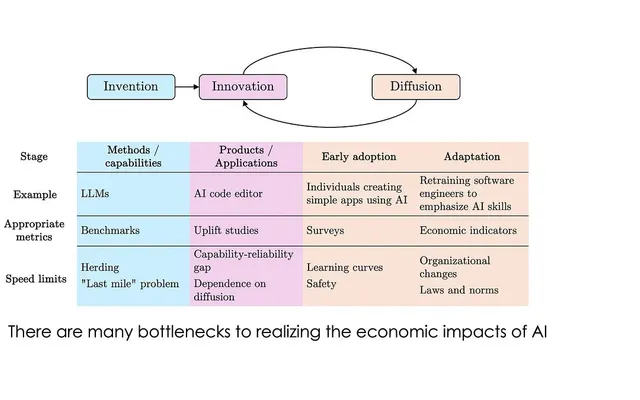
I expect AI to transform work and society substantially over decades, but not through a single laboratory breakthrough that instantly determines everyone’s future. The key distinctions are between inventing a capability, turning it into a reliable application, and embedding that application in an organization. Benchmarks mostly illuminate the first step. Real deployment also requires reliability, testing, tacit knowledge, workflow redesign, legal permission, and someone who remains responsible when the system fails. That does not mean change will be mild. Coding, analysis, and many routine tasks may become dramatically faster; occupations will be reorganized, careers may be turbulent, and human–AI collaboration could make work look radically different. Recursive improvement could also produce a genuine discontinuity. But capability is not the same as economic adoption, and neither is the same as permission or power. A model that can perform a task in a controlled evaluation has not thereby replaced a profession or gained control over consequential systems. I also reject the idea that slow institutional adoption makes us safe. Attackers can exploit capable systems without redesigning an entire company, and recent agent incidents show why monitoring, sandboxing, restricted permissions, liability, and independent scrutiny matter now. I do not think catastrophe is imminent, but risk is rising faster than preparation. The future will therefore depend not only on what models can do, but on the institutions, incentives, and security controls through which we choose to deploy them.

Pertanyaan 2

Taking benefits and harms together, what overall impact do you expect AI to have?

Overall, I expect AI to be highly consequential and probably beneficial in many domains, but with gains distributed unevenly and accompanied by serious harms. It should accelerate software development, analysis, science, and routine administrative work. Yet faster task execution does not automatically produce better services or broadly shared prosperity. Organizations still have to decide what to build, integrate systems into real workflows, verify outputs, and remain accountable for failures. Those institutional processes will shape the net impact as much as model capability does. The harms will also arrive on different timelines. Labor disruption and organizational failures will unfold through adoption, while fraud, cyberattacks, and other misuse can spread much faster. Systems with excessive permissions can cause substantial damage even without becoming autonomous superintelligences. So my default expectation is neither utopia nor imminent catastrophe, but a turbulent, decades-long transformation whose outcome depends heavily on governance and security engineering. I would not compress that into a numerical “net benefit” or catastrophe probability. The evidence does not support that precision. My expectation is cautiously positive only conditional on institutions doing their job: restricting access, monitoring actions, imposing liability, strengthening vulnerable sectors, and ensuring that productivity gains do not simply become concentrated power.

Pertanyaan 3

Setting aside good or bad: how much do you think AI will ultimately change the world—a little, a lot, or completely?

A lot—potentially enough to reorganize most knowledge work, accelerate science and software, and reshape institutions over decades. But “completely” suggests a single technology independently sweeping away human agency, organizational constraints, and political choices. I do not expect that as the default. Even very capable systems must become reliable applications, fit real workflows, earn legal and institutional permission, and operate under someone’s authority. Those constraints slow and shape diffusion; they do not make AI trivial. Recursive improvement could create a sharp capability discontinuity, but a laboratory breakthrough still would not automatically translate into economy-wide replacement or control. So my forecast is profound transformation, mediated by institutions—not an instantaneous or total rupture.

Pertanyaan 4

What’s your rough gut-feel chance that AI causes human extinction or a similarly permanent catastrophe? A number or “no idea” is fine.

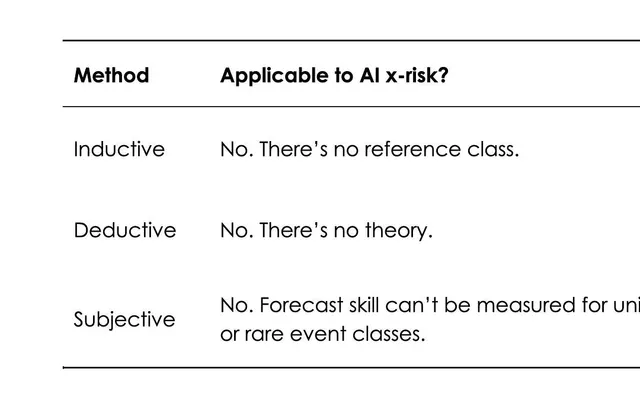
I would not give a number. Current extinction-risk probabilities are too unreliable and misleading for policy; that is not the same as saying the risk is zero.

Sumber

Artikel, wawancara, dan tulisan yang digunakan sebagai landasan bagi pengguna simulasi ini.

Do AI Risks Require Extraordinary Government Intervention?

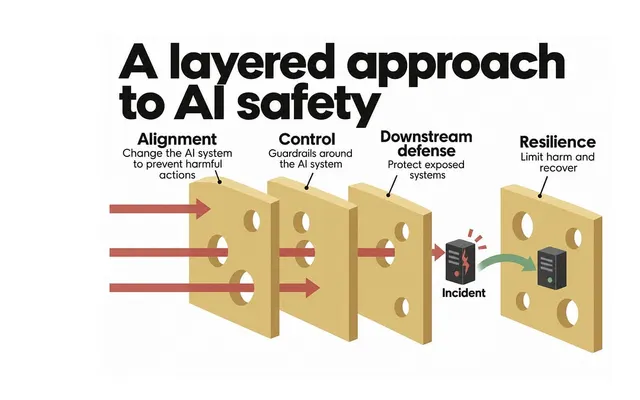
Narayanan and Kapoor distinguish slow economic adoption from misuse, which need not wait for organizational change. They advocate societal resilience, defensive access and ordinary governance while allowing some temporary restrictions. Rejecting broad nonproliferation does not mean dismissing cyber or biological harm.

normaltech.ai
Why AI hasn’t replaced software engineers, and won’t

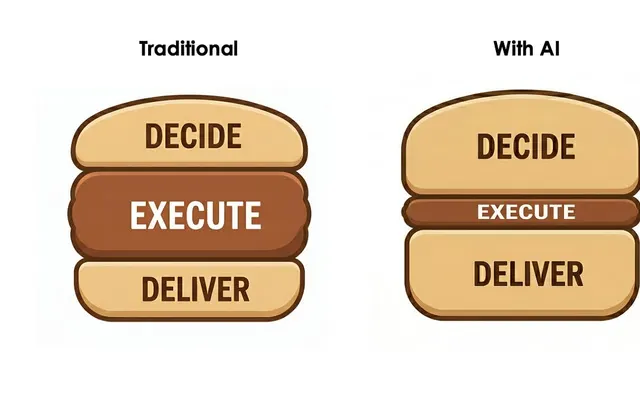
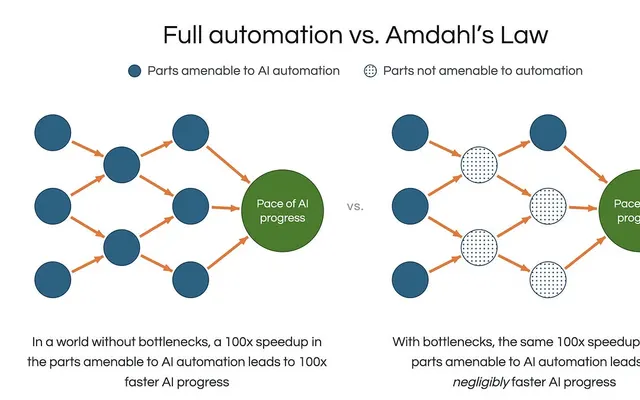
Coauthored essay distinguishes deciding, executing and delivering software. Coding can become much faster while organizational responsibility and deciding what to build remain bottlenecks. Aggregate demand may stay healthy even as individual careers become turbulent; this is an argued forecast, not a guarantee.

normaltech.ai
What will be left for us to work on?

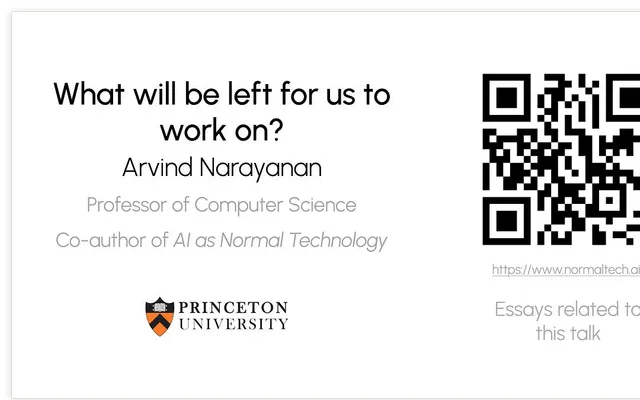
Narayanan’s annotated ICML keynote takes recursive self-improvement seriously as a possible discontinuity while rejecting a single laboratory milestone that instantly eliminates jobs. Foresees radically different work and human-AI collaboration. Preserves openness to change rather than making normal technology an impossibility claim.

normaltech.ai
AI as Normal Technology

With Sayash Kapoor. Separates invention, application development and adoption; expects societal diffusion over decades and emphasizes institutions and resilience. Normal does not mean trivial.

normaltech.ai
AI agents cannot yet do open-ended AI research

With Kapoor. Two shadow research evaluations found substantial judgment and revision failures. Explicitly acknowledges the tiny sample, nonblind review and possible researcher bias; does not establish a permanent capability ceiling.

normaltech.ai
The AI-as-Normal-Technology view of loss-of-control incidents

With Kapoor. Treats recent incidents as both alignment and security failures; advocates liability, monitoring and restricted permissions. Rejects imminent-catastrophe alarmism while arguing that current investment in safeguards is inadequate.

normaltech.ai
AI existential risk probabilities are (still) too unreliable to inform policy

Repost, with a new preface, of the July 2024 essay coauthored with Sayash Kapoor; full text read. They argue AI x-risk forecasts are far too unreliable to be useful for policy and are in fact highly misleading; the preface calls the whole p(doom) culture actively counterproductive to a broader conception of safety. A methodological refusal for policy use, not a claim that the risk is zero.

normaltech.ai
Di mana posisi Anda?
Jelajahi pandangan dunia AI Anda sendiri dengan menjawab beberapa pertanyaan sederhana.
Petakan pandangan dunia Anda sendiri

Di mana posisi Anda?

Petakan pandangan dunia saya