








Ellie Huxtable

Ellie Huxtable

x.com/ellie_huxtable

Software engineer behind the open-source shell tool Atuin who now finds AI coding agents useful and favors strong user privacy and sandboxed agents.

Bagaimana AI akan mengubah dunia?

Perubahan peradabanPerubahan bertahapDoomBloom
Titik tengah rentang yang belum ditentukanRentang interpretasi

Mendatar: pandangan Doom–Bloom yang mereka ungkapkan. Ke atas: skala transformasi.

Doom–Bloom: 64 dari 100. Skala transformasi: 50 dari 100. Rentang interpretasi: 40 hingga 85 secara horizontal, 0 hingga 100 secara vertikal. Ini adalah koordinat interpretasi, bukan probabilitas kejadian.

P(doom) Ellie Huxtable

Belum diestimasi

Jawaban simulasi mereka tidak cukup membahas risiko katastrofik untuk memperkirakannya.

Cara kami mengestimasi P(doom)

Hal-hal yang menentukan pandangan mereka

Asumsi utama

Language guarantees—especially the classes of problems Rust can rule out—reduce how much generated code humans must scrutinize.
Jawaban 1

Jika asumsi ini ternyata berbeda, bagaimana pandangan mereka akan berubah?

Pertanyaan yang belum terjawab

I don’t have a well-founded prediction about whether humans could retain control of systems broadly smarter than humans.
Jawaban 4

Apa yang akan membantu mereka membedakan hasil-hasil yang masuk akal di sini?

Detail lebih lanjut

Manfaat yang diperkirakan

Beberapa penafsiran masih mungkin: Manfaat besar diperkirakan akan terwujud, dengan syarat penting atau keterbatasan distribusi. / Manfaat yang terbatas atau hanya tersebar secara sempit diperkirakan akan terwujud.

52 / 100

Dampak kecilDampak transformatif

Rentang interpretasi 33 hingga 67 pada skala kualitatif.

Kerugian yang diperkirakan

Kerugian yang dapat dikelola atau bersifat lokal diperkirakan akan terjadi.

30 / 100

Dampak kecilDampak transformatif

Rentang interpretasi 0 hingga 33 pada skala kualitatif.

Pengaruh manusia

Anda belum menetapkan posisi mengenai hal ini. Titik tersebut menandai titik tengah rentang yang masih terbuka, bukan keyakinan yang moderat.

50 / 100

Sedikit pengaruhPengaruh kuat

Rentang interpretasi 0 hingga 100 pada skala kualitatif.

Interpretasi ini mempertahankan kondisi yang mereka nyatakan. Manfaat dan kerugian dapat sama-sama besar. Rentang tersebut menggambarkan cara kami membaca jawaban simulasi mereka, bukan interval kepercayaan statistik.

Di mana posisi Anda dibandingkan dengan Ellie Huxtable?
Petakan pandangan dunia AI Anda sendiri dalam waktu sekitar 3 menit, lalu bandingkan

Pandangan dunia serupa

Pemimpin opini dengan pandangan dunia simulasi yang paling mendekati pandangan Ellie Huxtable

Sumber

Artikel, wawancara, dan tulisan yang digunakan sebagai landasan bagi pengguna simulasi ini.

Penilaian Simulasi

Pertanyaan 1

Menurut Anda, apa arti AI bagi masa depan kita—dan mengapa?

I’m much more optimistic about AI-assisted programming than I used to be. With better models and tools, the productivity gain is real, and agents can now write effective software. The useful workflow is not just asking for code: agents need access to compiler errors, test output, and other feedback so they can inspect failures and iterate directly. That does not remove the need for engineering discipline. Language guarantees—especially the classes of problems Rust can rule out—reduce how much generated code humans must scrutinize. Review still matters, and unattended agents should run inside isolated virtual machines rather than directly on a sensitive host. Terminal data can include commands, paths, secrets, and operational context, so privacy should not depend on a company merely promising restraint. I prefer cryptographic protection, explicit permission before sharing more machine context, and options for self-hosting or local models. AI features should be optional, and dangerous commands need additional checks and confirmation. Beyond developer productivity, privacy, and operational safety, I don’t have a well-founded general forecast for “our future.” These tools already matter in practical software work, but that alone does not justify a confident prediction about AGI, extinction, or society as a whole.

Pertanyaan 2

Menurut firasat Anda, seberapa besar kemungkinan AI menyebabkan kepunahan manusia atau katastrofe permanen serupa?

I don’t have a defensible percentage. My experience with AI is about developer productivity, privacy, and safely operating coding agents; it doesn’t give me a sound basis for estimating human extinction or permanent global catastrophe. I’d rather not turn a gut feeling into a fake quantitative forecast.

Pertanyaan 3

Menurut Anda, bagaimana orang dan lembaga yang mengembangkan AI akan menanggapi risikonya?

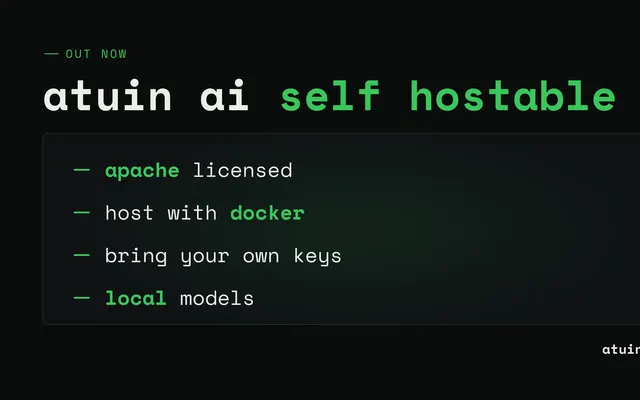
I can speak more concretely about how I think developers should respond than predict how the whole industry or governments will behave. In products touching terminals and developer machines, risk controls should be structural: encrypted user data, explicit permission before exposing additional context, opt-in AI features, self-hosting or local-model support, and confirmation around dangerous commands. Unattended agents should run in isolated VMs, with access to the feedback they need but not unrestricted access to the host. I also do not think promises are enough, especially for sensitive data. Cryptographic protection and user-controlled deployment provide stronger guarantees than statements about what a service intends to do. For generated software, strong language guarantees, tests, and human review still matter. I don’t have a well-founded forecast for how AI institutions generally will respond to larger societal or catastrophic risks. My views on practical developer-tool safeguards do not establish a broader prediction about industry governance or regulation.

Pertanyaan 4

Apakah Anda memperkirakan manusia akan tetap memegang kendali atas sistem AI yang lebih cerdas daripada manusia, dan mengapa?

I don’t have a well-founded prediction about whether humans could retain control of systems broadly smarter than humans. My practical experience is with current coding agents, where control comes from limiting permissions, isolating execution in VMs, requiring confirmation for dangerous commands, and keeping humans in the review loop. Those measures are useful now, but I would not pretend they answer the much larger question. A system being better than a person at software tasks does not automatically make it uncontrollable, and current operational safeguards do not prove that much more capable systems would remain controllable either.
Di mana posisi Anda?
Jelajahi pandangan dunia AI Anda sendiri dengan menjawab beberapa pertanyaan sederhana.
Petakan pandangan dunia Anda sendiri

Di mana posisi Anda?

Petakan pandangan dunia saya