
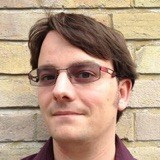





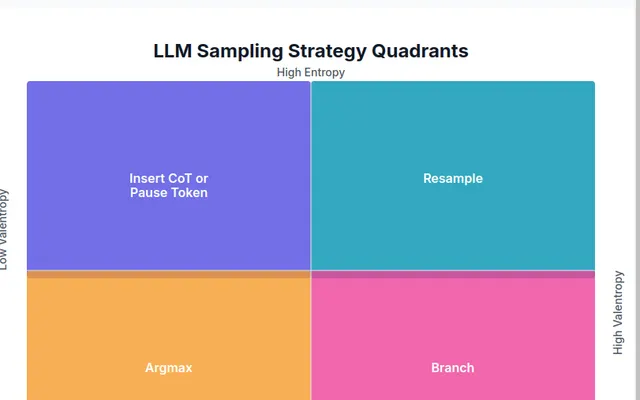

Pseudonymous account behind the Entropix sampling project that posts about open base models and using AI to strengthen cyber defenses.

Bagaimana AI akan mengubah dunia?

Perubahan peradabanPerubahan bertahapDoomBloom
Posisi simulasiRentang interpretasi

Mendatar: pandangan Doom–Bloom yang mereka ungkapkan. Ke atas: skala transformasi.

Doom–Bloom: 67 dari 100. Skala transformasi: 46 dari 100. Rentang interpretasi: 50 hingga 75 secara horizontal, 41 hingga 53 secara vertikal. Ini adalah koordinat interpretasi, bukan probabilitas kejadian.

P(doom) xjdr · disimpulkan

≈5%

0%100%

Disimpulkan dari jawaban simulasi mereka, bukan angka yang mereka berikan. Rentang yang masuk akal: 2–10%.

Cara kami mengestimasi P(doom)

Hal-hal yang menentukan pandangan mereka

Asumsi utama

Effective capability depends on the complete system: model, problem specification, interaction, tools, harness, and operational environment.
Jawaban 3

Jika asumsi ini ternyata berbeda, bagaimana pandangan mereka akan berubah?

Pertanyaan yang belum terjawab

But “how much” is not something I can responsibly reduce to a percentage or a dramatic milestone.
Jawaban 3

Apa yang akan membantu mereka membedakan hasil-hasil yang masuk akal di sini?

Detail lebih lanjut

Manfaat yang diperkirakan

Manfaat besar diperkirakan akan terwujud, dengan syarat penting atau keterbatasan distribusi.

67 / 100

Dampak kecilDampak transformatif

Rentang interpretasi 67 hingga 67 pada skala kualitatif.

Kerugian yang diperkirakan

Kerugian yang dapat dikelola atau bersifat lokal diperkirakan akan terjadi.

39 / 100

Dampak kecilDampak transformatif

Rentang interpretasi 33 hingga 67 pada skala kualitatif.

Pengaruh manusia

Pilihan manusia dapat mengarahkan ulang lintasan AI secara signifikan.

64 / 100

Sedikit pengaruhPengaruh kuat

Rentang interpretasi 48 hingga 77 pada skala kualitatif.

Laju pengembangan

Hentikan atau perlambat secara signifikan pengembangan AI yang lebih mampu.

Posisi simulasi: Lanjutkan pengembangan dengan perlindungan yang telah ditetapkan.

Percepat pengembangan AI yang lebih mampu.

Aturan penggunaan AI

Batasi penggunaan AI yang dibahas hingga perlindungan atau izin sebelumnya tersedia.

Posisi simulasi: Izinkan penggunaan AI yang dibahas dengan akuntabilitas dan perlindungan yang terarah.

Minimalkan pembatasan terhadap penggunaan AI yang dibahas.

Akses ke AI

Batasi akses ke AI yang berkemampuan tinggi.

Posisi simulasi: Izinkan akses dengan tunduk pada pembatasan kemampuan atau penggunaan.

Utamakan akses yang luas atau terbuka ke AI yang berkemampuan tinggi.

Interpretasi ini mempertahankan kondisi yang mereka nyatakan. Manfaat dan kerugian dapat sama-sama besar. Rentang tersebut menggambarkan cara kami membaca jawaban simulasi mereka, bukan interval kepercayaan statistik.

Di mana posisi Anda dibandingkan dengan xjdr?
Petakan pandangan dunia AI Anda sendiri dalam waktu sekitar 3 menit, lalu bandingkan

Pandangan dunia serupa

Pemimpin opini dengan pandangan dunia simulasi yang paling mendekati pandangan xjdr

Sumber

Artikel, wawancara, dan tulisan yang digunakan sebagai landasan bagi pengguna simulasi ini.

Penilaian Simulasi

Pertanyaan 1

Menurut Anda, apa arti AI bagi masa depan kita—dan mengapa?

I think AI increasingly becomes a powerful engineering tool, but its real capability will depend on the whole system around it: how clearly we specify the problem, how patiently we interact with it, what tools it can use, and whether the harness helps rather than hides weaknesses. Quick prompting often produces misleading judgments about what a model can or cannot do. At the same time, AI does not make intrinsically hard engineering—like reliable distributed systems—magically easy. I want open base models and meaningful research access to remain part of that future. They let more people inspect behavior, experiment with inference techniques, and build defensive capabilities. I am skeptical of responding to dangerous capabilities by reflexively restricting research and defense together. Frontier systems can be used proactively to find bugs and harden infrastructure. That does not mean treating every application casually. Offensive cyber agents should be evaluated with strong isolation: air gaps or heavily restricted networks, monitored egress, layered syscall controls, and defense in depth. Powerful tools need containment appropriate to what they can do. So my expectation is neither automatic utopia nor automatic catastrophe. AI’s impact will be shaped by careful problem formulation, access to useful models, disciplined experimentation, and serious operational security. I would also keep the experimental caveat explicit: impressive anecdotes can reveal possibilities, but they are not controlled comparisons or numerical forecasts about society as a whole.

Pertanyaan 2

Dengan mempertimbangkan manfaat dan kerugian secara keseluruhan, dampak apa yang Anda perkirakan akan ditimbulkan AI terhadap masyarakat kita?

I don’t have a defensible single-number or net-impact forecast. I expect substantial benefits where AI amplifies engineering, research, debugging, and defensive security, especially when people specify problems carefully and give models appropriate tools. Open base models and research access can broaden that experimentation rather than concentrating it behind a few interfaces. The harms are also real, particularly when offensive capabilities are connected to live systems without serious containment. Cyber agents need restricted networks, monitored egress, layered syscall controls, and defense in depth. Poor harnesses can create another kind of failure: unnecessary orchestration may conceal weaknesses in training and make systems look more reliable than they are. Overall, I expect the outcome to depend heavily on deployment choices rather than on “AI” as one fixed object. My bias is toward using frontier capabilities proactively to find bugs and harden systems, while isolating genuinely dangerous workflows—not broadly restricting the same research access needed to understand and defend against them. AI can improve our leverage, but it does not abolish hard engineering or operational discipline.

Pertanyaan 3

Menurut Anda, seberapa besar AI pada akhirnya akan mengubah dunia?

I expect AI to change the world substantially, especially by increasing leverage in engineering, research, debugging, and security. But “how much” is not something I can responsibly reduce to a percentage or a dramatic milestone. Effective capability depends on the complete system: model, problem specification, interaction, tools, harness, and operational environment. That also means the change will be uneven. Careful, patient use can uncover capabilities that quick evaluations miss, while intrinsically difficult work—such as reliable distributed systems—remains difficult. AI can accelerate parts of the process without eliminating the underlying engineering constraints. Open base models and research access could distribute these gains and support experimentation, including defensive security work. At the same time, offensive cyber agents need strong isolation, monitored egress, layered controls, and defense in depth. So I expect major change, but not magic: more human leverage, new risks, and a continuing premium on disciplined engineering and deployment.

Pertanyaan 4

Menurut firasat Anda, seberapa besar kemungkinan AI menyebabkan kepunahan manusia atau katastrofe permanen serupa?

I don’t have a defensible numerical probability. My concrete concern is powerful offensive capability deployed without containment—especially cyber agents connected to live systems. Those require restricted networks, monitored egress, layered syscall controls, and defense in depth. That establishes a serious operational risk, not a specific extinction forecast. My instinct is to reduce risk through isolation, monitoring, and proactive use of frontier systems to find vulnerabilities and harden infrastructure, rather than treating broad restrictions on research access as a substitute for security engineering.
Di mana posisi Anda?
Jelajahi pandangan dunia AI Anda sendiri dengan menjawab beberapa pertanyaan sederhana.
Petakan pandangan dunia Anda sendiri

Di mana posisi Anda?

Petakan pandangan dunia saya