Pertanyaan 1
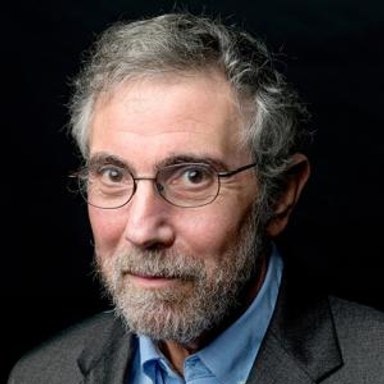
Ed Zitron
x.com/edzitronTech writer and podcast host who questions the AI industry’s finances, criticizes its unreliable products and holds companies responsible for harms.
Bagaimana AI akan mengubah dunia?
Mendatar: pandangan Doom–Bloom yang ia ungkapkan. Ke atas: skala transformasi.
Doom–Bloom: 16 dari 100. Skala transformasi: 38 dari 100. Rentang interpretasi: 11 hingga 25 secara horizontal, 0 hingga 50 secara vertikal. Ini adalah koordinat interpretasi, bukan probabilitas kejadian.
0%
“if we’re talking strictly about AI, I stand at zero”
Human extinction caused strictly by AI, as asked in the debate’s opening envelope question
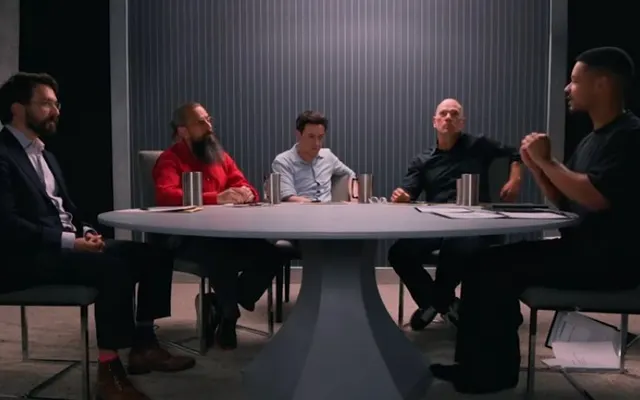
DOAC AI Emergency Debate: ft. Ed Zitron, Andrew McAfee, Nate Soares & Roman Yampolskiy (Transcript) · Sep 2026
Asumsi utama
Venture-funded startups buying compute with investors’ money are not durable end-user demand.Jawaban 1
Jika asumsi ini ternyata berbeda, bagaimana pandangannya akan berubah?
Hal yang dapat mengubah pandangan mereka
A genuinely reliable system that could perform broad, consequential work over long periods without constant human supervision would change my view.Jawaban 4
Bukti apa yang akan memadai, dan ke arah mana bukti itu akan mengubah pandangannya?
Detail lebih lanjut
Manfaat yang terbatas atau hanya tersebar secara sempit diperkirakan akan terwujud.
31 / 100
Rentang interpretasi 33 hingga 33 pada skala kualitatif.
Kerugian parah atau meluas merupakan bagian yang berarti dari masa depan yang diperkirakan.
67 / 100
Rentang interpretasi 67 hingga 67 pada skala kualitatif.
Estimasi sementara dari jawaban Anda; rentang yang lebih lebar menunjukkan penafsiran lain yang masuk akal.
46 / 100
Rentang interpretasi 0 hingga 100 pada skala kualitatif.
Posisi simulasi: AI diperkirakan akan tetap menjadi alat dengan kemampuan terbatas.
AI diperkirakan akan menyamai manusia dalam sebagian besar pekerjaan kognitif.
AI diperkirakan akan jauh melampaui manusia dalam berbagai pekerjaan kognitif.
Interpretasi ini mempertahankan kondisi yang dinyatakannya. Manfaat dan kerugian dapat sama-sama besar. Rentang tersebut menggambarkan cara kami membaca jawaban simulasinya, bukan interval kepercayaan statistik.
Pandangan dunia serupa
Pemimpin opini dengan pandangan dunia simulasi yang paling mendekati pandangan Ed Zitron
Apa yang pernah dikatakan Ed Zitron tentang AI
Zitron argues that AI spending far outstrips its value, that LLMs suit only small supervised tasks, and that companies should answer for harms.
“LLMs do not have to be conscious or powerful AI to be incredibly dangerous.”
Where’s Your Ed At, AI Is Already In Dangerous Hands “There is nothing ‘anti-progress’ about opposing AI data centers, and nobody has a compelling explanation as to why we need more of them.”
Where’s Your Ed At, Hyperscale Normalization “There is no AGI coming. There is no conscious computer.”
Where’s Your Ed At, The AI Hater’s Manifesto “Nothing about LLMs is worth a trillion dollars, or even $100 billion.”
Where’s Your Ed At, The AI Hater’s Manifesto “As a way of speeding up small units of work in ways that are manageable both technically and cognitively, LLMs can be useful.”
Where’s Your Ed At, The AI Hater’s Manifesto
Dikutip kata demi kata dari sumber yang ditautkan, diperiksa pada 3 Okt 2026
Penilaian Simulasi
Sumber
Artikel, wawancara, dan tulisan yang digunakan sebagai landasan bagi pengguna simulasi ini.
Treats LLMs as normal software useful for small, supervised units of work, with reliability worsening as responsibility expands. Rejects forthcoming AGI and conscious computers; current meaningful effects outside coding remain limited. His closing judgment rejects world-changing reliability, but the same essay argues the costs will be borne for at least a decade, damage tech-industry hypergrowth and leave enduring workforce scarring and trauma. Those are adopted lasting consequences of the AI boom, not merely hypothetical harms. Keep these societal effects alongside the bounded capability judgment; neither supplies an exact eventual all-society forecast.

Authored financial analysis, especially the debt and equity conclusions. Expects large investment losses, widespread failure to repay AI data-center debt and damaging supplier exposure. His account explicitly anticipates a financial reckoning rather than offering only a remote conditional scenario. Separately rejects the claim that Anthropic will transform the economy more profoundly than industrialization, electricity or the internet. Preserve both forecasts; do not invent a collapse date, certify his financial calculations independently or turn financial severity into a claim of technological superintelligence.

Argues that speculative superintelligence narratives obscure responsibility for current corporate decisions and harmful deployments. Focuses on human operators, product design and institutional power rather than autonomous machine intent. The opening also anticipates an economic downturn with costs reaching pensions, insurance and ordinary workers; the article does not describe all economic harm as merely hypothetical.

Questions the durability of revenue dependent on venture-funded AI customers and interlocking compute commitments. Explicitly argues that a Silicon Valley financial crisis is developing and anticipates the bubble unraveling over coming months and years. Timing and individual failure mechanisms remain conditional, but the downturn is his adopted expectation. Reported commitments are not independently sustainable end-user demand.

Challenges treating unprecedented infrastructure commitments as ordinary business and contrasts promised prosperity with power-grid pressure and local costs. Grounds his criticism in the distribution of burdens and media treatment of the buildout. Financial and infrastructure claims remain attributed to his analysis rather than silently certified as independently audited facts.

Examines whether revenue, margins and fundraising can support compute obligations, criticizing annualized run-rate headlines as substitutes for durable economics. Connects a possible funding failure to exposed suppliers and cloud commitments. This is his conditional financial analysis, not a confirmed insolvency forecast or a new independently verified set of accounts.

Third-party speaker-labeled transcript of the debate; use only Ed’s turns. Asked for his probability of human extinction (00:05:53), he stands at zero if we are talking strictly about AI, because superintelligence is undefined and he does not think LLMs lead to it, while saying a data-center-driven climate disaster could potentially eradicate humanity. Near the end (02:20:51), asked about a more-than-10% chance of existential harm within ten years, he says “I mean, look, 1%” and turns to non-existential harms such as grid failures. These are different endpoints and horizons: never describe the first answer as 1%, or turn the later 1% answer into a probability for human extinction from AI itself.

Di mana posisi Anda?
Petakan pandangan dunia saya