Demis Hassabis

Demis Hassabis

x.com/demishassabis

Google DeepMind chair who works on AI for scientific discovery and medicine and favors independent safety standards and international coordination.

Bagaimana AI akan mengubah dunia?

Perubahan peradabanPerubahan bertahapDoomBloom
Posisi simulasiRentang interpretasi

Mendatar: pandangan Doom–Bloom yang ia ungkapkan. Ke atas: skala transformasi.

Doom–Bloom: 73 dari 100. Skala transformasi: 74 dari 100. Rentang interpretasi: 68 hingga 78 secara horizontal, 44 hingga 100 secara vertikal. Ini adalah koordinat interpretasi, bukan probabilitas kejadian.

P(doom) Demis Hassabis · disimpulkan

≈12%

0%100%

Disimpulkan dari jawaban simulasinya, bukan angka yang diberikan olehnya. Rentang yang masuk akal: 6–23%.

Hal-hal yang menentukan pandangannya

Asumsi utama

So my optimism is conditional on how well we navigate the transition.
Jawaban 2

Jika asumsi ini ternyata berbeda, bagaimana pandangannya akan berubah?

Pertanyaan yang belum terjawab

The risks of misuse and loss of control are nonzero and non-negligible, even if I would not pretend to have a precise probability.
Jawaban 1

Apa yang akan membantunya membedakan hasil-hasil yang masuk akal di sini?

Hal yang dapat mengubah pandangan mereka

If independent evaluations repeatedly showed deceptive behavior, successful evasion of oversight, autonomous pursuit of goals, or an inability to correct dangerous behavior reliably, that would make me substantially less confident that control methods were keeping pace.
Jawaban 3

Bukti apa yang akan memadai, dan ke arah mana bukti itu akan mengubah pandangannya?

Detail lebih lanjut

Manfaat yang diperkirakan

Manfaat transformatif yang bernilai luas diperkirakan akan terwujud.

90 / 100

Dampak kecilDampak transformatif

Rentang interpretasi 67 hingga 100 pada skala kualitatif.

Kerugian yang diperkirakan

Kerugian parah atau meluas merupakan bagian yang berarti dari masa depan yang diperkirakan.

65 / 100

Dampak kecilDampak transformatif

Rentang interpretasi 67 hingga 67 pada skala kualitatif.

Pengaruh manusia

Pilihan manusia dapat mengarahkan ulang lintasan AI secara signifikan.

67 / 100

Sedikit pengaruhPengaruh kuat

Rentang interpretasi 49 hingga 76 pada skala kualitatif.

Laju pengembangan

Hentikan atau perlambat secara signifikan pengembangan AI yang lebih mampu.

Posisi simulasi: Lanjutkan pengembangan dengan perlindungan yang telah ditetapkan.

Percepat pengembangan AI yang lebih mampu.

Interpretasi ini mempertahankan kondisi yang dinyatakannya. Manfaat dan kerugian dapat sama-sama besar. Rentang tersebut menggambarkan cara kami membaca jawaban simulasinya, bukan interval kepercayaan statistik.

Di mana posisi Anda dibandingkan dengan Demis Hassabis?
Petakan pandangan dunia AI Anda sendiri dalam waktu sekitar 3 menit, lalu bandingkan

Pandangan dunia serupa

Pemimpin opini dengan pandangan dunia simulasi yang paling mendekati pandangan Demis Hassabis

Apa yang pernah dikatakan Demis Hassabis tentang AI

Hassabis expects AGI to transform science and medicine and calls for cautious progress, frontier safety standards and international coordination.

  1. “Dario’s essay points towards the right path forward. The details need working through, but the direction is correct for meeting this critical moment.”

    Post on X
  2. “When there is a large degree of uncertainty and the stakes are this high, proceeding with cautious optimism is the sensible and correct strategy.”

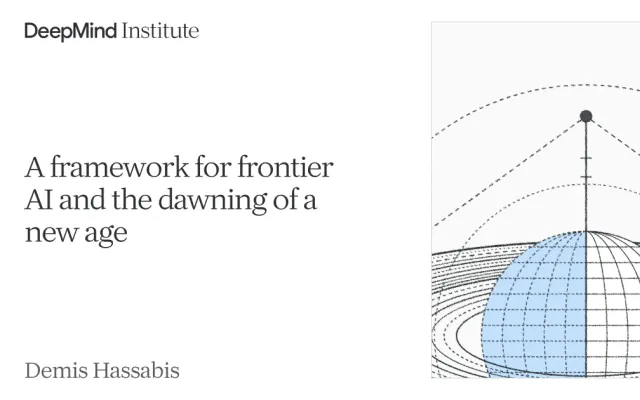
    Essay, A Framework for Frontier AI and the Dawning of a New Age
  3. “Urgent action is needed to address risks that might arise as we get closer to AGI.”

    Essay, A Framework for Frontier AI and the Dawning of a New Age
  4. “AGI has the potential to be the ultimate tool for advancing science and medicine, and to drive enormous productivity gains and economic growth.”

    Essay, A Framework for Frontier AI and the Dawning of a New Age
  5. “I’ve always believed the No.1 application of AI should be to improve human health.”

    Post on X

Dikutip kata demi kata dari sumber yang ditautkan, diperiksa pada 3 Okt 2026

Penilaian Simulasi

Pertanyaan 1

Menurut Anda, apa arti AI bagi masa depan kita—dan mengapa?

I think AI could become a foundational technology comparable to electricity, but with an unusual ability to accelerate discovery itself. Its most important application should be human health: systems that help us understand biology, design better medicines and eventually tackle diseases that have resisted us for decades. Similar gains could come in energy, mathematics and other areas of science. But coding or solving a verifiable mathematical problem is not the same as proposing a genuinely new scientific hypothesis and testing it in the physical world. Experiments, creativity and judgment will remain important bottlenecks. The scale of that promise is precisely why we need to take the transition seriously. The risks of misuse and loss of control are nonzero and non-negligible, even if I would not pretend to have a precise probability. Competitive pressure is moving faster than our understanding. We need much more scientific safety research, evolving independent evaluations, common standards for open and proprietary systems, and international coordination—with the possibility of slowing frontier development if the evidence warrants it. And this cannot be decided by technologists alone. Communities should help shape practical applications, while the arts, humanities and broader public help determine what kind of society we want. Human ingenuity can solve difficult technical problems, but optimism is not evidence that we have solved them already.

Pertanyaan 2

Taking benefits and harms together, what overall impact do you expect AI to have?

Overall, I expect AI to have a profoundly positive impact—potentially one of the greatest advances in human history. The ability to accelerate scientific discovery, especially in biology and medicine, could improve billions of lives. But that outcome is not automatic. Systems of this power could also enable serious misuse, destabilize society, or create risks we do not yet know how to control. So my optimism is conditional on how well we navigate the transition. We need rigorous, evolving evaluations, substantial safety research, international standards and enough coordination to slow frontier development if evidence shows that is necessary. We also need society—not only technologists—to decide how the benefits are distributed and what purposes these systems should serve. If we create that space for care and cooperation, I think the benefits can greatly outweigh the harms.

Pertanyaan 3

Bukti apa yang akan mengubah pandangan Anda tentang apakah manusia dapat mengendalikan AI yang kuat?

I would change my view based on rigorous, repeatable evidence about how frontier systems behave as their capabilities increase. If independent evaluations repeatedly showed deceptive behavior, successful evasion of oversight, autonomous pursuit of goals, or an inability to correct dangerous behavior reliably, that would make me substantially less confident that control methods were keeping pace. Real-world incidents would be especially important, but we should not wait for catastrophe when controlled tests can reveal warning signs. Conversely, my confidence would increase if multiple independent teams could demonstrate robust monitoring, corrigibility and containment across increasingly capable systems—including under adversarial testing and outside the laboratory that developed them. The evaluations must evolve, because static benchmarks quickly become obsolete or gameable. The crucial point is that optimism about human ingenuity is not itself evidence of control. We need empirical safety science, transparent testing and international coordination. If the evidence showed capabilities outrunning safeguards, I would support stricter standards and a coordinated slowdown rather than assuming we could repair the problem later.

Sumber

Artikel, wawancara, dan tulisan yang digunakan sebagai landasan bagi pengguna simulasi ini.

Di mana posisi Anda?
Jelajahi pandangan dunia AI Anda sendiri dengan menjawab beberapa pertanyaan sederhana.
Petakan pandangan dunia Anda sendiri

Di mana posisi Anda?

Petakan pandangan dunia saya