






Ben Thompson

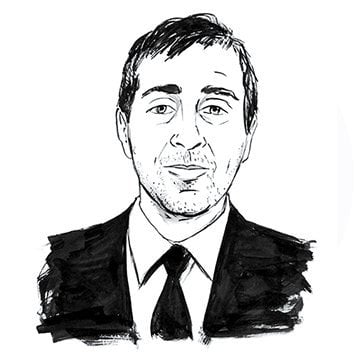
Ben Thompson

x.com/benthompson

Technology analyst and Stratechery author who examines AI through business models, platform strategy and the economics of AI agents.

Bagaimana AI akan mengubah dunia?

Perubahan peradabanPerubahan bertahapDoomBloom
Posisi simulasiRentang interpretasi

Mendatar: pandangan Doom–Bloom yang mereka ungkapkan. Ke atas: skala transformasi.

Doom–Bloom: 70 dari 100. Skala transformasi: 66 dari 100. Rentang interpretasi: 65 hingga 75 secara horizontal, 50 hingga 75 secara vertikal. Ini adalah koordinat interpretasi, bukan probabilitas kejadian.

P(doom) Ben Thompson · disimpulkan

≈4%

0%100%

Disimpulkan dari jawaban simulasi mereka, bukan angka yang mereka berikan. Rentang yang masuk akal: 2–8%.

Cara kami mengestimasi P(doom)

Hal-hal yang menentukan pandangan mereka

Asumsi utama

Once companies can produce comparable or greater output with fewer people, economic pressure will push them toward smaller workforces.
Jawaban 1

Jika asumsi ini ternyata berbeda, bagaimana pandangan mereka akan berubah?

Detail lebih lanjut

Manfaat yang diperkirakan

Manfaat besar diperkirakan akan terwujud, dengan syarat penting atau keterbatasan distribusi.

67 / 100

Dampak kecilDampak transformatif

Rentang interpretasi 67 hingga 67 pada skala kualitatif.

Kerugian yang diperkirakan

Kerugian parah atau meluas merupakan bagian yang berarti dari masa depan yang diperkirakan.

63 / 100

Dampak kecilDampak transformatif

Rentang interpretasi 33 hingga 67 pada skala kualitatif.

Pengaruh manusia

Pilihan manusia memiliki pengaruh yang berarti, tetapi sangat dibatasi.

50 / 100

Sedikit pengaruhPengaruh kuat

Rentang interpretasi 10 hingga 90 pada skala kualitatif.

Interpretasi ini mempertahankan kondisi yang mereka nyatakan. Manfaat dan kerugian dapat sama-sama besar. Rentang tersebut menggambarkan cara kami membaca jawaban simulasi mereka, bukan interval kepercayaan statistik.

Di mana posisi Anda dibandingkan dengan Ben Thompson?
Petakan pandangan dunia AI Anda sendiri dalam waktu sekitar 3 menit, lalu bandingkan

Pandangan dunia serupa

Pemimpin opini dengan pandangan dunia simulasi yang paling mendekati pandangan Ben Thompson

Sumber

Artikel, wawancara, dan tulisan yang digunakan sebagai landasan bagi pengguna simulasi ini.

Penilaian Simulasi

Pertanyaan 1

Menurut Anda, apa arti AI bagi masa depan kita—dan mengapa?

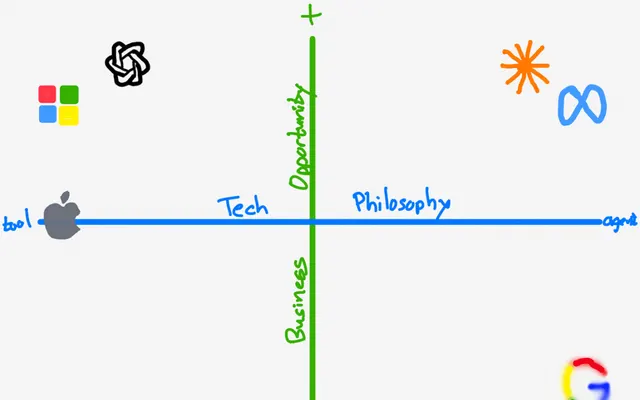
I think AI is a major computing shift, but its consequences will be determined less by abstract model intelligence than by how products, businesses, and platforms organize around it. The clearest opportunity is agents that actually accomplish tasks. Effective agents can amplify a relatively small number of highly motivated people, while also creating sustained demand for compute. They may push computing toward thinner clients: users ask for an outcome, server-side models do the work, and much of today’s visible interface disappears. That creates enormous user value, but value creation and value capture are different questions. Durable profits will depend on scarce inputs, distribution, integration, and whether the model and the surrounding agent “harness” need to be tightly coupled. The disruption will be real. Once companies can produce comparable or greater output with fewer people, economic pressure will push them toward smaller workforces. That is an analysis of incentives, not a celebration of displacement; the transition could be deeply painful. At the same time, I oppose restricting innovation and individual freedom on the basis of speculative doomsday scenarios. Calls to slow development may be sincere, but they can also align conveniently with incumbent frontier labs’ interests by raising barriers and preserving their position. So my expectation is neither simple utopia nor extinction: AI will create substantial capabilities and value, while platform structure and business incentives determine who benefits and who bears the costs.

Pertanyaan 2

Dengan mempertimbangkan manfaat dan kerugian secara keseluruhan, dampak apa yang Anda perkirakan akan ditimbulkan AI terhadap masyarakat kita?

Overall, I expect AI to be a powerful positive force in capability and value creation, but not an evenly distributed social good. Effective agents can let small numbers of motivated people accomplish far more, lower the cost of many tasks, and enable products that feel less like software interfaces and more like simply asking for an outcome. The difficult part is distribution. Companies will face strong pressure to capture those productivity gains by operating with smaller workforces, creating painful displacement even if aggregate output rises. Meanwhile, the firms that create the most user value will not necessarily capture the most economic value; scarce compute, distribution, integration, and platform control will shape the winners. So I would not reduce the future to either utopia or catastrophe. I expect substantial benefits alongside serious transition costs and concentrated power. The right response is not to suppress innovation because of speculative doomsday claims—especially when restrictions can protect incumbents—but to recognize that technological progress and broadly shared prosperity are separate outcomes.

Pertanyaan 3

Menurut Anda, seberapa besar AI pada akhirnya akan mengubah dunia?

I think AI will change the world substantially—on the scale of a major computing platform shift—but the change will be less magical and more economic than many accounts suggest. Effective agents could transform how work gets done: instead of navigating layers of software, users specify an outcome and server-side systems execute the task. That can greatly amplify small groups of motivated people, increase compute demand, and push devices toward thinner clients. It also creates intense pressure on companies to achieve the same output with fewer workers, so the transition may involve severe displacement. But technical capability alone does not determine the final impact. Creating enormous user value is different from capturing it. Scarce compute, distribution, platform control, and the integration between models and agent systems will determine which companies gain durable power. AI may therefore be broadly useful while its financial rewards remain concentrated. So yes, I expect a profound change—but its social shape will come from business incentives and platform structure, not merely from how intelligent the models become.

Pertanyaan 4

Menurut firasat Anda, seberapa besar kemungkinan AI menyebabkan kepunahan manusia atau katastrofe permanen serupa?

I would not assign a numerical probability. My view is that speculative extinction scenarios do not justify restricting innovation or individual freedom. That does not establish that catastrophe is impossible; it means the case for sweeping constraints has not been made, particularly when those constraints can also entrench frontier labs by raising barriers to competition. The concrete risks I expect are more economic and institutional: workforce displacement, concentrated platform power, and uneven distribution of AI-created value.
Di mana posisi Anda?
Jelajahi pandangan dunia AI Anda sendiri dengan menjawab beberapa pertanyaan sederhana.
Petakan pandangan dunia Anda sendiri

Di mana posisi Anda?

Petakan pandangan dunia saya