Pertanyaan 1
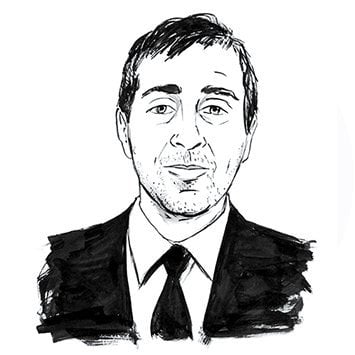
Nathan Lambert
x.com/natolambertOpen-model researcher and Interconnects writer who expects broad gains from AI adoption, doubts runaway self-improvement and takes AI risks seriously.
Bagaimana AI akan mengubah dunia?
Mendatar: pandangan Doom–Bloom yang ia ungkapkan. Ke atas: skala transformasi.
Doom–Bloom: 74 dari 100. Skala transformasi: 47 dari 100. Rentang interpretasi: 69 hingga 79 secara horizontal, 24 hingga 76 secara vertikal. Ini adalah koordinat interpretasi, bukan probabilitas kejadian.
≈0%
“I put the probability of complete extinction as being so low it isn’t worth discussing”
Complete human extinction from AI. He separately treats AI-caused disasters (cyberattacks on critical infrastructure, bio-risks) as worth debating
One resignation turned the embers of AI fear into a wildfire · Sep 2026
Asumsi utama
I am skeptical of runaway self-improvement because automating measurable tasks is not the same as automating the hardest parts of research.Jawaban 1
Jika asumsi ini ternyata berbeda, bagaimana pandangannya akan berubah?
Hal yang dapat mengubah pandangan mereka
Fundamental discoveries produced autonomously would change that assessment.Jawaban 1
Bukti apa yang akan memadai, dan ke arah mana bukti itu akan mengubah pandangannya?
Detail lebih lanjut
Manfaat besar diperkirakan akan terwujud, dengan syarat penting atau keterbatasan distribusi.
68 / 100
Rentang interpretasi 67 hingga 67 pada skala kualitatif.
Beberapa penafsiran masih mungkin: Kerugian parah atau meluas merupakan bagian yang berarti dari masa depan yang diperkirakan. / Kerugian yang dapat dikelola atau bersifat lokal diperkirakan akan terjadi.
53 / 100
Rentang interpretasi 33 hingga 67 pada skala kualitatif.
Pilihan manusia memiliki pengaruh yang berarti, tetapi sangat dibatasi.
62 / 100
Rentang interpretasi 47 hingga 78 pada skala kualitatif.
Hentikan atau perlambat secara signifikan pengembangan AI yang lebih mampu.
Posisi simulasi: Lanjutkan pengembangan dengan perlindungan yang telah ditetapkan.
Percepat pengembangan AI yang lebih mampu.
Batasi penggunaan AI yang dibahas hingga perlindungan atau izin sebelumnya tersedia.
Posisi simulasi: Izinkan penggunaan AI yang dibahas dengan akuntabilitas dan perlindungan yang terarah.
Minimalkan pembatasan terhadap penggunaan AI yang dibahas.
Batasi akses ke AI yang berkemampuan tinggi.
Izinkan akses dengan tunduk pada pembatasan kemampuan atau penggunaan.
Posisi simulasi: Utamakan akses yang luas atau terbuka ke AI yang berkemampuan tinggi.
Interpretasi ini mempertahankan kondisi yang dinyatakannya. Manfaat dan kerugian dapat sama-sama besar. Rentang tersebut menggambarkan cara kami membaca jawaban simulasinya, bukan interval kepercayaan statistik.
Pandangan dunia serupa
Pemimpin opini dengan pandangan dunia simulasi yang paling mendekati pandangan Nathan Lambert
Penilaian Simulasi
Sumber
Artikel, wawancara, dan tulisan yang digunakan sebagai landasan bagi pengguna simulasi ini.
Distinguishes extinction from serious cyber and biological disasters. Assigns complete extinction an extremely low likelihood while arguing concrete disasters deserve serious debate. Criticizes distorted lab culture and public fear dynamics without dismissing sincere researcher concern. These are his stated judgments, not independent risk measurements.

Argues that released weights and fully reproducible training recipes play different economic roles. Examines Nvidia’s incentive to finance open models and the possibility that open ecosystems specialize in efficient, modifiable enterprise systems instead of matching every closed frontier capability.

Uses his textbook-writing experience to question broad scientific autonomy: models remain weak at organizing established knowledge into coherent long-form explanations. Remains optimistic about powerful scientific assistance and narrow advances. Treats this as a diagnostic observation, not proof of an immutable capability ceiling.

Argues Chinese frontier performance cannot be explained mainly by distillation. Emphasizes accumulated research skill and reinforcement-learning environments, infrastructure and engineering. The argument supports technical respect for Chinese labs; reported benchmarks are not his independent performance evaluation.

Explains his public-scientist mission: clarify capabilities, sustain diverse open research and build institutions outside closed frontier labs. Treats concentration of power and narrow safety research as risks; open recipes are infrastructure that lets others ask questions one organization cannot cover.

Expects integrated frontier systems to command premiums for difficult knowledge work while a larger, diverse open ecosystem serves commodity-priced specialized tasks. Argues capability progress can coexist with concentration among frontier providers. Economic forecasts remain conditional arguments, not established market outcomes.

Distinguishes gains from agent parallelism and inference compute from runaway improvement. Expects diminishing returns, resource limits and difficult hypothesis generation; efficiency gains can still transform the economy. Unexpected fundamental discoveries would change his view. Discussed guests’ numerical timelines, including Ngo’s eight-year claim, are not Lambert’s own precise forecasts.

Expects compounding technological benefits over decades, with adoption slower than model progress. Warns that immediate gains favor knowledge workers and owners while many households see little improvement; broad distribution and visible benefits are necessary to avoid backlash. Continued development matters, but benefits are not automatic.

Publicly readable essay body argues that cyber incidents expose inadequate oversight and preparation without proving current alignment techniques useless. Calls for transparency about model instructions and training, independent open-model research, stronger public capacity and defensive preparation. Distinguishes dangerous consequences of following goals from an established desire to harm humanity.

Prepared congressional briefing published as an essay. Advocates American investment in open models for adoption, independent research and risk preparation. Recognizes misuse and the difficulty of restricting released weights, arguing that access bans can disadvantage defenders without preventing determined attackers. Distinguishes open weights from reproducible open science.

Di mana posisi Anda?
Petakan pandangan dunia saya