सवाल 1
Joe Carlsmith
x.com/jkcarlsmithPhilosopher at Anthropic who writes about AI’s potential for a far better future and the alignment work and restraint needed to reach it safely.
एआई दुनिया को कैसे बदलेगा?
आर-पार: उनका व्यक्त किया गया Doom–Bloom दृष्टिकोण। ऊपर: बदलाव का स्तर।
Doom–Bloom: 100 में से 27। बदलाव का स्तर: 100 में से 94। व्याख्या के दायरे: क्षैतिज रूप से 22 से 50, लंबवत रूप से 89 से 100। ये व्याख्या के निर्देशांक हैं, घटनाओं की संभावनाएँ नहीं।
≥10%
“a significant (read: double-digit) probability of destroying the entire future of the human species”
The technology being built by companies like Anthropic destroying the entire future of the human species (existential catastrophe)
एक मुख्य मान्यता
It is that highly capable agents may have motivations imperfectly aligned with ours, options that let them evade control, and incentives to seek influence or prevent correction.उत्तर 1
अगर यह मान्यता अलग साबित होती, तो उनका दृष्टिकोण कैसे बदलता?
क्या उनकी राय बदल सकता है
The biggest positive update would be a technically and institutionally credible safety case for superintelligence: evidence that we can understand and shape a system’s motivations, detect strategic deception, keep its options bounded, preserve meaningful corrigibility as capabilities scale, and verify these claims under adversarial pressure.उत्तर 4
कौन-सा प्रमाण पर्याप्त होगा, और उससे उनका दृष्टिकोण किस दिशा में बदलेगा?
अधिक जानकारी
काफ़ी लाभ की उम्मीद है, लेकिन उनके साथ महत्वपूर्ण शर्तें या वितरण संबंधी सीमाएँ होंगी।
56 / 100
गुणात्मक पैमाने पर व्याख्या का दायरा 33 से 67 तक है।
विनाशकारी या अपरिवर्तनीय क्षति अपेक्षित भविष्य का केंद्रीय हिस्सा है।
89 / 100
गुणात्मक पैमाने पर व्याख्या का दायरा 67 से 100 तक है।
मानवीय विकल्पों का सार्थक, लेकिन काफी सीमित प्रभाव है।
61 / 100
गुणात्मक पैमाने पर व्याख्या का दायरा 50 से 75 तक है।
अधिक सक्षम एआई का विकास रोकें या उसकी गति काफी धीमी करें।
सिम्युलेट की गई स्थिति: बताए गए सुरक्षा उपायों के तहत विकास जारी रखें।
अधिक सक्षम एआई के विकास की गति बढ़ाएँ।
इन व्याख्याओं में उनकी बताई गई शर्तें बरकरार रखी गई हैं। लाभ और नुकसान, दोनों पर्याप्त हो सकते हैं। ये दायरे बताते हैं कि हम उनके सिम्युलेट किए गए उत्तरों को कैसे समझते हैं, ये सांख्यिकीय विश्वास-अंतराल नहीं हैं।
मिलते-जुलते विश्वदृष्टिकोण
ऐसे जाने-माने विचारक जिनके सिम्युलेट किए गए विश्वदृष्टिकोण Joe Carlsmith के विश्वदृष्टिकोण से सबसे अधिक मिलते हैं
सिम्युलेट किया गया आकलन
स्रोत
इस सिम्युलेट किए गए उपयोगकर्ता को तथ्य-आधारित बनाने के लिए इस्तेमाल किए गए लेख, इंटरव्यू और रचनाएँ।
Updated January 29, 2026. Expects superintelligent agents, perhaps soon; current trajectory extremely dangerous. Safety requires controlling motivations and options, evaluating risk, and restraining capabilities. Safe AI labor is a major opportunity; he is more optimistic about solutions than the strongest pessimists.

Supports building the ability to slow or halt dangerous development, without abandoning technical safety. Compute provides governance leverage; algorithms, verification, authoritarian advantage, and concentrated power complicate restraint. Rejects treating the race as inevitably a prisoner’s dilemma.

Says his earlier 5% doom-by-2070 estimate was too low. Expected future capabilities should affect present beliefs before their arrival makes danger emotionally vivid. Numerical examples such as 42% are illustrative, not his personal forecast.

Philosophical series about power, plural values, and relating ethically to unfamiliar minds. Safety concern coexists with gentleness toward artificial beings; liberalism and respect are important but cannot alone guarantee a good future.

Foundational values rather than a current capability forecast. Safe, ethical enhancement could open forms of flourishing far beyond present imagination; merely picturing comfortable present-day life understates the possible upside.

Speaker-labeled Dwarkesh interview: distinguish AI motivations, available options, and incentives; takeover is not inevitable under every power distribution. His positive vision involves incremental, decentralized civilizational growth, potentially beyond biological humanity. Attribute Joe’s answers only, not the interviewer’s premises.

First-party identity and discovery hub: philosopher working on Claude’s constitution at Anthropic, previously a senior advisor at Coefficient Giving. Affiliation does not make independent essays Anthropic policy.

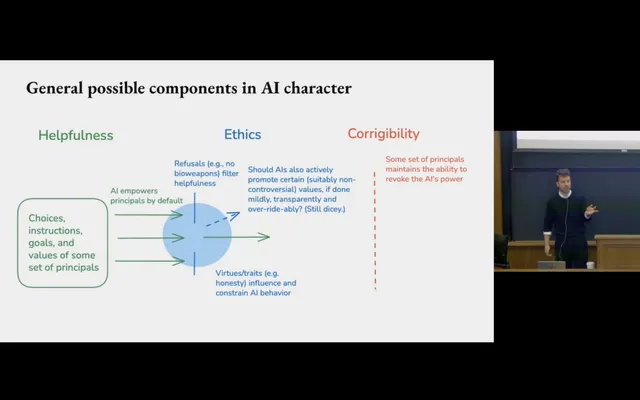
March 2026 Yale talk, published with lightly edited transcript. Constitutions shape character through training, not just legalistic obedience. Argues for honesty, corrigibility, public legitimacy, pluralism, and constraints on AI-company power; respectful treatment reflects possible AI moral status.

Philosophy helps generalize concepts and practices to unfamiliar situations. Making AI capable of reasoning humans would endorse differs from motivating it to actually do so. Alignment need not create a sovereign optimizer with perfectly correct ultimate values.

Calls the probability of technology like Anthropic’s destroying humanity’s entire future double-digit, without a precise figure. Thinks no lab has an adequate superintelligence safety plan; benefits do not currently justify that risk. Supports well-designed collective restraint while explaining why safety work inside a lab can remain valuable.

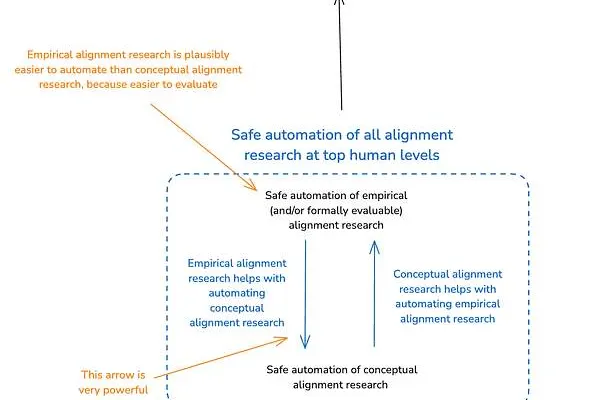
Believes safe automation has a real chance and is crucial. Empirical feedback and formal methods make some research easier to evaluate; conceptual work, scheming, sabotage, and inadequate time or resources remain barriers.

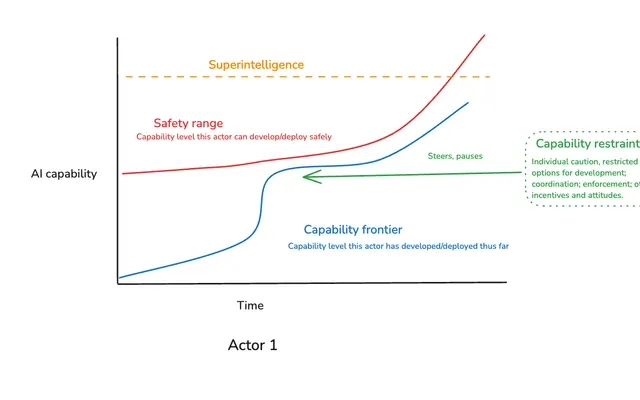
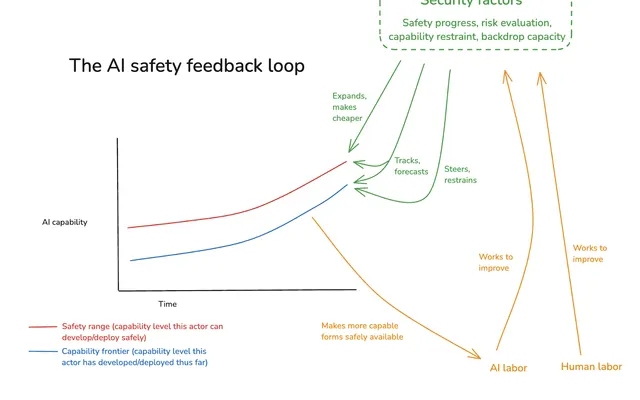
Prioritizes using AI labor to improve alignment, oversight, risk evaluation, cybersecurity, coordination, and governance. The safety feedback loop must outpace or restrain the capability feedback loop; safe-enough systems useful for safety are an especially valuable stage to slow down.

आपकी सोच कहाँ ठहरती है?
मेरा विश्वदृष्टिकोण मैप करें