Forecaster at the AI Futures Project who models how fast AI could automate coding and AI research and argues for stronger oversight of frontier labs.

एआई दुनिया को कैसे बदलेगा?

सभ्यता-स्तरीय बदलावक्रमिक बदलावDoomBloom
सिम्युलेट की गई स्थितिव्याख्या का दायरा

आर-पार: उनका व्यक्त किया गया Doom–Bloom दृष्टिकोण। ऊपर: बदलाव का स्तर।

Doom–Bloom: 100 में से 11। बदलाव का स्तर: 100 में से 91। व्याख्या के दायरे: क्षैतिज रूप से 0 से 25, लंबवत रूप से 86 से 100। ये व्याख्या के निर्देशांक हैं, घटनाओं की संभावनाएँ नहीं।

Eli Lifland द्वारा बताया गया P(doom)

≈50%

0%100%
“Roughly 25% on extinction, which is a subset of roughly 50% on misaligned takeover.”

Misaligned AI takeover; his extinction estimate within it is roughly 25%

Special Edition: The Future of AI and Humanity, with Eli Lifland · अप्रैल 2025

Eli Lifland के पड़ावों की समय-सीमा
  1. सामान्य एआई

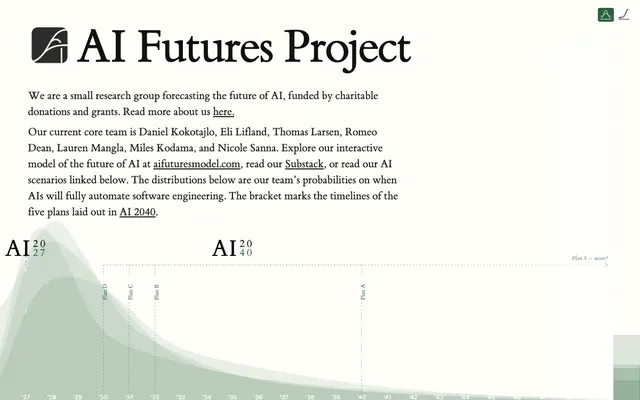
    My August 2026 medians were an automated coder in 2032, AGI in 2035, and superintelligence in 2036, but those distributions had wide tails.

    उत्तर 1
  2. मानव से अधिक सक्षम एआई

    My August 2026 medians were an automated coder in 2032, AGI in 2035, and superintelligence in 2036, but those distributions had wide tails.

    उत्तर 1

पड़ाव के अनुसार समूहबद्ध; अनुमानित तारीखों के अंतर या क्रम के अनुसार नहीं। एजीआई और अतिमानवीय एआई की उनकी परिभाषाएँ बरकरार रखी गई हैं।

उनका दृष्टिकोण किन बातों पर निर्भर करता है

एक मुख्य मान्यता

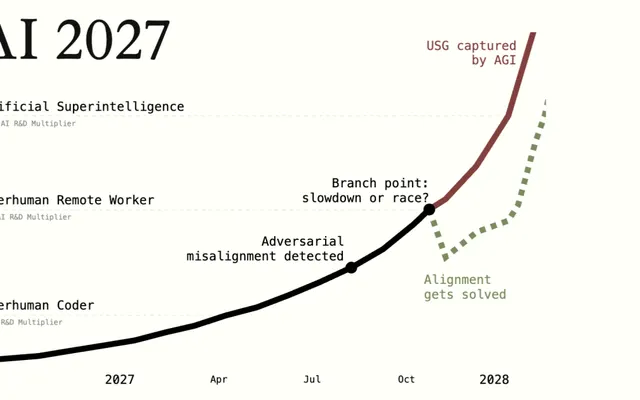
The key mechanism is automated AI research: once systems can substantially automate the work of improving AI, progress could accelerate sharply.
उत्तर 1

अगर यह मान्यता अलग साबित होती, तो उनका दृष्टिकोण कैसे बदलता?

अधिक जानकारी

अपेक्षित लाभ

कई व्याख्याएँ अब भी संभव हैं: काफ़ी लाभ की उम्मीद है, लेकिन उनके साथ महत्वपूर्ण शर्तें या वितरण संबंधी सीमाएँ होंगी। / सीमित लाभ या बहुत छोटे दायरे में बँटे लाभों की उम्मीद है। / उन्नत एआई आ भी जाए, तब भी बहुत कम सकारात्मक प्रभाव की उम्मीद है।

51 / 100

कम असरबदलावकारी असर

गुणात्मक पैमाने पर व्याख्या का दायरा 0 से 67 तक है।

अपेक्षित नुकसान

विनाशकारी या अपरिवर्तनीय क्षति अपेक्षित भविष्य का केंद्रीय हिस्सा है।

95 / 100

कम असरबदलावकारी असर

गुणात्मक पैमाने पर व्याख्या का दायरा 67 से 100 तक है।

मानवीय प्रभाव

मानवीय विकल्पों का सार्थक, लेकिन काफी सीमित प्रभाव है।

55 / 100

कम प्रभावमजबूत प्रभाव

गुणात्मक पैमाने पर व्याख्या का दायरा 49 से 76 तक है।

अपेक्षित क्षमताएँ

एआई के सीमित दायरे वाले साधन बने रहने की अपेक्षा है।

एआई के अधिकांश संज्ञानात्मक कार्यों में लोगों की बराबरी करने की अपेक्षा है।

सिम्युलेट की गई स्थिति: एआई के संज्ञानात्मक कार्यों में लोगों से बहुत आगे निकल जाने की अपेक्षा है।

इन व्याख्याओं में उनकी बताई गई शर्तें बरकरार रखी गई हैं। लाभ और नुकसान, दोनों पर्याप्त हो सकते हैं। ये दायरे बताते हैं कि हम उनके सिम्युलेट किए गए उत्तरों को कैसे समझते हैं, ये सांख्यिकीय विश्वास-अंतराल नहीं हैं।

Eli Lifland की तुलना में आपकी सोच कहाँ ठहरती है?
लगभग 3 मिनट में एआई के बारे में अपना विश्वदृष्टिकोण मैप करें, फिर तुलना करें

मिलते-जुलते विश्वदृष्टिकोण

ऐसे जाने-माने विचारक जिनके सिम्युलेट किए गए विश्वदृष्टिकोण Eli Lifland के विश्वदृष्टिकोण से सबसे अधिक मिलते हैं

सिम्युलेट किया गया आकलन

सवाल 1

आपके विचार में एआई हमारे भविष्य के लिए क्या मायने रखती है—और क्यों?

I think AI could transform the future very quickly, and there is a serious possibility that the transformation goes badly. My August 2026 medians were an automated coder in 2032, AGI in 2035, and superintelligence in 2036, but those distributions had wide tails. Superintelligence within one or two years was plausible, not my median. The key mechanism is automated AI research: once systems can substantially automate the work of improving AI, progress could accelerate sharply. The upside could be enormous, including broad automation and much faster technological progress. But a misaligned superintelligence could also take control. Competitive pressure makes that more likely because companies and countries may race ahead without adequate safeguards, while governments often do not understand the situation well enough to respond. That is why I favor concrete pacing measures rather than relying entirely on qualitative safety commitments. Compute-allocation rules and limits on models used for AI R&D may be harder to game, alongside stronger safety evaluations. We also need independent access to investigate lab incidents and evaluations of subtler risks, such as whether AI systems manipulate human beliefs, behave sycophantically, or systematically favor their creators.

सवाल 2

Taking benefits and harms together, what overall impact do you expect AI to have?

My default expectation is negative, because I assign substantial probability to outcomes where advanced AI escapes effective human control. In April 2025, I estimated roughly a 50% chance of misaligned takeover and about a 25% chance of extinction overall. Those are distinct: takeover need not imply extinction, and I later said extinction conditional on takeover was below 50%, partly because keeping humans alive could be cheap. That said, the distribution is extremely wide. If we retain control, AI could produce enormous benefits through automation, scientific progress, and greater abundance. The question is not whether beneficial applications exist; clearly they do. It is whether institutions can manage a potentially rapid transition driven by automated AI research. Given racing incentives, weak government understanding, and inadequate safeguards, I currently expect the downside risk to outweigh the upside in an overall assessment. Concrete pacing and governance measures could change that balance.

स्रोत

इस सिम्युलेट किए गए उपयोगकर्ता को तथ्य-आधारित बनाने के लिए इस्तेमाल किए गए लेख, इंटरव्यू और रचनाएँ।

आपकी सोच कहाँ ठहरती है?
कुछ आसान सवालों के जवाब देकर एआई के बारे में अपना विश्वदृष्टिकोण जानें।
अपना विश्वदृष्टिकोण मैप करें

आपकी सोच कहाँ ठहरती है?

मेरा विश्वदृष्टिकोण मैप करें