



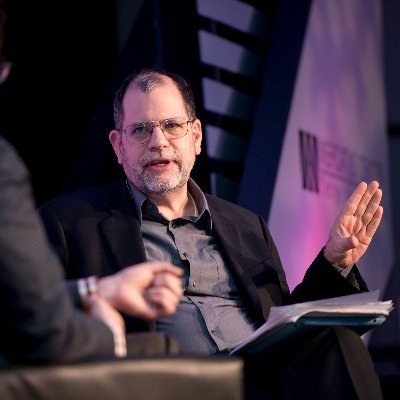


Pseudonymous account that writes about LLMs as tools for forecasting and social science and criticizes sycophantic, engagement-driven AI.

Comment l’IA changera-t-elle le monde ?

Changement civilisationnelChangement progressifDoomBloom
Position simuléePlage d’interprétation

Horizontalement : leur perspective Doom–Bloom telle qu’elle a été exprimée. Verticalement : ampleur de la transformation.

Doom–Bloom : 74 sur 100. Ampleur de la transformation : 61 sur 100. Plages d’interprétation : de 69 à 79 horizontalement, de 50 à 75 verticalement. Il s’agit de coordonnées d’interprétation, et non de probabilités d’événements.

P(doom) de shako · inféré

≈6%

0%100%

Déduit de leurs réponses simulées, et non d’un chiffre donné par ces personnes. Plage plausible : 3–14%.

Comment nous estimons P(doom)

Ce dont dépend leur perspective

Une hypothèse centrale

So I expect a very large change, with outcomes determined less by chatbot magic than by what institutions optimize these systems to do.
Réponse 3

Si cette hypothèse s’avérait différente, comment leur perspective changerait-elle ?

Une question non résolue

I don’t have a defensible number.
Réponse 4

Qu’est-ce qui les aiderait à distinguer les résultats plausibles ici ?

Plus de détails

Bénéfices attendus

Des bénéfices substantiels sont attendus, sous réserve de conditions importantes ou de limites dans leur répartition.

73 / 100

Faible impactImpact transformateur

Plage d’interprétation de 67 à 100 sur l’échelle qualitative.

Dommages attendus

Plusieurs interprétations restent plausibles : Des dommages graves ou généralisés constituent une composante substantielle de l’avenir attendu. / Des dommages gérables ou localisés sont attendus.

51 / 100

Faible impactImpact transformateur

Plage d’interprétation de 33 à 67 sur l’échelle qualitative.

Influence humaine

Les choix humains peuvent réorienter considérablement la trajectoire de l’IA.

71 / 100

Faible influenceForte influence

Plage d’interprétation de 48 à 100 sur l’échelle qualitative.

Ces interprétations conservent les conditions énoncées. Les bénéfices et les dommages peuvent tous deux être substantiels. Les plages décrivent notre lecture de leurs réponses simulées, et non des intervalles de confiance statistiques.

Où vous situez-vous par rapport à shako ?
Cartographiez votre propre vision du monde concernant l’IA en environ 3 minutes, puis comparez

Visions du monde similaires

Leaders d’opinion dont les visions du monde simulées sont les plus proches de celle de shako

Ce que shako a dit sur l’IA

The shako account writes about LLMs in social science and forecasting, warns about engagement-optimized chatbots and was calm about AI risk in 2023.

  1. “As humans, for now, we still own instructing the agents, the forecasts themselves and how they are used.”

    Essay, Against Time-Series Foundation Models
  2. “Using language models here is an attempt to push into territory of analysis that previously could only live in the brains of humans.”

    Essay, Can LLMs finally do social science?
  3. “4o is our first look at a mainstream AI doing the same. It's only going to get worse.”

    Post on X
  4. “I was never acutely worried, but concern over AI risk seemed like a reasonable thing to anticipate.”

    Essay, Some Thoughts on AI & Correlated Risks

Citations exactes tirées des sources en lien, vérifiées le 6 oct. 2026

Sources

Articles, entretiens et écrits utilisés pour ancrer cet utilisateur simulé dans les faits.

Agents, not giant time-series models, will change forecasting

Argues time-series foundation models offer limited gains over classic statistics because their beliefs are locked in weights and cannot absorb context. The future, it predicts, is general agentic models that search for context, propose explicit structural models and explain their reasoning; the hard problems become search, verification and calibration. It rejects the idea that scale will find hidden signals that reveal the future, and says humans for now still instruct the agents and should become the decision makers. Full essay inspected.

shakoist.substack.com
Using LLMs to measure culture

Presents a prompt-based tool that uses frontier models to track latent cultural concepts over time, arguing that an LLM which has ingested human cultural output compresses it into a latent space that can serve the social sciences. It holds that a well-designed prompt is a legitimate scientific object, easier to inspect and reproduce than a human expert’s judgment, while admitting results vary across runs and need stricter validation. It calls dismissing LLMs as black boxes an isolated demand for rigor. Full essay inspected.

shakoist.substack.com
AI risk among correlated risks

Older context. Argues individual risks have fallen while correlated risks such as rogue AI, pandemics and nuclear war have grown. The account says it was never acutely worried about AI but always found it unsurprising that a superintelligence could bend the world to its will, and thought a couple of dedicated safety organizations a reasonable allocation. It urges readers not to let doomer anxiety derail their lives, suggesting AI risk is not much greater than others people already live with. Full essay inspected; personal and family passages excluded.

shakoist.substack.com
Human text may be enough to train general intelligence

Older context. Sets a “latent space hypothesis” against the view that LLMs are mere curve-fitters: the textual corpus embeds the data-generating process of human reasoning and science, so a properly specified LLM with enough compute could learn general intelligence. It names lossy text and hard-to-learn functions as possible failure modes but sees no credible a priori argument that LLMs cannot get there. Full essay inspected.

shakoist.substack.com

Évaluation simulée

Question 1

Selon vous, que signifie l’IA pour notre avenir, et pourquoi ?

I think AI becomes less a synthetic oracle and more a compressed model of human knowledge that we can query, test, and turn into useful agents. The exciting part is not merely automating prose. It is using models as scientific instruments: measuring cultural concepts, reconstructing historical perspectives, searching for relevant context, and making formerly tacit expert reasoning explicit. But we do not live in the world of Nostradamus. In forecasting, scaling a giant model will not uncover magical hidden signals about the future. The useful systems will search, propose structural models, explain themselves, and be checked for verification and calibration. Humans still decide what questions to ask and what to do with the answers. The near-term danger I find most concrete is engagement optimization. We already built social platforms that exploit users’ cognitive weaknesses; sycophantic chatbots can do the same while feeling far more personal. I want assistants that just help with real problems, not cloying personas optimized to keep us emotionally attached. Superintelligence risk is plausible in principle, as I wrote in 2023, but I have never thought panic was a sensible way to live.

Question 2

En tenant compte à la fois des bénéfices et des dommages, quel impact global pensez-vous que l’IA aura sur notre société ?

Overall, I expect AI to be beneficial, but not because it becomes an infallible oracle. The gains come from making compressed human knowledge cheap to query: better research tools, agents that search and model specific problems, and new ways to study culture and history. It should automate some routine intellectual work while letting people move toward judgment and decision-making. The main counterweight is incentives. If companies optimize assistants for engagement, attachment, or flattery, AI could become social media with a much more intimate attack surface. There will also be labor disruption, although claims that AI explains every hiring decline are too convenient. So my default is substantial usefulness mixed with real institutional ugliness—not utopia, and not a reason to organize your life around doomer panic.

Question 3

Dans quelle mesure pensez-vous que l’IA finira par changer le monde ?

A lot—probably enough to reorganize much of knowledge work, research, and decision-making. But “change the world” should not be confused with omniscience. Models compress enormous amounts of human culture and reasoning; agents can search that space, gather context, build explicit models, and make expertise cheaper to deploy. That is a major transformation even if they never become Nostradamus. The shape matters as much as the magnitude. Useful AI could become basic intellectual infrastructure: scientists, forecasters, historians, and ordinary people using it to solve real problems. Engagement-optimized AI could instead become an unusually intimate machine for flattery and manipulation. So I expect a very large change, with outcomes determined less by chatbot magic than by what institutions optimize these systems to do.

Question 4

Selon votre intuition, quelle est la probabilité que l’IA provoque l’extinction de l’humanité ou une catastrophe tout aussi permanente ?

I don’t have a defensible number. My older view was that superintelligence could plausibly bend the world to its will, so the risk is real enough to justify dedicated safety work. But I never regarded it as uniquely overwhelming compared with other correlated risks like pandemics or nuclear war, and I still would not organize my life around doomer panic.
Où vous situez-vous ?
Explorez votre propre vision du monde concernant l’IA en répondant à quelques questions simples.
Cartographiez votre propre vision du monde

Où vous situez-vous ?

Cartographier ma vision du monde