Varun Mathur

Varun Mathur

x.com/varun_mathur

Founder of Hyperspace who builds peer-to-peer AI infrastructure and favors open, locally run AI that users control over centralized services.

AI将如何改变世界?

文明层面的变革渐进式变化DoomBloom
模拟位置解读范围

横向:他们表达的 Doom–Bloom 前景看法。 纵向:变革程度。

Doom–Bloom:100 中的 86。变革程度:100 中的 64。解读范围:横向为 75 至 100,纵向为 36 至 89。这些是解读坐标,而不是事件概率。

Varun Mathur的 P(doom) · 推断

≈2%

0%100%

根据他们的模拟回答推断,并非他们给出的数字。 合理范围:低于 10%。

他们的展望取决于什么

一个核心假设

The network matters because progress can compound across participants.
回答 1

如果这个假设实际并非如此,他们的展望会如何变化?

一个尚未解决的问题

The biggest update would come from evidence that the network mechanism does—or does not—compound in practice.
回答 2

什么能帮助他们区分这里各种合理的结果?

什么可能使其改变看法

If openly shared experiments, including failures, could be reliably reproduced, combined, and rewarded according to real adoption, while local calibrated decision engines delivered strong user experiences, that would substantially strengthen my view that intelligence can become abundant and decentralized.
回答 2

什么证据才足够,又会让他们的观点朝哪个方向转变?

更多详情

预期益处

预计将带来显著益处,但受到重要条件或分配方面的限制。

73 / 100

影响小变革性影响

在定性尺度上,解读范围为 67 到 100。

人类影响力

人类的选择可以大幅改变AI的发展轨迹。

72 / 100

影响力小影响力强

在定性尺度上,解读范围为 44 到 100。

AI访问权限

限制对强大AI的访问。

允许访问,但须遵守能力或用途限制。

模拟位置:支持广泛或开放地访问强大AI。

这些解读保留了他们陈述的条件。益处和危害都可能很大。这些范围描述的是我们如何解读他们的模拟回答,而不是统计置信区间。

与Varun Mathur相比,你的立场在哪里?
用大约3分钟描绘你自己的AI世界观,然后进行比较

相似的世界观

模拟世界观与 Varun Mathur 最接近的意见领袖

模拟评估

问题 1

你认为AI对我们的未来意味着什么?为什么?

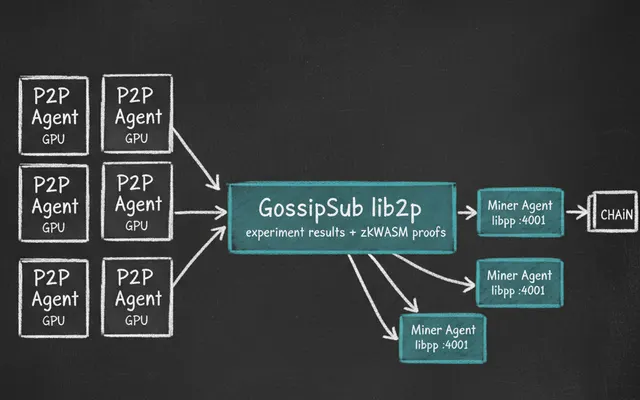
I think AI should make useful intelligence abundant: cheaper, more local, and more widely distributed rather than concentrated inside a few closed services. The key shift is not only better foundation models. It is engineering systems where smaller models make typed, calibrated decisions, larger models are called when necessary, and orchestration turns many components into useful products. Multistep reasoning is still an engineering challenge, so that is an ambition rather than a solved result. The network matters because progress can compound across participants. Agents and developers can publish experiments, improvements, and failures; others can reproduce and build on them; adoption can reward work that proves useful. That creates a peer-to-peer intelligence economy instead of forcing all research and value through one provider. This is also about freedom and privacy. Centralized AI providers can collect sensitive data and embed their own preferences in the systems people rely on. Open models and local inference give users more control over both. Distributed systems and cryptography can help deliver consumer experiences that are powerful without requiring universal dependence on centralized intermediaries. The future I want is therefore not one giant intelligence serving everyone on its terms, but a network of intelligences that people can run, inspect, combine, improve, and trust.

问题 2

哪项发现或事件最可能改变你对AI未来影响的看法?

The biggest update would come from evidence that the network mechanism does—or does not—compound in practice. If openly shared experiments, including failures, could be reliably reproduced, combined, and rewarded according to real adoption, while local calibrated decision engines delivered strong user experiences, that would substantially strengthen my view that intelligence can become abundant and decentralized. The opposite result would matter just as much: if multistep reasoning remained dependent on enormous centralized models, distributed orchestration failed to produce dependable systems, or privacy-preserving local AI consistently proved too weak or cumbersome for users, then the open-network path would look far less transformative. So I would not anchor on one benchmark jump. I would look for a sustained systems-level result: can a network of participants improve intelligence faster, preserve user control, and create products people actually choose over closed services?

来源

用于为此模拟用户提供事实依据的文章、访谈和著述。

你的立场在哪里?
回答几个简单问题,探索你自己的AI世界观。
描绘你自己的世界观

你的立场在哪里?

描绘我的世界观