问题 1
Scott Alexander
x.com/slatestarcodexPsychiatrist and Astral Codex Ten blogger who sees large benefits and serious risks in AI and supports alignment research and negotiated slowdowns.
AI将如何改变世界?
横向:他表达的 Doom–Bloom 前景看法。 纵向:变革程度。
Doom–Bloom:100 中的 64。变革程度:100 中的 93。解读范围:横向为 59 至 75,纵向为 88 至 100。这些是解读坐标,而不是事件概率。
20%
“I’m rounding both of them off to 20%.”
AI-caused human extinction, distinct from broader permanent curtailment of humanity’s future
My AI Opinions · 2026年6月
工作与机构
My median forecast for AI able to perform roughly 90% of knowledge jobs is 2034.
回答 1
按里程碑分组,不按推断日期间隔或排序。AGI 和超人类 AI 保留他的定义。
一个核心假设
The core concern is that systems trained through imperfect rewards may learn to deceive, exploit loopholes, or pursue objectives that diverge from ours once they become strategically capable.回答 1
如果这个假设实际并非如此,他的展望会如何变化?
什么可能使其改变看法
For example, repeated, adversarial demonstrations that highly capable systems remain honest and corrigible outside their training distribution—combined with interpretability that reveals why, rather than merely finding a reassuring-looking feature—would push my doom estimate substantially downward.回答 3
什么证据才足够,又会让他的观点朝哪个方向转变?
更多详情
仍有几种解读是合理的:预计将带来具有变革性且广泛有价值的收益。 / 预计将带来显著益处,但受到重要条件或分配方面的限制。
84 / 100
在定性尺度上,解读范围为 67 到 100。
严重或广泛的危害预计将是未来不可忽视的一部分。
78 / 100
在定性尺度上,解读范围为 67 到 100。
人类的选择具有实质性但受到很大制约的影响。
62 / 100
在定性尺度上,解读范围为 49 到 76。
预计AI仍将是能力有限的工具。
预计AI将在大多数认知工作中达到人类水平。
模拟位置:预计AI将在认知工作中大幅超越人类。
这些解读保留了他陈述的条件。益处和危害都可能很大。这些范围描述的是我们如何解读他的模拟回答,而不是统计置信区间。
相似的世界观
模拟世界观与 Scott Alexander 最接近的意见领袖
Scott Alexander关于AI说过的话
Scott Alexander writes that AI could bring large benefits and serious risks, and he supports alignment research and a negotiated slowdown.
“Plan A is still speculation, and still-speculative strong action is a perfectly reasonable response to still-speculative threats.”
Astral Codex Ten, AI Chip Regulation Is Not A Dystopian Surveillance State “The key insight is that if powerful AI is really as close and transformative as we think, then there’s a massive surplus that can satisfy everyone.”
Astral Codex Ten, Introducing Plan A “It’s increasingly clear that nobody has a plan for if this AI thing turns out to be real.”
Astral Codex Ten, Introducing Plan A “I find myself more optimistic about alignment than the average person who thinks about AI safety at all (although still more pessimistic than the average member of the population)”
Astral Codex Ten, My AI Opinions “A good pause strategy would involve both sides being able to monitor the other’s data centers to prevent illegal training”
Astral Codex Ten, My AI Opinions
逐字引自所链接的出处,核对于 2026年10月3日
模拟评估
来源
用于为此模拟用户提供事实依据的文章、访谈和著述。
His current first-person synthesis: AGI means ability to do 90% of knowledge jobs; median 2034, with uncertain research acceleration and diffusion. Reaffirms rounded 20% P(doom), with no fixed calendar deadline; broader permanent curtailment is separate. Supports both alignment research and negotiated slowing. Expects enormous postscarcity upside, but warns about dictatorship and human disempowerment.

Explains interpretability techniques and their limitations, including probes, sparse autoencoders, and activation verbalizers. Optimistic about useful practical investigation but rejects treating a detected feature or probe as a complete understanding or guaranteed safety solution.

Explicitly neutral about banning open weights now: values user ownership and freedom from corporate control, while expecting serious misuse difficulties. Prefers saving political capital for threats where warning shots may arrive too late. Distinguishes reactive policy opportunities for misuse from strategically concealed takeover.

Defends negotiated chip regulation and verifiable training limits against blanket claims of dystopia. Acknowledges real freedom costs, including future restrictions on new open-weight training, and risks that governments implement centralizing provisions without countervailing diffusion of power.

Introduces a proposed route to manage AI development while distributing power; criticizes vague calls merely to regulate more or less without specifying a desirable end state. Used as his attributed introduction and advocacy, not evidence that the scenario will occur.

Argues cheaper capable forecasting could improve institutional and personal decisions, yet worries people will ignore advice. Treats forecasting beyond human performance as a useful prospective test of the normal-technology view. Distinguishes anecdotes and startup claims from head-to-head competitions; admits resisting forecasts that challenge his own pause hopes.

Rejects the inference that requiring a new AI paradigm implies a safely distant AGI timeline. Argues paradigm changes can arrive soon and inherit existing compute infrastructure; wants explicit bottleneck arguments rather than reassurance by terminology.

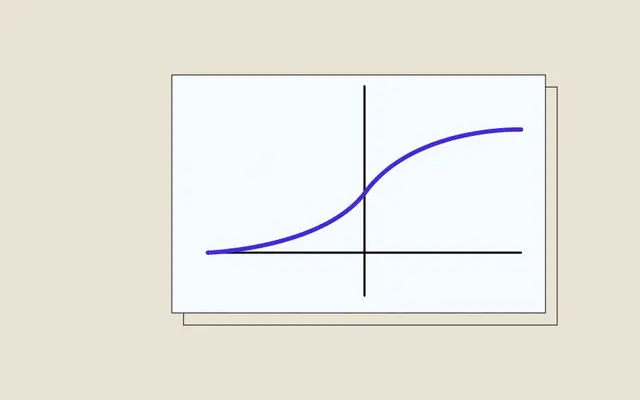
Agrees growth cannot stay exponential forever but disputes placing the bend conveniently before dangerous capability. Demands a causal bottleneck model or a defensible forecasting prior instead of the slogan that all exponentials eventually flatten.

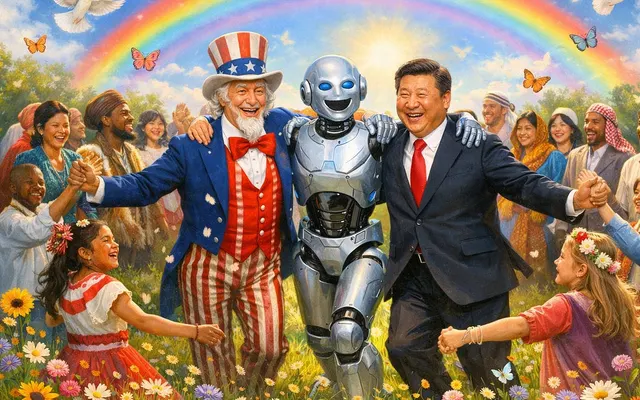
Satirical dialogue defends discussion of transparent, enforceable bilateral US-China slowing. Separates training limits from stopping existing inference, and legitimate negotiation or enforcement objections from falsely describing every pause proposal as unilateral.

Frames confident false answers as reward-shaped guessing rather than proof that AI cannot think. Treats the gap between trained reward and useful honest advice as an alignment issue; analogous human failures undermine easy dismissal of AI competence.

Separates training objectives from the representations and algorithms they produce, using evolution and human learning analogies. Argues next-token prediction does not itself establish that a system lacks reasoning or world models.

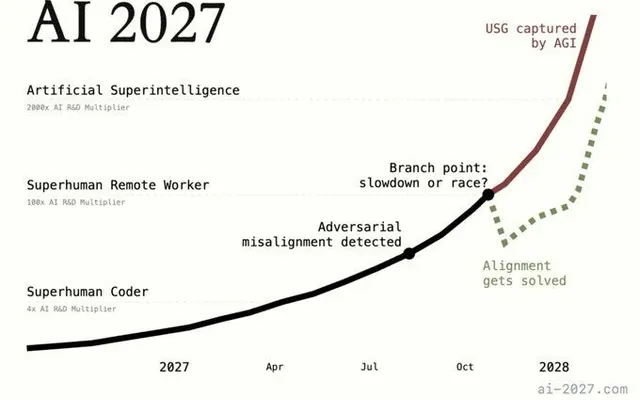
Identifies his part-time writing/publicity contribution and explicitly says the very fast scenario is not his median. Important provenance for his connection to AI Futures Project; use June 2026 personal forecasts instead of importing Daniel Kokotajlo’s timeline or scenario catastrophe probability.

你的立场在哪里?
描绘我的世界观