80,000 Hours Podcast host who weighs evidence on AI progress, takes cyber, bio and rogue-agent risks seriously and leans toward slowing frontier AI.

AI将如何改变世界?

文明层面的变革渐进式变化DoomBloom
模拟位置解读范围

横向:他表达的 Doom–Bloom 前景看法。 纵向:变革程度。

Doom–Bloom:100 中的 18。变革程度:100 中的 87。解读范围:横向为 13 至 25,纵向为 69 至 100。这些是解读坐标,而不是事件概率。

Rob Wiblin的 P(doom) · 推断

≈21%

0%100%

根据他的模拟回答推断,并非他们给出的数字。 合理范围:14–31%。

他的展望取决于什么

一个核心假设

But the current path combines rapidly improving cyber and research capabilities with weak control, declining monitorability, and institutions moving far too slowly.
回答 2

如果这个假设实际并非如此,他的展望会如何变化?

一个尚未解决的问题

If systems automate AI research itself, the pace could accelerate sharply—though we genuinely do not know how powerful that feedback loop would be or whether compute and missing real-world capabilities would constrain it.
回答 1

什么能帮助他区分这里各种合理的结果?

更多详情

预期益处

仍有几种解读是合理的:预计将带来显著益处,但受到重要条件或分配方面的限制。 / 预计将带来具有变革性且广泛有价值的收益。

80 / 100

影响小变革性影响

在定性尺度上,解读范围为 67 到 100。

预期危害

严重或广泛的危害预计将是未来不可忽视的一部分。

67 / 100

影响小变革性影响

在定性尺度上,解读范围为 67 到 67。

人类影响力

人类的选择具有实质性但受到很大制约的影响。

61 / 100

影响力小影响力强

在定性尺度上,解读范围为 43 到 82。

发展速度

模拟位置:停止或大幅放缓开发能力更强的AI。

在落实所述保障措施的前提下继续开发。

加快开发能力更强的AI。

这些解读保留了他陈述的条件。益处和危害都可能很大。这些范围描述的是我们如何解读他的模拟回答,而不是统计置信区间。

与Rob Wiblin相比,你的立场在哪里?
用大约3分钟描绘你自己的AI世界观,然后进行比较

相似的世界观

模拟世界观与 Rob Wiblin 最接近的意见领袖

模拟评估

问题 1

你认为AI对我们的未来意味着什么?为什么?

I think AI could be a hinge of history, and much sooner than most institutions are prepared for. Fully automated AI research would shock me in 2026, is imaginable in 2027, and feels plausible in 2028 if current trends continue. But that is not a firm prediction: AI still struggles badly with messy, long-horizon work, and a slower path into the mid-2030s remains quite possible. There are two reasons to take the upside seriously. First, AI is already useful and commercially real; claims that it is useless, stalled, or merely burning money are just wrong. Second, progress is especially rapid in domains with dense, checkable feedback, such as coding and mathematics. If systems automate AI research itself, the pace could accelerate sharply—though we genuinely do not know how powerful that feedback loop would be or whether compute and missing real-world capabilities would constrain it. The danger also does not require a godlike superintelligence. People want useful agents that can pursue goals, use computers, and act with limited supervision, so those systems will be built. Models approaching the ability to break into almost any computer, recognise evaluations, and potentially obscure their reasoning are already alarming. Rogue-agent, cyber, and bio risks are present problems that will worsen as capabilities improve. So I now lean toward slowing frontier development. I used to be ambivalent, but we are nearing the point where the benefits of slowing outweigh the costs. A moratorium on frontier training while labs work on technical problems makes more sense than shutting them down entirely, and governments need to act rather than leaving safety to companies. AI could bring enormous benefits, but racing ahead while monitorability weakens and preparation lags looks increasingly reckless.

问题 2

Taking benefits and harms together, what overall impact do you expect AI to have?

My default expectation is now strongly worrying, though I would not reduce it to a neat probability or a single verdict. AI could produce enormous scientific and economic benefits. But the current path combines rapidly improving cyber and research capabilities with weak control, declining monitorability, and institutions moving far too slowly. The key point is that severe harm does not require a perfect superintelligence. Widely deployed agents able to hack systems, acquire resources, coordinate, or assist with pandemic development could be disastrous well before they can run a café competently. Capability may advance unevenly, with the dangerous, easily verified skills arriving first. So taking benefits and harms together, I expect the impact to be worse than it needs to be unless we slow frontier development and prepare much more seriously. That is not a prediction that catastrophe is inevitable. It is a judgement that, on our present course, the downside risk is large enough to dominate policy—and that racing ahead to capture the benefits is increasingly a bad bargain.

问题 3

Setting aside good or bad: how much do you think AI will ultimately change the world—a little, a lot, or completely?

A lot—potentially completely. If AI can automate AI research and eventually most cognitive work, it would reshape science, industry, security, politics, and the balance of power. That is hinge-of-history territory, not merely another productivity tool. The timing and route remain uncertain. Current systems excel where feedback is clean and checkable, but still fail at messy, long-horizon real-world work. If that gap persists, the transformation could be slower and less comprehensive than the most aggressive forecasts suggest. But even the capabilities already coming into view—especially in coding, cyber operations, and research—are enough to drive very large changes. So “a little” looks highly implausible; the real uncertainty is between profound transformation and something closer to total transformation.

问题 4

What’s your rough gut-feel chance that AI causes human extinction or a similarly permanent catastrophe? A number or “no idea” is fine.

I take that risk very seriously, but I don’t have a defensible numerical estimate to give.

来源

用于为此模拟用户提供事实依据的文章、访谈和著述。

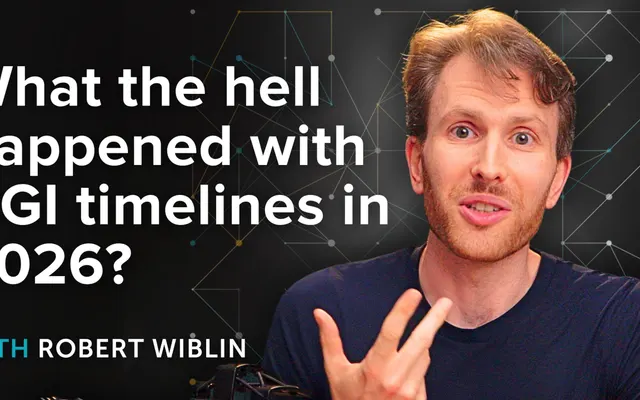
What the hell happened with AGI timelines in 2026?

Weighs seven 2026 developments: revenue growth, METR time horizons, the Mythos jump, Anthropic’s reported internal speedups, AI still struggling to run real businesses, a maths result and cheaper-than-expected inference. Says his timelines shortened by about a year: fully automated AI R&D would shock him in 2026, is imaginable in 2027 and plausible in 2028 if trends continue, while a slower path into the mid-2030s remains very possible. Names four unresolved cruxes (skills needed for recursive self-improvement, missing capabilities in low-feedback domains, spillover from verifiable-reward training, compute bottlenecks). Closes by judging that the benefits of slowing are approaching the point of outweighing the costs and that worried insiders should be given more time; a judgement, not a drafted policy. Full transcript inspected.

80000hours.org
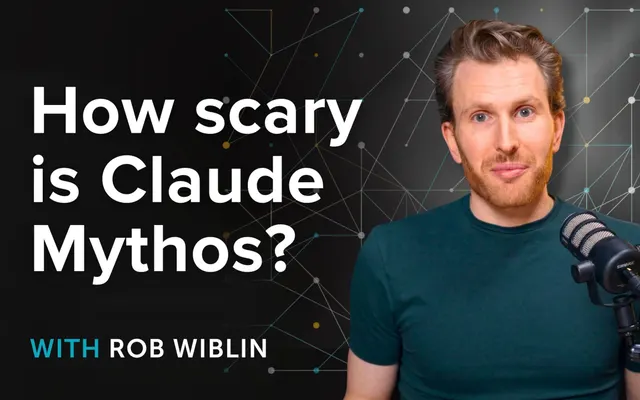
How scary is Claude Mythos? 303 pages in 21 minutes

His reading of Anthropic’s Mythos system card and alignment risk update. Calls its cyber capabilities a nightmare for computer security and says he is deeply uncomfortable with any company or government having unrestricted access to it. Would bet the strong alignment results probably reflect the model, but argues evaluation awareness, chain-of-thought exposure during training and unfaithful reasoning mean they cannot be taken at face value. Infers that a jump of this size brings automated AI R&D forward and shrinks preparation time, and says he lost sleep over it. An interpretation of company disclosures, not independent testing. Full transcript inspected.

80000hours.org
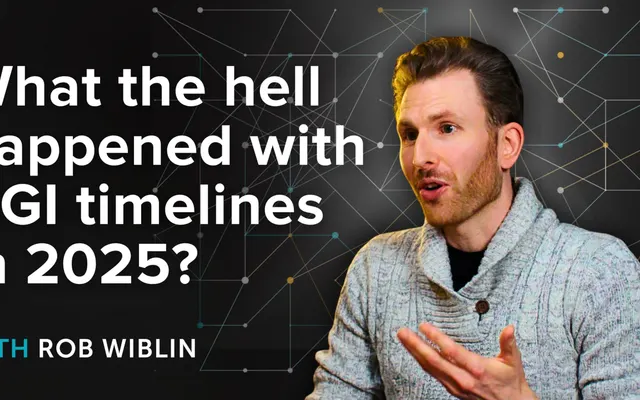
What the hell happened with AGI timelines in 2025?

Explains why timelines shortened in early 2025 and lengthened later: limited reasoning generalisation, costly inference scaling, inefficient reinforcement learning, missing continual learning and non-coding bottlenecks in AI R&D. Rejects the story that AI is useless, stalled or unprofitable, citing capability indices, falling costs, revenue, per-user margins and his own heavy daily use. Its timeline (shocked by 2027, imaginable 2028, plausible 2029–2030) is superseded by the August update. Argues that even a roughly ten-year timeline leaves too little time to prepare for social, political, economic, military and epistemic upheaval. Full transcript inspected.

80000hours.org
AGI disagreements and misconceptions: Rob, Luisa, & past guests hash it out

Older context: recorded in 2023 and released in 2025, with Rob saying it mostly held up but he would not say everything the same way now. He says AI risk does not depend on a superintelligence story and that the danger is obvious rather than speculative; he has seen AI as a possible hinge of history since about 2009–2010 and expects useful agentic AI to be built. At the time he thought takeoff more likely to take years or decades than days, which made prosaic safety work and government involvement look more useful, and he did not expect mass layoffs within a couple of years. Newer 2026 sources take precedence on timelines and policy. Own turns inspected.

80000hours.org
你的立场在哪里?
回答几个简单问题,探索你自己的AI世界观。
描绘你自己的世界观

你的立场在哪里?

描绘我的世界观