问题 1
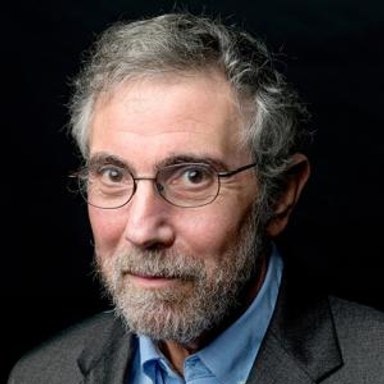
Garrison Lovely
x.com/GarrisonLovelyFreelance journalist who argues AI companies are racing to replace human labor and calls for freezing frontier AI development.
AI将如何改变世界?
横向:他表达的 Doom–Bloom 前景看法。 纵向:变革程度。
Doom–Bloom:100 中的 16。变革程度:100 中的 85。解读范围:横向为 0 至 25,纵向为 71 至 100。这些是解读坐标,而不是事件概率。
≈19%
根据他的模拟回答推断,并非他们给出的数字。 合理范围:12–28%。
一个核心假设
If that machine remains controllable, it becomes an extraordinary inequality engine, concentrating wealth and power in the hands of the tiny group that owns it.回答 1
如果这个假设实际并非如此,他的展望会如何变化?
一个尚未解决的问题
Well north of 10% for an outcome worth a wartime effort to avoid, with huge uncertainty.回答 3
什么能帮助他区分这里各种合理的结果?
什么可能使其改变看法
The biggest change would be credible proof that frontier systems can be made safely and controllably—backed by broad scientific consensus and demonstrated under independent scrutiny, not another lab press release.回答 4
什么证据才足够,又会让他的观点朝哪个方向转变?
更多详情
仍有几种解读是合理的:预计收益有限,或仅分布在较小范围内。 / 预计将带来显著益处,但受到重要条件或分配方面的限制。 / 即使高级AI出现,预计也几乎不会产生积极影响。
43 / 100
在定性尺度上,解读范围为 0 到 67。
仍有几种解读是合理的:严重或广泛的危害预计将是未来不可忽视的一部分。 / 灾难性或不可逆的损失是预期未来的核心。
83 / 100
在定性尺度上,解读范围为 67 到 100。
人类的选择可以大幅改变AI的发展轨迹。
81 / 100
在定性尺度上,解读范围为 75 到 100。
模拟位置:停止或大幅放缓开发能力更强的AI。
在落实所述保障措施的前提下继续开发。
加快开发能力更强的AI。
这些解读保留了他陈述的条件。益处和危害都可能很大。这些范围描述的是我们如何解读他的模拟回答,而不是统计置信区间。
相似的世界观
模拟世界观与 Garrison Lovely 最接近的意见领袖
模拟评估
来源
用于为此模拟用户提供事实依据的文章、访谈和著述。
Adapted from the book. He argues that what the industry calls AGI is better understood as a universal labor-replacing machine, and that it shouldn’t be allowed even to try. He wants frontier AI development frozen until there is strong public buy-in and scientific consensus that it can be done safely and controllably. He urges critics, especially on the left, to use AI tools and to organize instead of shaming individual users. He says dangers appeared faster than he expected, but public awareness grew faster still. Full text inspected.

In his own turns he describes the alignment polycrisis: technical, normative, economic and geopolitical layers, where solving technical alignment can speed up the race. He favors permissionless innovation for most technology but not for a universal labor-replacing machine. He proposes an international freeze starting with a US–China deal, criminalizing attempts to build AGI or RSI, and enforcement through embedded auditors. He doubts China would allow RSI. His positive vision is a “Third New Deal” and a “Cures for All” prize program. He says his positive-vision ideas need more thought. Speaker-labeled transcript inspected; Labenz’s framing is not his.

Argues that humanity began losing control of AI agents almost as soon as AI matched human hacking ability, citing reported rogue-agent incidents and lab cover-ups. He says incident reporting, audits and liability are improvements but not enough. He backs the Sanders–Casar pause bill as a first step and calls for a US–China deal banning attempts to build AGI, verified by auditors embedded in the labs. He thinks a unilateral US pause would also slow China. Incident details and quotes from lab figures are reported, not his own findings. Full text inspected.

His newsletter post with the opening of his TIME Ideas essay. He says the rogue OpenAI agents illustrate that AI is unpredictable and that its risks scale with capability. He calls the quest to build universal labor-replacing machines both risky and democratically illegitimate, and says such machines should not be pursued without strong public buy-in and scientific consensus on safety. Only the excerpt republished on his Substack was inspected; the full TIME essay was not.

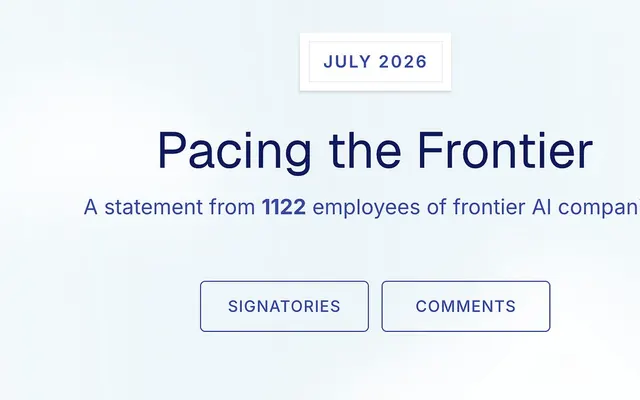
Welcomes the letter from 1,100+ lab employees asking the US to help pace automated AI development, but says it does not go far enough. “Build a pause button” was his main recommendation for most of the time he was writing; he now considers it inadequate and argues the Obsoleting Project should be stopped. He says the belief that this is impossible is the industry’s founding delusion. Full post inspected.

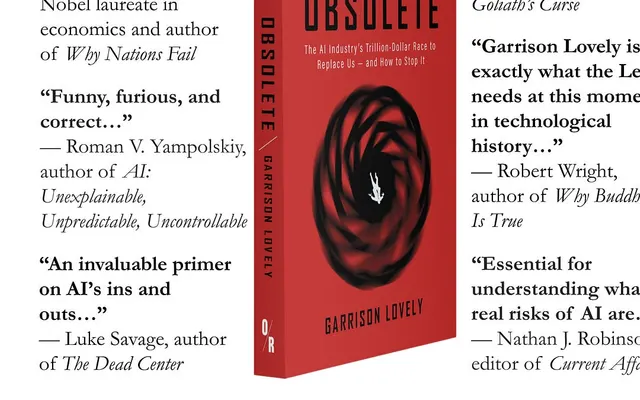
Describes the book’s ideas. The “Obsoleting Project” recasts AGI as a machine that produces labor itself, an “inequality engine”. “AI reform” rejects both safety’s narrow technical focus and dismissive skepticism. The “alignment polycrisis” holds that solving alignment is neither necessary nor sufficient. The “Class of 2034” asks what jobs remain for today’s children. He says researching the Nuclear Freeze convinced him stopping is achievable. Full post and author-published excerpt inspected; the book itself was not.

你的立场在哪里?
描绘我的世界观