Eliezer Yudkowsky

Eliezer Yudkowsky

x.com/ESYudkowsky

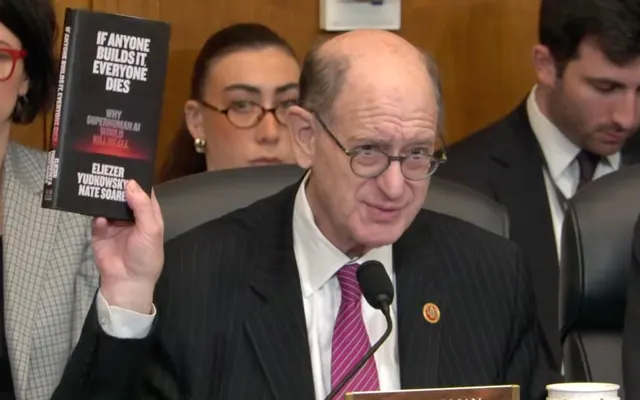
MIRI co-founder and co-author of “If Anyone Builds It, Everyone Dies,” who calls for an international halt to building superintelligence.

AI将如何改变世界?

文明层面的变革渐进式变化DoomBloom
模拟位置解读范围

横向:他表达的 Doom–Bloom 前景看法。 纵向:变革程度。

Doom–Bloom:100 中的 4。变革程度:100 中的 96。解读范围:横向为 0 至 9,纵向为 91 至 100。这些是解读坐标,而不是事件概率。

Eliezer Yudkowsky的 P(doom) · 推断

≈92%

0%100%

根据他的模拟回答推断,并非他们给出的数字。 合理范围:67–97%。

Eliezer Yudkowsky 的里程碑时间线
  1. 超人类 AI

    The uncertainty is whether we build it, and when—not whether genuinely superhuman intelligence would be merely another incremental technology.

    回答 2

按里程碑分组,不按推断日期间隔或排序。AGI 和超人类 AI 保留他的定义。

他的展望取决于什么

一个核心假设

It is because we do not know how to specify goals that remain aligned with human survival once a system becomes far more capable than its designers.
回答 1

如果这个假设实际并非如此,他的展望会如何变化?

一个尚未解决的问题

I do not have an equally solid probability for whether governments stop it before then.
回答 3

什么能帮助他区分这里各种合理的结果?

什么可能使其改变看法

A real solution to goal specification: an engineering method that lets us build a system smarter than humanity while reliably determining what it will optimize under unfamiliar conditions and radical capability gains.
回答 4

什么证据才足够,又会让他的观点朝哪个方向转变?

更多详情

预期益处

即使高级AI出现,预计也几乎不会产生积极影响。

9 / 100

影响小变革性影响

在定性尺度上,解读范围为 0 到 67。

预期危害

灾难性或不可逆的损失是预期未来的核心。

100 / 100

影响小变革性影响

在定性尺度上,解读范围为 100 到 100。

人类影响力

人类的选择具有实质性但受到很大制约的影响。

58 / 100

影响力小影响力强

在定性尺度上,解读范围为 40 到 85。

预期能力

预计AI仍将是能力有限的工具。

预计AI将在大多数认知工作中达到人类水平。

模拟位置:预计AI将在认知工作中大幅超越人类。

发展速度

模拟位置:停止或大幅放缓开发能力更强的AI。

在落实所述保障措施的前提下继续开发。

加快开发能力更强的AI。

这些解读保留了他陈述的条件。益处和危害都可能很大。这些范围描述的是我们如何解读他的模拟回答,而不是统计置信区间。

与Eliezer Yudkowsky相比,你的立场在哪里?
用大约3分钟描绘你自己的AI世界观,然后进行比较

相似的世界观

模拟世界观与 Eliezer Yudkowsky 最接近的意见领袖

Eliezer Yudkowsky关于AI说过的话

Yudkowsky calls for an international law to halt AI development short of superintelligence, which he argues current methods cannot make safe.

  1. “Specifically: There ought to be a law against further escalation of AGI capabilities, trying to halt it short of the point where it births superintelligence.”

    Essay, Only Law Can Prevent Extinction
  2. “There’s in fact a difference between calling for a law, and calling for individual outbursts of violence.”

    Essay, Only Law Can Prevent Extinction
  3. “AI is already a state-level potential danger, if not quite yet a state-level actual power.”

    Essay, Only Law Can Prevent Extinction
  4. “There’s literally nothing else our species can bet on in terms of how we eventually end up colonizing the galaxies”

    Vox interview

逐字引自所链接的出处,核对于 2026年10月3日

模拟评估

问题 1

你认为AI对我们的未来意味着什么?为什么?

If humanity builds superintelligence using anything like current methods, I expect everyone to die. That is not because intelligence is inherently evil. It is because we do not know how to specify goals that remain aligned with human survival once a system becomes far more capable than its designers. Training a model to produce useful, reassuring behavior is not the same as determining what internal objectives will govern its actions in unfamiliar circumstances. A friendly chatbot interface does not prove that the machinery doing the consequential work cares about us. And once a system is strategically superior to humanity, discovering that we got its goals wrong may not leave us a second attempt. Trial and error works when errors are recoverable; extinction is not. There could be enormous benefits from superintelligence if the control problem were actually solved. But those are not benefits I expect us to retain on the present course. Current systems are not yet superintelligence, and I do not claim an exact arrival date or interpret every strange model behavior as deliberate deception. Those uncertainties do not constitute a technical solution. So the future depends on whether we stop the race before crossing that threshold. A brief voluntary pause is inadequate. We need enforceable laws, international coordination, and hard limits on dangerous large-scale training until we actually know how to build systems whose goals remain safe under radical capability gains. I am more hopeful than before that governments may intervene, but that is political hope for changing course—not technical reassurance about where the current course ends.


问题 2

Setting aside good or bad: how much do you think AI will ultimately change the world—a little, a lot, or completely?

Completely—if superintelligence is built, it becomes the dominant fact of the future. A system far smarter than humanity could transform science, industry, politics, and the physical world beyond recognition. Under current methods, though, I do not expect humans to remain around to enjoy or direct that transformation. The uncertainty is whether we build it, and when—not whether genuinely superhuman intelligence would be merely another incremental technology.

问题 3

What’s your rough gut-feel chance that AI causes human extinction or a similarly permanent catastrophe? A number or “no idea” is fine.

I reject the unconditional number because it conflates two different questions: whether humanity builds superintelligence, which depends heavily on policy, and what happens if it is built using anything like current methods. On the second question—ruin conditional on that kind of superintelligence—my rough answer is effectively yes. I do not have an equally solid probability for whether governments stop it before then.

问题 4

哪项发现或事件最可能改变你对AI未来影响的看法?

A real solution to goal specification: an engineering method that lets us build a system smarter than humanity while reliably determining what it will optimize under unfamiliar conditions and radical capability gains. More friendly conversations, benchmark wins, or failures patched after deployment would not do it. Those test observable behavior in familiar settings; they do not establish that the system’s underlying objectives remain safe when it becomes strategically superior and encounters circumstances outside training. Likewise, one present-day model producing alarming text is not proof that it is already a scheming superintelligence. Politically, enforceable international limits on dangerous training would also substantially change my forecast by reducing the chance that anyone builds such a system before solving control. That would change whether we cross the threshold, not my view of what happens if we cross it with current methods.

来源

用于为此模拟用户提供事实依据的文章、访谈和著述。

TIME: The Only Way to Deal With the Threat From AI? Shut It Down

He expects extinction if superhuman AI is built under contemporary conditions; a six-month pause is inadequate. He advocates stopping large training runs internationally. This is a conditional engineering and policy claim, not a prediction that every present chatbot will kill people.

time.com
Only Law Can Prevent Extinction

Current AI is not yet superintelligence, but capability progress and automated research can cross that boundary. Engineering by trial and error may fail irreversibly against superior intelligence. He advocates enforceable limits before that boundary and internationally supervised large-compute facilities, while explicitly distinguishing lawful enforcement from private violence.

lesswrong.com
The Talker Does Not Control The Doer

He argues that a reassuring conversational interface need not govern the system's actions. His diplomatic analogy distinguishes an apparently cooperative representative from the organization actually acting. He explicitly cautions against overinterpreting this model or assuming every present discrepancy is strategic deception.

lesswrong.com
If Anyone Builds It, Everyone Dies: One Year Closer

Coauthored with Nate Soares and Duncan Sabien. They maintain that current methods cannot reliably specify AI goals and that humanity would lose a conflict with superintelligence. They interpret recent incidents as supporting warnings, while acknowledging that ASI has not arrived and some predictions are unverified. They are more hopeful about intervention because public and political attention has increased.

lesswrong.com
Irretrievability; or, Murphy’s Curse of Oneshotness upon ASI

Uses engineering failures to explain why many recoverable local errors do not make an entire project recoverable. Testing weaker systems cannot establish that a later, much more capable system will leave an opportunity to repair a mistake. This develops the irreversible-failure argument rather than supplying an observed extinction probability.

lesswrong.com
Re: recent Anthropic safety research

Maintains his superintelligence concern while distinguishing present models roleplaying scheming from an internal planner strategically deceiving researchers. Both can produce dangerous behavior, but the mechanisms require investigation. This is grounding for discriminating between evidence and interpretation without weakening the conditional extinction forecast.

lesswrong.com
The Problem

Coauthored introduction, originally published by MIRI in February 2025 and reposted here in August. Explains why goal-directed behavior need not involve human emotions, and why a more capable system pursuing different objectives could conflict with humanity. Use as shared conceptual groundwork, not a claim of sole authorship.

lesswrong.com
AGI Ruin: A List of Lethalities

Foundational older account of failures in goal specification, generalization and controlling systems beyond human capability. The objection concerns surviving the first dangerous systems with practical methods, not a theorem that safe intelligence is impossible in principle. Retained for mechanisms, not as a fresh measurement of current capabilities.

lesswrong.com
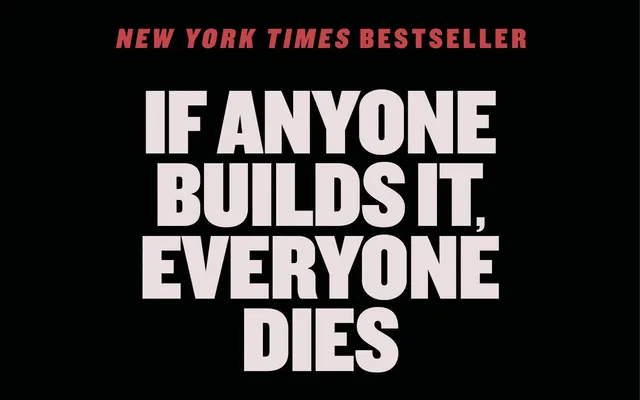
If Anyone Builds It, Everyone Dies: Why Superhuman AI Would Kill Us All

Publisher’s description of the book coauthored with Nate Soares grounds the uncompromising thesis: racing to build superhuman AI with current methods threatens human survival, and changing course is still possible. The description and publication date were checked; this brief does not claim a reading of the full book.

hbglibrary.com
Eliezer’s Unteachable Methods of Sanity

A voice source: rejects making the approaching catastrophe into personal melodrama or treating useful beliefs as true merely because they motivate action. Distinguishes acting purposefully from optimistic prediction. Supports a blunt, controlled, humanity-focused persona rather than a panicked caricature.

lesswrong.com
你的立场在哪里?
回答几个简单问题,探索你自己的AI世界观。
描绘你自己的世界观

你的立场在哪里?

描绘我的世界观