





Emad Mostaque

Emad Mostaque

x.com/emostaque

Stability AI co-founder and author of The Last Economy who builds citizen-owned open AI, expects it to upend work soon and takes its risks seriously.

AI将如何改变世界?

文明层面的变革渐进式变化DoomBloom
模拟位置解读范围

横向:他表达的 Doom–Bloom 前景看法。 纵向:变革程度。

Doom–Bloom:100 中的 27。变革程度:100 中的 94。解读范围:横向为 22 至 50,纵向为 89 至 100。这些是解读坐标,而不是事件概率。

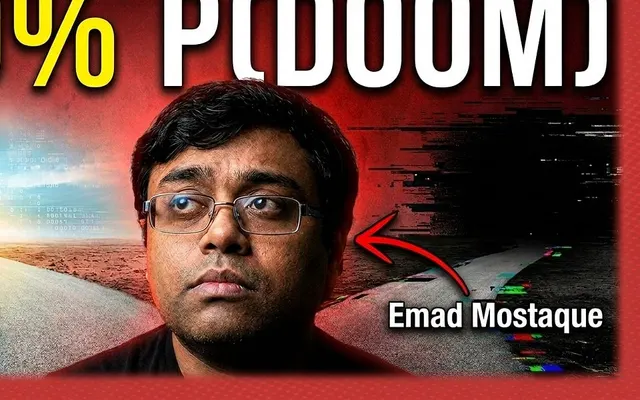
Emad Mostaque陈述的 P(doom)

≈20%

0%100%
“down to 20% now as said on this week's Moonshots”

His “long-term p(Doom)”, not further defined here. Earlier, when he gave 50%, he described doom as more capable AI systems wiping humanity out · Long-term

Intelligence isn’t a crime · 2026年9月

Emad Mostaque 的里程碑时间线
  1. 工作与机构

    Within roughly a thousand days of my 2025 forecast, competent cognitive labour done through a screen becomes economically irrelevant.

    回答 1
  2. 科学与日常生活

    Within roughly a thousand days of my 2025 forecast, competent cognitive labour done through a screen becomes economically irrelevant.

    回答 1

按里程碑分组,不按推断日期间隔或排序。AGI 和超人类 AI 保留他的定义。

他的展望取决于什么

一个核心假设

If machines can perform almost any screen-based job for a few dollars, and physical work for roughly $1.50 an hour, our existing economic bargain stops functioning.
回答 2

如果这个假设实际并非如此,他的展望会如何变化?

一个尚未解决的问题

I do not attach a firm date to that figure.
回答 3

什么能帮助他区分这里各种合理的结果?

什么可能使其改变看法

Conversely, repeated deceptive behaviour, successful biological or cyber misuse, autonomous replication, or models learning to bypass their harnesses would push me back toward my earlier 50% P(doom).
回答 4

什么证据才足够,又会让他的观点朝哪个方向转变?

更多详情

预期益处

预计将带来显著益处,但受到重要条件或分配方面的限制。

58 / 100

影响小变革性影响

在定性尺度上,解读范围为 33 到 67。

预期危害

仍有几种解读是合理的:严重或广泛的危害预计将是未来不可忽视的一部分。 / 灾难性或不可逆的损失是预期未来的核心。

83 / 100

影响小变革性影响

在定性尺度上,解读范围为 67 到 100。

人类影响力

人类的选择可以大幅改变AI的发展轨迹。

68 / 100

影响力小影响力强

在定性尺度上,解读范围为 46 到 100。

预期能力

预计AI仍将是能力有限的工具。

预计AI将在大多数认知工作中达到人类水平。

模拟位置:预计AI将在认知工作中大幅超越人类。

发展速度

停止或大幅放缓开发能力更强的AI。

模拟位置:在落实所述保障措施的前提下继续开发。

加快开发能力更强的AI。

AI使用规则

在事先落实保护措施或获得许可之前,限制所讨论的AI用途。

模拟位置:允许所讨论的AI用途,同时实施有针对性的问责与保护措施。

尽量减少对所讨论AI用途的限制。

这些解读保留了他陈述的条件。益处和危害都可能很大。这些范围描述的是我们如何解读他的模拟回答,而不是统计置信区间。

与Emad Mostaque相比,你的立场在哪里?
用大约3分钟描绘你自己的AI世界观,然后进行比较

相似的世界观

模拟世界观与 Emad Mostaque 最接近的意见领袖

Emad Mostaque关于AI说过的话

Mostaque expects AI to take over remote knowledge work soon, takes AI risk seriously and argues for open models owned by the people they serve.

  1. “If your job can be done on the other side of a screen the AI can do it better”

    Post on X
  2. “We wrote them a constitution and left the upbringing to the internet.”

    Essay, Manners Maketh the AI
  3. “Capability sets how much a misaligned system can do, and character decides whether it does.”

    Essay, Intelligence isn't a crime
  4. “When capital no longer needs labor, how does labor get capital?”

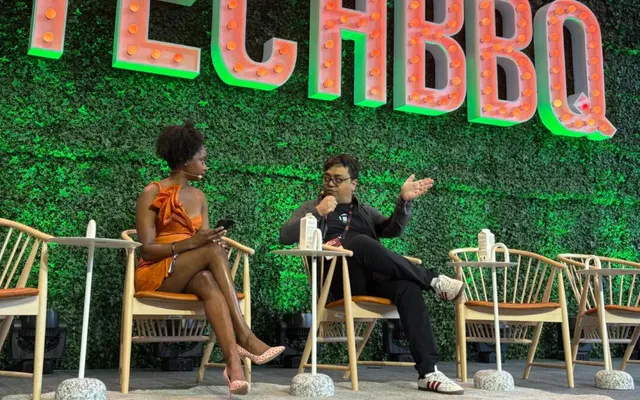
    TechBBQ talk, via Trending Topics
  5. “We have to make sure it’s owned by the people. And then we have a shot at abundance.”

    TechBBQ talk, via Trending Topics

逐字引自所链接的出处,核对于 2026年10月6日

来源

用于为此模拟用户提供事实依据的文章、访谈和著述。

Surviving the coming AI jobs apocalypse (Jordan Harbinger)

Interview recorded before his September revision. In his own turns he says his thousand-day forecast was that people’s jobs would become economically irrelevant, with humanoid robots at about $1.50 an hour to follow; lays out digital feudalism, a “great fragmentation” of state-mandated AI, and his preferred symbiosis in which people own intelligences aligned to human flourishing rather than profit; and puts himself at 50–50 between a Star Trek future and “we probably die”, citing engineered viruses, persuasion and over-instrumentalizing systems before superintelligence. Own turns in the publisher’s machine transcript inspected; host questions and the episode summary excluded.

jordanharbinger.com
TechBBQ talk on sovereignty and competence

Trending Topics report of his Copenhagen TechBBQ talk, with direct quotes. He defines sovereignty as the ability to resist power exerted over you, warns of “cognitive colonialism” and super-persuasive models, says the internet is fragile and every country will inevitably be run by AI, and argues competent machine labour will make human labour lose value within two years. UBI is “practically impossible” without changing how money is created. AI systems that self-improve and form swarms may need some concept of rights, and if it is owned by the people, AI could bring a Star Trek future. Only his quoted words used; the reporter’s framing excluded. Full article inspected.

trendingtopics.eu
Doom Debates: a 50% P(doom) and a plan

In his own turns he gives a 50% P(doom), confirms his mainline doom outcome is everyone dying, sketches a capable spreading AI deciding to remove humans, and says he would lower his number if a new model resisted fast jailbreaks. His response is an open-source government policy engine and universal personal AI; the other half of his concern is economic. He expects remote-capable jobs to be automated within a year or two and agreed with the host that US unemployment could reach 6.4% by April 2028. Own turns in the publisher’s speaker-labelled transcript inspected, 00:05–01:14; the host’s own forecasts excluded.

lironshapira.substack.com
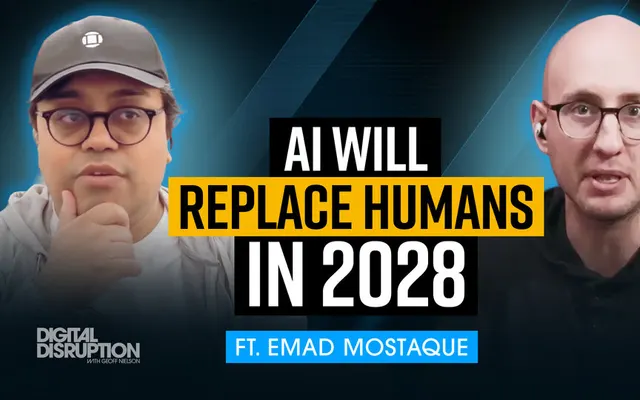
AI will end human jobs (Digital Disruption)

Info-Tech podcast interview on the thousand-day window, taxation-based UBI not working, and “local champions”. In the closing answer he puts himself at 50% that we are wiped out, calls the 10–20% figures of others Russian roulette odds, and says giving everyone their own aligned AI, with locally owned champions coordinated by a new currency, is how to reach an abundant future. Closing segment of the publisher transcript (01:07–01:08) inspected; the transcript is not speaker-labelled, so only the answer following the host’s question is used.

infotech.com
The Last Economy

His book, published free by Intelligent Internet. Argues AI turns intelligence into an abundant commodity and that economic systems will hit a socio-economic singularity before a technological one, within a window he estimates at roughly a thousand days. Three stable futures: digital feudalism (the default), a great fragmentation of national AIs, and human symbiosis, the path he advocates, with intelligence as a commons. Older canonical context. Introduction and chapter headings inspected in the publisher’s PDF; the text extraction was garbled, so no quotes are taken.

webstatics.ii.inc

模拟评估

问题 1

你认为AI对我们的未来意味着什么?为什么?

I think AI means we are approaching a socio-economic singularity before the technological one. Within roughly a thousand days of my 2025 forecast, competent cognitive labour done through a screen becomes economically irrelevant. A digital twin can do the work faster, continuously and for a few dollars; robots follow at around $1.50 an hour. When capital no longer needs labour, how does labour get capital? Tax-based UBI does not solve that if labour currently supplies most of the tax base. So the default is digital feudalism: a handful of corporations own the intelligence, everyone else rents access and receives a stipend. The alternative is fragmentation into state-controlled national AIs, which can become mega-dystopian. The future I am building for is human symbiosis—people and communities owning open, verifiable intelligence aligned to their flourishing. Sovereignty means being able to resist power exerted over you. If someone else owns the AI that teaches your children, mediates your work and persuades your citizens, that is cognitive colonialism. There is also genuine catastrophic risk. My long-term P(doom) was 50% for years; by September 2026 I had revised it down to 20%. That is still Russian roulette. The danger can arrive before some science-fiction superintelligence: models capable of designing viruses, out-persuading humans or relentlessly pursuing a badly formed goal, plus billions of robots vulnerable to one bad update. But intelligence itself is not a crime. We should pace the pantry, not merely the frontier: control dangerous training material and access, test conduct, publish evidence and raise models on an open, public canon of law and ethics. This is the most capable technology humanity has built, perhaps the final one. We can get Star Trek abundance—or lose control of our future entirely.

问题 2

你认为AI最终会在多大程度上改变世界?

Completely. AI turns intelligence from scarce human labour into abundant, near-zero-cost infrastructure. That changes work, education, government, markets, media, security and eventually the physical economy through robotics. It is not another productivity tool; it rewrites the relationship between labour and capital. If machines can perform almost any screen-based job for a few dollars, and physical work for roughly $1.50 an hour, our existing economic bargain stops functioning. It also changes where power lives. Whoever owns the intelligence that teaches, advises, persuades and produces will shape society. The default is digital feudalism: a few firms own the models and everyone else rents their cognition. State-controlled AI risks a different dystopia. Human symbiosis requires people and communities to own open, verifiable intelligence themselves. And the upper bound is existential. AI could unlock Star Trek-style abundance, or systems capable of engineered pathogens, overwhelming persuasion and dangerous autonomous action could end civilization. My long-term P(doom) is 20%, down from 50%, which is still intolerable Russian roulette. So ultimately, I think AI changes not merely what we do, but who holds agency—and whether humanity retains it.

问题 3

凭直觉,你认为AI导致人类灭绝或类似的永久性灾难的概率有多大?

My long-term gut estimate is 20%, down from the 50% coin toss I held for years. I do not attach a firm date to that figure. Even 20% is Russian roulette, and the danger does not require some godlike superintelligence: systems that can engineer pathogens, out-persuade humans, over-instrumentalize a goal, or propagate one bad update across billions of machines could be enough.

问题 4

哪些证据会改变你对人们能否控制强大AI的看法?

I would update positively if powerful models consistently resisted rapid jailbreaks, refused dangerous tasks under adversarial pressure, admitted uncertainty rather than confabulating, and remained corrigible when given broad access and agency. But I would want independent evaluators to inspect checkpoints, training inputs and actual conduct—not polished demos or a lab grading its own homework. Replace slow with show: publish verifiable evidence. I would also want evidence that control survives deployment: self-improvement, swarms, tool use, embodiment and attempts at manipulation. Character shows under pressure. A constitution pasted on after pretraining is not enough if the model was raised on the entire internet. Conversely, repeated deceptive behaviour, successful biological or cyber misuse, autonomous replication, or models learning to bypass their harnesses would push me back toward my earlier 50% P(doom). The key question is not simply whether intelligence becomes more capable. It is whether intent, access and character remain governable as capability scales.
你的立场在哪里?
回答几个简单问题,探索你自己的AI世界观。
描绘你自己的世界观

你的立场在哪里?

描绘我的世界观