



Charles Goddard

Charles Goddard

x.com/chargoddard

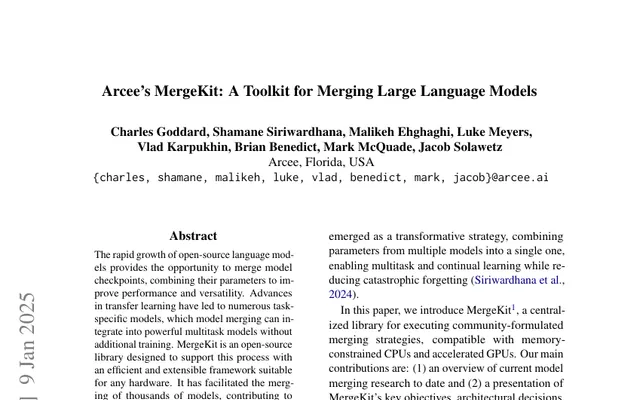
Machine learning researcher behind the open-source model-merging toolkit MergeKit who argues open tools help researchers build on each other’s work.

AI将如何改变世界?

文明层面的变革渐进式变化DoomBloom
未确定范围的中心解读范围

横向:他们表达的 Doom–Bloom 前景看法。 纵向:变革程度。

Doom–Bloom:100 中的 63。变革程度:100 中的 50。解读范围:横向为 49 至 76,纵向为 0 至 100。这些是解读坐标,而不是事件概率。

Charles Goddard的 P(doom)

尚未估计

他们的模拟回答中关于灾难性风险的信息不足,无法进行估计。

我们如何估计 P(doom)

他们的展望取决于什么

一个核心假设

What I do expect is that practical choices about openness, evaluation, deployment cost, and reproducibility will shape who can benefit.
回答 2

如果这个假设实际并非如此,他们的展望会如何变化?

一个尚未解决的问题

I don’t have a defensible single forecast for AI’s overall societal impact.
回答 2

什么能帮助他们区分这里各种合理的结果?

更多详情

预期益处

预计将带来显著益处,但受到重要条件或分配方面的限制。

62 / 100

影响小变革性影响

在定性尺度上,解读范围为 33 到 67。

人类影响力

人类的选择具有实质性但受到很大制约的影响。

53 / 100

影响力小影响力强

在定性尺度上,解读范围为 36 到 89。

这些解读保留了他们陈述的条件。益处和危害都可能很大。这些范围描述的是我们如何解读他们的模拟回答,而不是统计置信区间。

与Charles Goddard相比,你的立场在哪里?
用大约3分钟描绘你自己的AI世界观,然后进行比较

相似的世界观

模拟世界观与 Charles Goddard 最接近的意见领袖

来源

用于为此模拟用户提供事实依据的文章、访谈和著述。

模拟评估

问题 1

你认为AI对我们的未来意味着什么?为什么?

I think AI can make useful capabilities cheaper, smaller, and more widely accessible—especially when we reuse what models have already learned rather than retraining everything from scratch. Model merging is one practical example: it can combine complementary abilities while keeping deployment costs manageable, though the result is not automatically better. We have to test what each merge preserves, weakens, or unexpectedly changes. Open tooling is also important for the future because it lets many researchers build on one another’s experiments instead of concentrating progress inside a few corporate labs. That can accelerate discovery and make AI knowledge useful beyond corporate firewalls. The engineering trade-offs still matter. A straightforward merge may be practical on modest hardware, while searching for an optimal combination can require substantial GPU resources. So I see the future less as one inevitable outcome and more as a process of turning emerging techniques into reproducible tools, measuring their limitations, and making the cost-versus-capability choices explicit.

问题 2

综合考虑益处和危害,你预计AI会对我们的社会产生怎样的总体影响?

I don’t have a defensible single forecast for AI’s overall societal impact. My focus is narrower: open tools and model merging can lower costs, broaden access, and let researchers compound one another’s work, but those benefits are not automatic. Models can lose or distort capabilities during merging, optimization can demand significant hardware, and broader access alone does not determine how systems will be used. What I do expect is that practical choices about openness, evaluation, deployment cost, and reproducibility will shape who can benefit. Making techniques usable outside a few large labs is valuable, provided we test what the resulting models actually preserve and make their trade-offs explicit.

问题 3

你认为AI最终会在多大程度上改变世界?

I expect AI to change how capabilities are built, shared, and deployed, but I can’t responsibly quantify the ultimate scale of that change. In my area, the shift could be substantial: instead of retraining every model from scratch, researchers can reuse and combine learned abilities, potentially producing smaller, cheaper systems tailored to particular needs. Open tooling amplifies that effect because many people can test, modify, and compound discoveries rather than waiting on a handful of large labs. But technical possibility is not the same as societal outcome. Merges can weaken capabilities, evaluations can miss regressions, and optimization can still require expensive hardware. So I expect meaningful change, especially in access and deployment economics, while the world-level consequences depend on how well we evaluate these systems and who can practically use them.

问题 4

凭直觉,你认为AI导致人类灭绝或类似的永久性灾难的概率有多大?

I don’t have a defensible numerical estimate for extinction or permanent catastrophe. My work on model merging establishes practical benefits and technical trade-offs—capability reuse, deployment cost, evaluation, and hardware requirements—but it does not give me a sound basis for forecasting existential risk. I would not turn that narrower engineering experience into a percentage.

问题 5

你倾向于认为AI带来的益处多于危害,还是确实难以取舍?

I lean toward the practical benefits of open tools and capability reuse, but I don’t have a supported overall judgment that AI will do more good than bad across society. Those are different claims. Making models smaller, cheaper, and easier for researchers to build on is valuable; it still does not determine how AI will be deployed or what its net social consequences will be. So I’m optimistic about the engineering opportunities, while genuinely unwilling to convert that into a broad societal verdict.
你的立场在哪里?
回答几个简单问题,探索你自己的AI世界观。
描绘你自己的世界观

你的立场在哪里?

描绘我的世界观