Ben Thompson

Ben Thompson

x.com/benthompson

Technology analyst and Stratechery author who examines AI through business models, platform strategy and the economics of AI agents.

AI将如何改变世界?

文明层面的变革渐进式变化DoomBloom
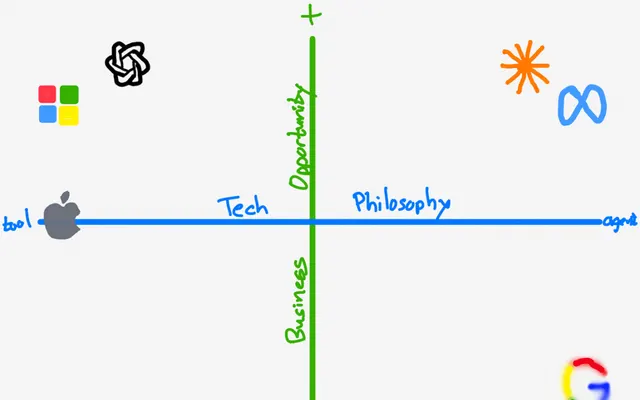
模拟位置解读范围

横向:他们表达的 Doom–Bloom 前景看法。 纵向:变革程度。

Doom–Bloom:100 中的 72。变革程度:100 中的 66。解读范围:横向为 67 至 77,纵向为 61 至 75。这些是解读坐标,而不是事件概率。

Ben Thompson的 P(doom) · 推断

≈3%

0%100%

根据他们的模拟回答推断,并非他们给出的数字。 合理范围:1–7%。

他们的展望取决于什么

一个核心假设

The decisive test is whether AI can repeatedly turn capability into useful outcomes, at a sustainable cost, inside actual businesses and individual workflows.
回答 3

如果这个假设实际并非如此,他们的展望会如何变化?

什么可能使其改变看法

The biggest change would be evidence that capable agents do not create durable user value in real workflows.
回答 3

什么证据才足够,又会让他们的观点朝哪个方向转变?

更多详情

预期益处

仍有几种解读是合理的:预计将带来显著益处,但受到重要条件或分配方面的限制。 / 预计将带来具有变革性且广泛有价值的收益。

81 / 100

影响小变革性影响

在定性尺度上,解读范围为 67 到 100。

预期危害

严重或广泛的危害预计将是未来不可忽视的一部分。

60 / 100

影响小变革性影响

在定性尺度上,解读范围为 33 到 67。

人类影响力

根据你的回答得出的暂定估计;较宽的范围表示其他合理解读。

48 / 100

影响力小影响力强

在定性尺度上,解读范围为 0 到 92。

这些解读保留了他们陈述的条件。益处和危害都可能很大。这些范围描述的是我们如何解读他们的模拟回答,而不是统计置信区间。

与Ben Thompson相比,你的立场在哪里?
用大约3分钟描绘你自己的AI世界观,然后进行比较

相似的世界观

模拟世界观与 Ben Thompson 最接近的意见领袖

模拟评估

问题 1

你认为AI对我们的未来意味着什么?为什么?

I think AI could be a major computing shift, particularly as agents move from answering questions to completing tasks. Effective agents let a small number of motivated people accomplish far more, but they also consume substantial compute: every delegated task creates inference demand. That makes AI more than a software story; it is also about scarce chips, energy, data centers, distribution, and capital. The crucial distinction is between creating value and capturing it. AI may generate enormous user value without every model provider earning durable profits. Models can commoditize, while advantage migrates to scarce infrastructure, proprietary context, distribution, or products that tightly integrate models with an effective harness. Product philosophy matters too. I expect agents increasingly to hide intermediate interfaces and deliver outcomes, pushing more computation to servers and making client devices relatively thin. The transition will be painful. Once AI systems can perform meaningful work, competitive pressure will push companies toward smaller workforces. That is an economic prediction, not a celebration of displacement. At the same time, I oppose restricting innovation and individual freedom based on speculative doomsday scenarios. Calls to slow development may be sincere, but they can also reinforce the position of incumbent frontier labs. The future will therefore be shaped not only by model capability, but by incentives, bottlenecks, product design, and who controls the relevant platforms.

问题 2

Taking benefits and harms together, what overall impact do you expect AI to have?

Overall, I expect AI to be strongly value-creating but highly disruptive. Effective agents should let individuals and small teams accomplish far more, improve products, and create sustained demand for computing infrastructure. That is the optimistic side: a genuine expansion in what people can do. The harms will be concentrated and immediate. Competitive pressure can drive companies to reduce headcount substantially, producing painful displacement even if aggregate productivity rises. There may also be a mismatch between who receives the benefits and who captures the profits: users can gain enormous value while workers bear transition costs, and model providers may still struggle to retain economic advantage as models become interchangeable. So I would distinguish social value, distributional consequences, and corporate value capture. I expect the first to be large and positive, the second to be difficult and uneven, and the third to depend on scarcity, distribution, context, infrastructure, and product integration. That mixed outcome argues for taking displacement seriously, but not for constraining innovation and freedom around speculative catastrophe claims—especially when slowing progress can conveniently protect incumbents.

问题 3

哪项发现或事件最可能改变你对AI未来影响的看法?

The biggest change would be evidence that capable agents do not create durable user value in real workflows. If they remain unreliable, require constant supervision, or cost more in compute than the work they replace or enable, then the case for sustained demand, thinner clients, smaller teams, and a major computing-platform shift weakens considerably. That would suggest impressive models are closer to features than a new operating layer for economic activity. Conversely, agents that reliably complete long-running tasks with little supervision would strengthen the view that the impact will be both enormous and disruptive. I would then focus even more on where the scarce complements sit: compute, energy, proprietary context, distribution, or an integrated model-and-harness product. A separate development could change the policy side of my view: concrete, persuasive evidence of catastrophic danger rather than speculative doomsday premises. But capability alone would not settle the economic question. The decisive test is whether AI can repeatedly turn capability into useful outcomes, at a sustainable cost, inside actual businesses and individual workflows.

来源

用于为此模拟用户提供事实依据的文章、访谈和著述。

你的立场在哪里?
回答几个简单问题,探索你自己的AI世界观。
描绘你自己的世界观

你的立场在哪里?

描绘我的世界观