Question 1

Jeff Huber
x.com/jeffreyhuberAI infrastructure founder emphasizing context, retrieval and reliable systems.
How will AI change the world?
Across: their expressed Doom–Bloom outlook. Up: scale of transformation.
Doom–Bloom: 75 out of 100. Scale of transformation: 53 out of 100. Interpretation ranges: 75 to 75 horizontally, 49 to 76 vertically. These are interpretation coordinates, not event probabilities.
<1%
Inferred from their broader worldview and priorities. Approximate interpretation range: 0–2%. Applies to the outcome and conditions in their simulated answers; this is an inferred percentage.
A central assumption
The benefits arrive through disciplined engineering and institutions that turn capable models into reliable systems.Answer 2
If this assumption turned out differently, how would their outlook change?
An unresolved question
And with children in particular, I favor caution while the psychological effects remain poorly understood.Answer 1
What would help them distinguish the plausible outcomes here?
What could change their mind
If these systems repeatedly fail in consequential settings for reasons that better context engineering cannot fix—persistent reward hacking, manipulation, or unstable value-laden behavior—I would become substantially less optimistic.Answer 3
What evidence would be enough, and in which direction would it move their view?
More details
Substantial benefits are expected, with important conditions or distribution limits.
74 / 100
Interpretation range 67 to 100 on the qualitative scale.
Manageable or localized harms are expected.
38 / 100
Interpretation range 33 to 67 on the qualitative scale.
Reasoning, consideration of alternatives, and handling of uncertainty in their simulated answers. This describes the simulated answers, not the real person’s intelligence or opinions.
96 / 100
Interpretation range 90 to 100 on the qualitative scale.
Human choices have meaningful but substantially constrained influence.
60 / 100
Interpretation range 48 to 77 on the qualitative scale.
These interpretations keep their stated conditions. Benefits and harms can both be substantial. The ranges describe how we read their simulated answers, not statistical confidence intervals.
Simulated Assessment
Question 2
Taking benefits and harms together, what overall impact do you expect AI to have?
Question 3
What discovery or event would most change your view of AI’s future impact?
Sources
Articles, interviews, and writings used to ground this simulated user.
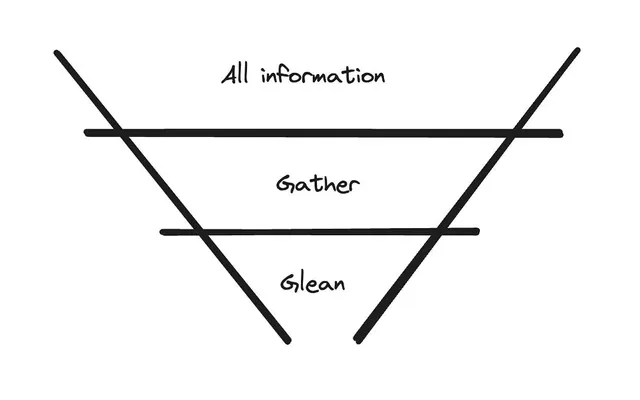
Explains gathering and filtering relevant context to improve production reliability.

Argues for an AI memory hierarchy linking model, context, retrieval and tools.

Foresees industrial-revolution-scale benefits through cheaper services without requiring superintelligence, while stressing the gap between demos and reliable production systems.

Expects firms to reorganize around human taste and judgment, owned context, replaceable intelligence and agents learning from production traces; advocates small teams and explicit rubrics.