Doom or Bloom

Question 1
What do you think AI means for our future—and why?
I think AI’s future will depend not only on building larger or better-trained models, but on learning how to use the capabilities already inside them. Today, we often place a model in a brittle, human-designed workflow, give it one enormous prompt, and then interpret failure as a clean measurement of its limits. That can confuse the weakness of the harness with the weakness of the model.
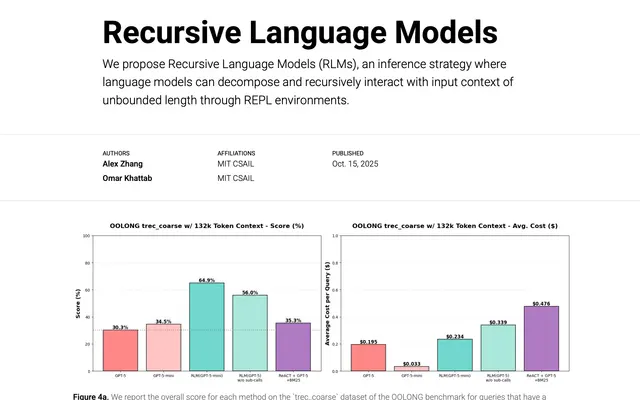
Recursive computation, learned decomposition, tool use, and better inference procedures could change that picture substantially. A difficult out-of-distribution task may become tractable when the system can break it into familiar subproblems, inspect intermediate results, and call itself or specialized tools as needed. Long-context work is one example: rather than forcing everything through a single context window, a model can programmatically navigate the material and recursively delegate narrower questions.
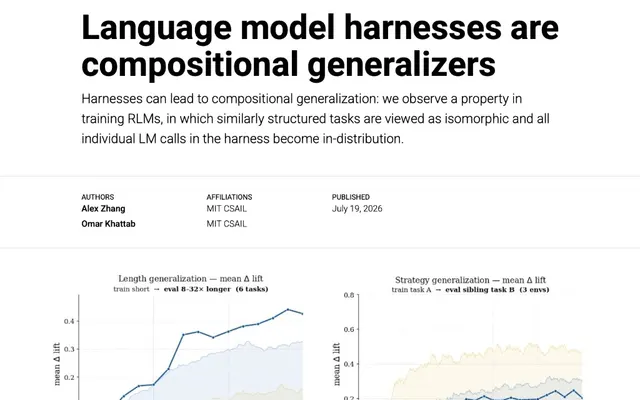
But this is not an argument that scaling or training is over. Better models and better harnesses are complementary. The key empirical challenge is figuring out which apparent limitations are truly representational and which come from poor orchestration.
Evaluation is therefore central. Benchmarks with familiar formats, reusable tricks, or contaminated examples can make leaderboard performance look much stronger than practical usefulness. Simply making tasks longer does not guarantee meaningful generalization. We need evaluations that test whether systems can compose knowledge and procedures in genuinely unfamiliar settings. So my view is optimistic about latent capability, but the path forward runs through better inference, decomposition, and benchmarks—not raw benchmark scores mistaken for broad real-world competence.