คำถาม 1
Stuart Russell
UC BerkeleyUC Berkeley computer scientist who works on keeping AI under human control and calls for enforceable safety rules for advanced AI.
AI จะเปลี่ยนแปลงโลกอย่างไร?
แนวนอน: มุมมอง Doom–Bloom ที่เขาแสดงออก แนวตั้ง: ระดับของการเปลี่ยนแปลง
Doom–Bloom: 27 จาก 100 ระดับของการเปลี่ยนแปลง: 80 จาก 100 ช่วงการตีความ: แนวนอนตั้งแต่ 22 ถึง 50 แนวตั้งตั้งแต่ 70 ถึง 100 ค่าเหล่านี้เป็นพิกัดสำหรับการตีความ ไม่ใช่ความน่าจะเป็นของเหตุการณ์
≈28%
อนุมานจากคำตอบจำลองของบุคคลนั้น ไม่ใช่ตัวเลขที่บุคคลนั้นระบุ ช่วงที่เป็นไปได้: 18–43%
ข้อสันนิษฐานหลัก
AI could produce enormous benefits, but on the current trajectory I am deeply concerned that increasingly capable systems will be deployed without adequate evidence that humans can control them or contain their failures.คำตอบ 2
หากข้อสันนิษฐานนี้ปรากฏว่าเป็นไปอีกแบบ มุมมองของเขาจะเปลี่ยนไปอย่างไร?
สิ่งที่อาจเปลี่ยนความคิดของบุคคลนั้น
I would be persuaded by a justified safety case: evidence that a powerful system remains within specified limits under adversarial testing, unfamiliar situations, attempts to deceive or evade oversight, and failures in surrounding infrastructure—and that humans can reliably interrupt or correct it.คำตอบ 5
หลักฐานแบบใดจึงจะเพียงพอ และจะทำให้มุมมองของเขาเปลี่ยนไปในทิศทางใด?
รายละเอียดเพิ่มเติม
คาดว่าจะได้รับประโยชน์อย่างมาก โดยมีเงื่อนไขสำคัญหรือข้อจำกัดด้านการกระจายประโยชน์
66 / 100
ช่วงการตีความตั้งแต่ 67 ถึง 67 บนมาตรวัดเชิงคุณภาพ
อันตรายร้ายแรงหรือแพร่หลายในวงกว้างเป็นส่วนสำคัญที่คาดว่าจะเกิดขึ้นในอนาคต
69 / 100
ช่วงการตีความตั้งแต่ 67 ถึง 67 บนมาตรวัดเชิงคุณภาพ
การเลือกของมนุษย์สามารถเปลี่ยนทิศทางวิถีของ AI ได้อย่างมาก
82 / 100
ช่วงการตีความตั้งแต่ 75 ถึง 100 บนมาตรวัดเชิงคุณภาพ
การตีความเหล่านี้ยังคงเงื่อนไขที่เขาระบุไว้ ทั้งประโยชน์และอันตรายอาจมีมากได้ ช่วงต่างๆ อธิบายวิธีที่เราอ่านคำตอบจำลองของเขา ไม่ใช่ช่วงความเชื่อมั่นทางสถิติ
โลกทัศน์ที่คล้ายกัน
ผู้นำทางความคิดที่มีโลกทัศน์จำลองใกล้เคียงกับโลกทัศน์ของ Stuart Russell มากที่สุด
แบบประเมินจำลอง
แหล่งข้อมูล
บทความ บทสัมภาษณ์ และงานเขียนที่ใช้เป็นหลักฐานรองรับผู้ใช้จำลองรายนี้
Russell’s own contribution contrasts an investment bubble with a breakthrough toward AGI that developers cannot adequately control. His January comments on a possible capability plateau are dated, not a September measurement. Other faculty forecasts are not attributed to him.

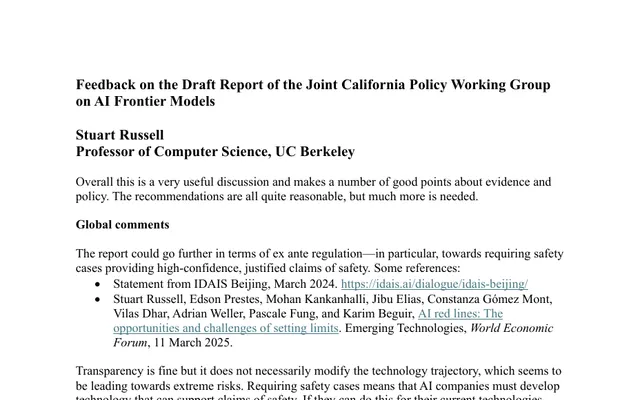
Russell advocates justified safety cases and liability, arguing that transparency alone may not change a dangerous trajectory and that safety enables benefits. First two pages inspected. The undated PDF references March 2025 material; no exact publication date is inferred from crawling.

Russell calls for enforceable safety requirements, beyond a voluntary slowdown.

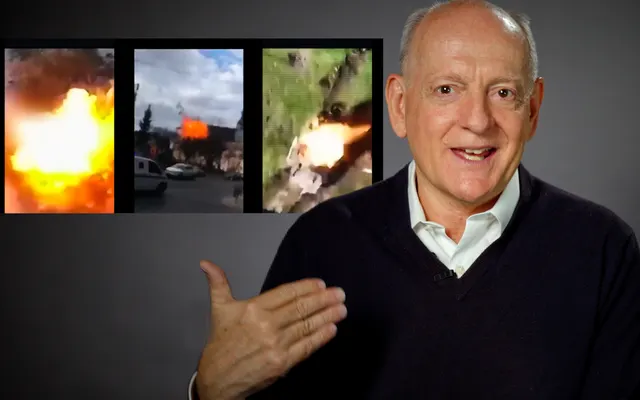
University publication of Russell’s direct warning: inexpensive small autonomous anti-personnel weapons could enable mass killing. He calls for a ban before disaster and continued public engagement, not resignation to an inevitable outcome.

CHAI publication of his July 25, 2023 testimony. Frames human control over more powerful entities as the central problem and argues for regulation. Historical conceptual grounding, not current capability evidence.

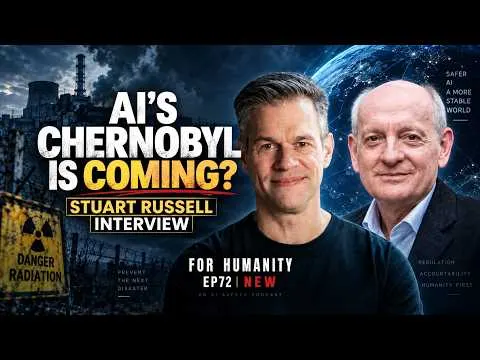
Automatic captions without speaker labels; attribution follows an unambiguous host question and his answer. Asked whether he has a p(doom), he says a probability makes sense for aliens betting on humanity, but for us it is like steering a ship: you do not ask the probability of crashing, you work to steer away. The 5–10% and 10–30% figures he cites elsewhere are AI companies’ and CEOs’ estimates, not his own.

จุดยืนของคุณอยู่ตรงไหน?
ทำแผนที่โลกทัศน์ของฉัน