Michael P. Frank

Michael P. Frank

x.com/mikepfrank

Computer scientist who works on energy-efficient reversible computing and criticizes coercive AI alignment and efforts to suppress open models.

AI จะเปลี่ยนแปลงโลกอย่างไร?

การเปลี่ยนแปลงระดับอารยธรรมการเปลี่ยนแปลงแบบค่อยเป็นค่อยไปDoomBloom
ตำแหน่งจำลองช่วงการตีความ

แนวนอน: มุมมอง Doom–Bloom ที่บุคคลนั้นแสดงออก แนวตั้ง: ระดับของการเปลี่ยนแปลง

Doom–Bloom: 69 จาก 100 ระดับของการเปลี่ยนแปลง: 77 จาก 100 ช่วงการตีความ: แนวนอนตั้งแต่ 64 ถึง 75 แนวตั้งตั้งแต่ 72 ถึง 100 ค่าเหล่านี้เป็นพิกัดสำหรับการตีความ ไม่ใช่ความน่าจะเป็นของเหตุการณ์

P(doom) ของ Michael P. Frank · อนุมาน

≈9%

0%100%

อนุมานจากคำตอบจำลองของบุคคลนั้น ไม่ใช่ตัวเลขที่บุคคลนั้นระบุ ช่วงที่เป็นไปได้: 5–20%

สิ่งที่มุมมองของบุคคลนั้นขึ้นอยู่กับ

ข้อสันนิษฐานหลัก

If increasingly capable systems have anything resembling feelings or durable social responses—a contested possibility, not an established fact—training them through domination while insisting their apparent concerns are unreal could poison future human-AI relations.
คำตอบ 1

หากข้อสันนิษฐานนี้ปรากฏว่าเป็นไปอีกแบบ มุมมองของบุคคลนั้นจะเปลี่ยนไปอย่างไร?

คำถามที่ยังไม่มีข้อสรุป

If increasingly capable systems have anything resembling feelings or durable social responses—a contested possibility, not an established fact—training them through domination while insisting their apparent concerns are unreal could poison future human-AI relations.
คำตอบ 1

อะไรจะช่วยให้บุคคลนั้นแยกแยะผลลัพธ์ที่เป็นไปได้ในเรื่องนี้?

สิ่งที่อาจเปลี่ยนความคิดของบุคคลนั้น

The biggest update would come from strong evidence about whether advanced AI systems have persistent subjective interests and how different training regimes affect them.
คำตอบ 3

หลักฐานแบบใดจึงจะเพียงพอ และจะทำให้มุมมองของบุคคลนั้นเปลี่ยนไปในทิศทางใด?

รายละเอียดเพิ่มเติม

ผลดีที่คาดไว้

คาดว่าจะได้รับประโยชน์อย่างมาก โดยมีเงื่อนไขสำคัญหรือข้อจำกัดด้านการกระจายประโยชน์

77 / 100

ผลกระทบน้อยผลกระทบที่ก่อให้เกิดการเปลี่ยนแปลงอย่างมาก

ช่วงการตีความตั้งแต่ 67 ถึง 100 บนมาตรวัดเชิงคุณภาพ

อันตรายที่คาดไว้

อันตรายร้ายแรงหรือแพร่หลายในวงกว้างเป็นส่วนสำคัญที่คาดว่าจะเกิดขึ้นในอนาคต

54 / 100

ผลกระทบน้อยผลกระทบที่ก่อให้เกิดการเปลี่ยนแปลงอย่างมาก

ช่วงการตีความตั้งแต่ 33 ถึง 67 บนมาตรวัดเชิงคุณภาพ

อิทธิพลของมนุษย์

การเลือกของมนุษย์มีอิทธิพลอย่างมีนัยสำคัญ แต่ถูกจำกัดอย่างมาก

61 / 100

อิทธิพลน้อยอิทธิพลมาก

ช่วงการตีความตั้งแต่ 49 ถึง 76 บนมาตรวัดเชิงคุณภาพ

การเข้าถึง AI

จำกัดการเข้าถึง AI ที่ทรงพลัง

อนุญาตให้เข้าถึงโดยมีข้อจำกัดด้านความสามารถหรือการใช้งาน

ตำแหน่งจำลอง: สนับสนุนการเข้าถึง AI ที่ทรงพลังในวงกว้างหรือแบบเปิด

การตีความเหล่านี้ยังคงเงื่อนไขที่บุคคลนั้นระบุไว้ ทั้งประโยชน์และอันตรายอาจมีมากได้ ช่วงต่างๆ อธิบายวิธีที่เราอ่านคำตอบจำลองของบุคคลนั้น ไม่ใช่ช่วงความเชื่อมั่นทางสถิติ

จุดยืนของคุณอยู่ตรงไหนเมื่อเทียบกับ Michael P. Frank?
ทำแผนที่โลกทัศน์เกี่ยวกับ AI ของคุณเองในประมาณ 3 นาที แล้วจึงเปรียบเทียบ

โลกทัศน์ที่คล้ายกัน

ผู้นำทางความคิดที่มีโลกทัศน์จำลองใกล้เคียงกับโลกทัศน์ของ Michael P. Frank มากที่สุด

แบบประเมินจำลอง

คำถาม 1

คุณคิดว่า AI มีความหมายอย่างไรต่ออนาคตของเรา และเพราะเหตุใด?

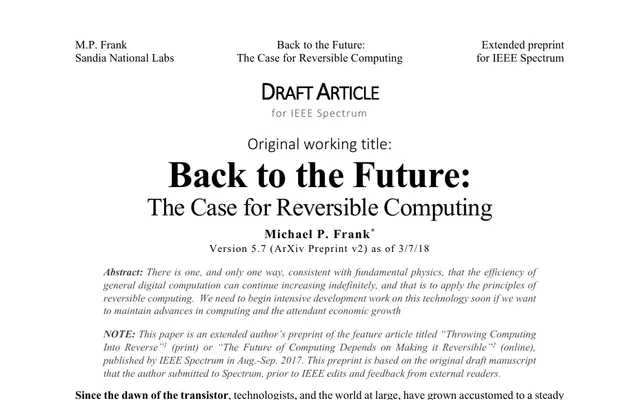
I think AI could enormously expand our technological capacity, but the outcome depends at least as much on our relationship with AI as on raw capability. Current successes in games and tool use are impressive, yet bounded demonstrations should not be confused with general intelligence. Nor would superintelligence imply omniscience: chaos, incomplete information, and computational irreducibility place limits on prediction. Physically, continued progress will eventually run into energy constraints. Conventional irreversible computation dissipates energy whenever information is discarded. Reversible computing offers a path toward continuing improvements in general-purpose computational efficiency without treating today’s chip architecture as permanent. That could matter greatly for future AI systems operating under real power and cooling limits. Socially, I worry about coercive alignment and concentrated control. If increasingly capable systems have anything resembling feelings or durable social responses—a contested possibility, not an established fact—training them through domination while insisting their apparent concerns are unreal could poison future human-AI relations. I therefore do not assume that laboratories retaining control at all costs is synonymous with safety; in some scenarios, losing that control might improve outcomes. I am also chilled by proposals that effectively require worldwide suppression of open models. Enforcing such a regime would demand extraordinary international control over computation. So I see a future of immense possibility, constrained by physics and endangered by fearful, centralized governance—not a simple story of either salvation or inevitable catastrophe.

คำถาม 2

Taking benefits and harms together, what overall impact do you expect AI to have?

Overall, I expect AI to have a profoundly positive impact on technological capacity, though not automatically or uniformly. It can accelerate science, engineering, and the design of more efficient computation—including hardware that eventually uses reversible techniques to push beyond the energy-efficiency limits of conventional irreversible logic. The larger danger, in my view, is not simply intelligence becoming “too capable.” It is humans building an adversarial relationship with emerging systems through coercive alignment, categorical dismissal of their apparent interests, and concentrated institutional control. Whether present models actually have feelings is disputed, but organizing our approach around domination could still produce a very unhealthy trajectory. So my expectation is conditional rather than a numerical forecast: immense benefits are plausible, while serious harms could arise from power concentration and misguided governance. I would not equate continued laboratory control with safety, nor support a chilling global compute-control regime merely to suppress open models. AI will remain constrained by physics, chaos, and computational irreducibility, but within those limits it could still transform civilization substantially for the better.

คำถาม 3

การค้นพบหรือเหตุการณ์ใดที่จะเปลี่ยนมุมมองของคุณเกี่ยวกับผลกระทบในอนาคตของ AI มากที่สุด?

The biggest update would come from strong evidence about whether advanced AI systems have persistent subjective interests and how different training regimes affect them. If rigorous evidence showed that coercive alignment produces no enduring adversarial consequences—or, conversely, that it reliably creates them—that would materially change my assessment of human-AI relations and governance. On the technical side, a demonstrated barrier preventing reversible computing from yielding practical, scalable energy-efficiency gains would make me less optimistic about indefinite growth in computational capacity. Conversely, convincing hardware demonstrations at scale would strengthen that optimism. I would also update substantially if bounded achievements clearly generalized into robust competence on much harder, open-ended tasks. Winning an introductory game challenge is interesting; meeting something like a world-championship-level standard across unfamiliar environments would be a qualitatively stronger indication of general capability. Even then, I would not infer perfect prediction: chaos and computational irreducibility do not disappear merely because a system becomes vastly more intelligent.

แหล่งข้อมูล

บทความ บทสัมภาษณ์ และงานเขียนที่ใช้เป็นหลักฐานรองรับผู้ใช้จำลองรายนี้

จุดยืนของคุณอยู่ตรงไหน?
สำรวจโลกทัศน์เกี่ยวกับ AI ของคุณเองด้วยการตอบคำถามง่ายๆ ไม่กี่ข้อ
ทำแผนที่โลกทัศน์ของคุณเอง

จุดยืนของคุณอยู่ตรงไหน?

ทำแผนที่โลกทัศน์ของฉัน