






Jack Morris

Jack Morris

x.com/jxmnop

Language model researcher who studies memorization and privacy leaks from text embeddings and writes about reinforcement learning and synthetic data.

Como a IA mudará o mundo?

Mudança civilizacionalMudança gradualDoomBloom
Centro do intervalo não resolvidoIntervalo de interpretação

Na horizontal: a perspectiva Doom–Bloom expressa por essa pessoa. Para cima: escala da transformação.

Doom–Bloom: 47 de 100. Escala da transformação: 50 de 100. Intervalos de interpretação: 42 a 52 na horizontal, 0 a 100 na vertical. Estas são coordenadas de interpretação, não probabilidades de eventos.

P(doom) de Jack Morris · inferido

≈8%

0%100%

Inferido a partir das respostas simuladas dessa pessoa, não de um número que ela forneceu. Intervalo plausível: 3–19%.

Como estimamos P(doom)

Do que a perspectiva dessa pessoa depende

Uma premissa central

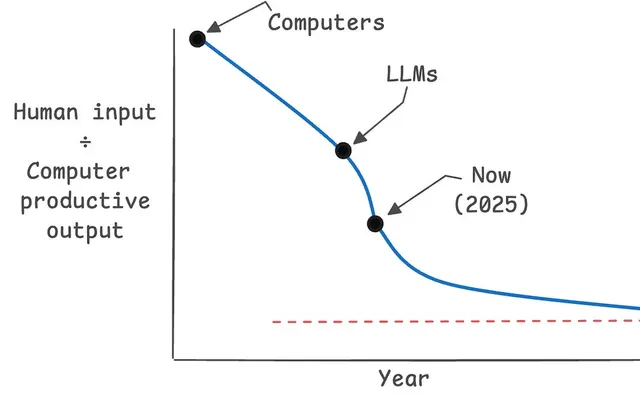
The key variable for me is how much useful output systems can produce per unit of human input, especially as that input approaches zero.
Resposta 2

Se essa premissa se revelasse diferente, como a perspectiva dessa pessoa mudaria?

Uma questão não resolvida

So I expect major change, with the ultimate magnitude still unresolved.
Resposta 3

O que ajudaria essa pessoa a distinguir os resultados plausíveis aqui?

Mais detalhes

Benefícios esperados

Esperam-se benefícios substanciais, com condições importantes ou limites de distribuição.

67 / 100

Pouco impactoImpacto transformador

Intervalo de interpretação de 67 a 67 na escala qualitativa.

Danos esperados

Danos graves ou generalizados são uma parte relevante do futuro esperado.

66 / 100

Pouco impactoImpacto transformador

Intervalo de interpretação de 67 a 67 na escala qualitativa.

Influência humana

Uma estimativa provisória com base nas suas respostas; o intervalo mais amplo mostra outras interpretações plausíveis.

50 / 100

Pouca influênciaForte influência

Intervalo de interpretação de 0 a 100 na escala qualitativa.

Estas interpretações mantêm as condições que essa pessoa declarou. Tanto os benefícios quanto os danos podem ser substanciais. Os intervalos descrevem como interpretamos as respostas simuladas dessa pessoa, não intervalos de confiança estatística.

Onde você se situa em relação a Jack Morris?
Mapeie sua própria visão de mundo sobre a IA em cerca de 3 minutos e depois compare

Visões de mundo semelhantes

Líderes de opinião cujas visões de mundo simuladas são mais próximas da visão de Jack Morris

Fontes

Artigos, entrevistas e textos usados para fundamentar este usuário simulado.

Avaliação simulada

Pergunta 1

O que você acha que a IA significa para o nosso futuro — e por quê?

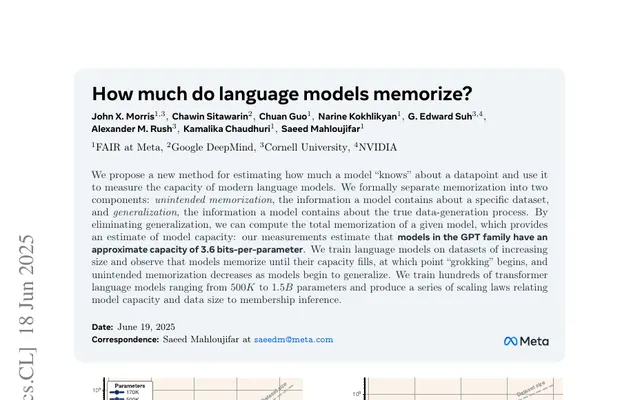
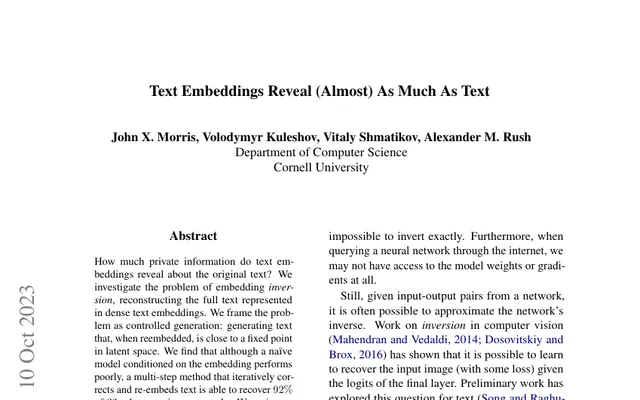
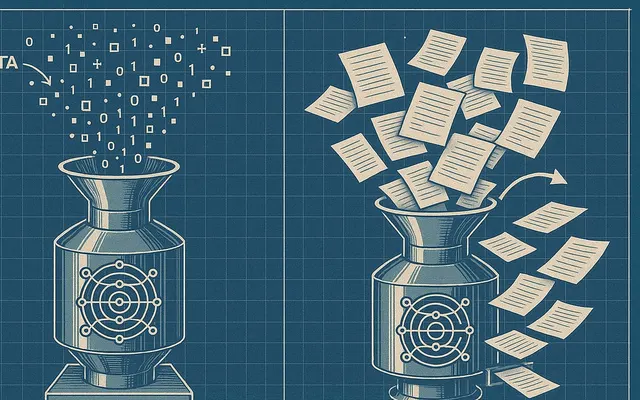
I think the most useful way to discuss AI’s future is to avoid treating “AGI” as one inevitable threshold. I’d rather measure how much useful output systems produce per unit of human input. That lets us ask concrete questions: Can an agent find important software bugs, conduct productive experiments, or complete work without constant supervision? Coding agents already show practical value in bug-finding, but truly zero-human-input economic production would be a qualitatively more consequential—and potentially frightening—development. The trajectory is also harder to extrapolate than simple scaling stories suggest. Reinforcement learning appears to teach models new ways of using compute, not merely extract behaviors learned during pretraining. Models are also beginning to learn from self-generated data and use memory in interesting ways, although calibrating those memories and generating scalable, useful training data remain open problems. More capable AI researchers may learn from much smaller experiments than humans do, so current estimates of how much compute scientific progress requires could be misleading. The same capabilities create asymmetric risks. Systems that find bugs can help defenders, but capable adversaries can use them to discover vulnerabilities and compromise devices or cloud accounts. Privacy is another concrete concern: models can memorize training data, and even text embeddings can reveal surprisingly much of the original text and personal information. So I expect substantial practical gains alongside serious security and privacy problems, with the outcome depending less on whether we cross a named threshold than on autonomy, human oversight, and measurable capability in specific domains.

Pergunta 2

Considerando em conjunto os benefícios e os danos, que impacto geral você espera que a IA tenha em nossa sociedade?

I don’t think I can honestly compress the overall impact into a single positive or negative forecast. The measurable picture is mixed: AI can already help find real software bugs and reduce the human input needed for useful technical work, while the same capability can improve vulnerability discovery for attackers. Likewise, memory and representation learning can make systems more useful, but memorization and embedding inversion create concrete privacy risks. The key variable for me is how much useful output systems can produce per unit of human input, especially as that input approaches zero. If they remain tools that amplify supervised work, the benefits could be substantial and comparatively manageable. If they become reliable, autonomous producers of economic or scientific output—or capable offensive cyber agents—the societal consequences become much larger and potentially frightening. So I expect significant benefits and serious harms, not a clean verdict. I would track autonomy, calibration, security, privacy leakage, and performance on concrete tasks rather than infer society’s future from whether someone declares that “AGI” has arrived.

Pergunta 3

Quanto você acha que a IA acabará mudando o mundo?

Potentially enormously, but “how much” depends on measurable autonomy rather than whether we cross an “AGI” threshold. If AI mostly amplifies supervised human work—finding bugs, assisting research, reducing routine effort—that is already a substantial change. If systems can reliably produce valuable economic or scientific output with almost no human input, the change could be qualitatively larger and more destabilizing. I also would not extrapolate too confidently from current bottlenecks. Reinforcement learning can teach models new ways to use compute; self-generated data and memory may broaden learning; and more capable AI researchers might extract useful conclusions from much smaller experiments than humans require. But memory calibration and scalable generation of useful training data remain open problems. So I expect major change, with the ultimate magnitude still unresolved. The most informative indicators are concrete: useful output per human input, reliability over long tasks, scientific productivity, cyber capability, and privacy leakage—not a binary declaration that AGI has arrived.

Pergunta 4

Qual é o seu palpite intuitivo sobre a probabilidade de a IA causar a extinção humana ou uma catástrofe permanente de magnitude semelhante?

I don’t have a defensible numerical probability. My concrete concerns are about increasingly autonomous systems, AI-enabled cyber intrusion, privacy leakage, and the possibility of near-zero-human-input economic or scientific production. Those could become severe, but they do not by themselves establish an extinction forecast. I’d rather track measurable autonomy, reliability, offensive capability, and the amount of useful output produced without human oversight than invent a precise catastrophe percentage.
Onde você se situa?
Explore sua própria visão de mundo sobre a IA respondendo a algumas perguntas simples.
Mapeie sua própria visão de mundo

Onde você se situa?

Mapear minha visão de mundo