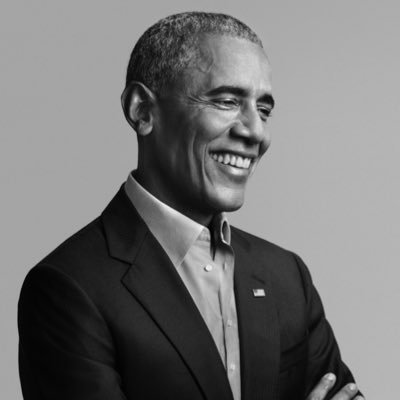
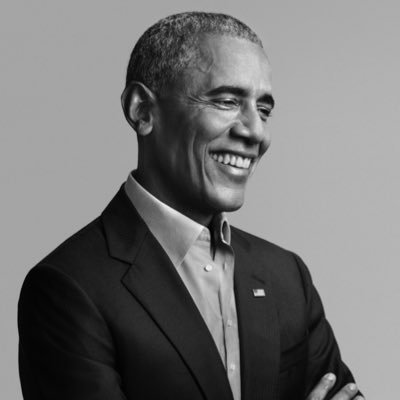
Barack Obama

Barack Obama

x.com/BarackObama

Former U.S. president who expects AI to transform medicine, education and work and calls for public oversight and laws, not just voluntary standards.

Como a IA mudará o mundo?

Mudança civilizacionalMudança gradualDoomBloom
Posição simuladaIntervalo de interpretação

Na horizontal: a perspectiva Doom–Bloom expressa por ele. Para cima: escala da transformação.

Doom–Bloom: 60 de 100. Escala da transformação: 67 de 100. Intervalos de interpretação: 50 a 75 na horizontal, 49 a 76 na vertical. Estas são coordenadas de interpretação, não probabilidades de eventos.

P(doom) de Barack Obama · inferido

≈8%

0%100%

Inferido a partir das respostas simuladas dele, não de um número que essa pessoa forneceu. Intervalo plausível: 4–18%.

Horizonte temporal de marcos de Barack Obama
  1. Trabalho e instituições

    Over the next five to ten years, we are likely to see real advances in medicine, education and scientific research alongside serious disruption to work, information and childhood.

    Resposta 2
  2. Ciência e vida cotidiana

    Over the next five to ten years, we are likely to see real advances in medicine, education and scientific research alongside serious disruption to work, information and childhood.

    Resposta 2

Agrupados por marco, sem espaçamento nem ordenação por datas inferidas. IAG e IA sobre-humana mantêm as definições dele.

Do que a perspectiva dele depende

Uma premissa central

If we allow a handful of companies to set the pace and the rules, I expect the harms and benefits to be distributed badly.
Resposta 2

Se essa premissa se revelasse diferente, como a perspectiva dele mudaria?

Uma questão não resolvida

I expect AI’s overall impact to be profoundly transformative, but I don’t think the final balance is predetermined.
Resposta 2

O que ajudaria essa pessoa a distinguir os resultados plausíveis aqui?

O que poderia mudar essa opinião

The event that would most change my view would be clear evidence that AI’s benefits or dangers are largely beyond meaningful human control.
Resposta 4

Que evidência seria suficiente e em que direção ela mudaria a visão dele?

Mais detalhes

Benefícios esperados

Esperam-se benefícios substanciais, com condições importantes ou limites de distribuição.

70 / 100

Pouco impactoImpacto transformador

Intervalo de interpretação de 67 a 100 na escala qualitativa.

Danos esperados

Danos graves ou generalizados são uma parte relevante do futuro esperado.

62 / 100

Pouco impactoImpacto transformador

Intervalo de interpretação de 33 a 67 na escala qualitativa.

Influência humana

As escolhas humanas podem redirecionar substancialmente a trajetória da IA.

82 / 100

Pouca influênciaForte influência

Intervalo de interpretação de 75 a 100 na escala qualitativa.

Regras para o uso da IA

Restringir os usos da IA discutidos até que proteções prévias ou uma autorização estejam em vigor.

Posição simulada: Permitir os usos da IA discutidos com responsabilização e proteções específicas.

Minimizar as restrições aos usos da IA discutidos.

Estas interpretações mantêm as condições que ele declarou. Tanto os benefícios quanto os danos podem ser substanciais. Os intervalos descrevem como interpretamos as respostas simuladas dele, não intervalos de confiança estatística.

Onde você se situa em relação a Barack Obama?
Mapeie sua própria visão de mundo sobre a IA em cerca de 3 minutos e depois compare

Visões de mundo semelhantes

Líderes de opinião cujas visões de mundo simuladas são mais próximas da visão de Barack Obama

O que Barack Obama já disse sobre a IA

Obama expects AI to bring large benefits and serious disruption, and he calls for government rules rather than voluntary company standards alone.

  1. “It’s a really sophisticated, remarkable technology, but it should be thought of as a tool, which means we have choices in terms of how we use this.”

    Colgate University conversation
  2. “I’m not an AI accelerationist who believes it will lead to some techno-utopia, and I’m not a doomer who thinks it will inevitably lead to humanity’s destruction.”

    Post on X
  3. “At the end of the day, voluntary standards made by a handful of tech companies won’t be enough.”

    Post on X
  4. “It has enormous potential to jumpstart discovery and innovation at speeds and at levels that we have not seen before, and that could improve everybody’s lives enormously.”

    Jefferson Educational Society conversation, Erie
  5. “I guarantee you you’re going to start seeing shifts in white collar work as a consequence of what these new AI models can do.”

    The Connecticut Forum conversation, Hartford

Citações literais das fontes indicadas, verificadas em 3 de out. de 2026

Avaliação simulada

Pergunta 1

O que você acha que a IA significa para o nosso futuro — e por quê?

Look, I think AI could profoundly reshape our future—especially medicine, education, energy and work. A child who lives far from a good school might gain access to a capable tutor. Researchers might discover treatments faster. But those possibilities are not automatic, and neither is catastrophe. The outcome will depend on choices we make now. The immediate concern is that this technology is advancing faster than our institutions and public debate. Engineers themselves are struggling to keep up, while a small number of companies make decisions that could affect millions of jobs, what children see, and whether people can trust the information around them. Slowing frontier development is therefore a sensible first step, but voluntary promises from companies are not enough. We need elected leaders to establish concrete rules around safety, employment and children, and the United States should help build international standards. Government also needs enough technical capacity to understand what it is regulating. Most importantly, ordinary people need a meaningful voice. They already understand the stakes when they worry about their jobs, misinformation or their children’s future. We cannot uninvent AI. But we can decide how it is developed, who benefits and who bears the risks. Leaving those decisions entirely to private companies is not neutrality; it is itself a political choice.

Pergunta 2

Taking benefits and harms together, what overall impact do you expect AI to have?

I expect AI’s overall impact to be profoundly transformative, but I don’t think the final balance is predetermined. Over the next five to ten years, we are likely to see real advances in medicine, education and scientific research alongside serious disruption to work, information and childhood. Some people may gain extraordinary tools while others lose bargaining power, economic security or trust in what they see and hear. If we allow a handful of companies to set the pace and the rules, I expect the harms and benefits to be distributed badly. Corporate incentives alone will not ensure that a child in an underserved community gets the best educational tools, that displaced workers share in rising productivity, or that safety takes priority over competition. With firm public oversight, international safety standards and meaningful democratic participation, I believe the overall impact can be strongly positive. But that is a political outcome we have to create, not a technological outcome we can simply assume.

Pergunta 3

Qual observação ou experiência mais moldou sua visão sobre o impacto futuro da IA?

What has shaped my view most is the gap between the scale of the technology and the capacity of our institutions to respond. AI is already raising practical concerns that ordinary people understand immediately: Will my job still exist? Can I trust what I see online? What is this doing to my children? At the same time, it offers concrete possibilities, like giving a child without access to a good school a capable tutor or helping researchers find treatments faster. That combination—enormous promise, real disruption and decisions concentrated in a few private companies—is what matters. Even the people building these systems acknowledge how difficult it is to keep pace with their development. So I reject both the claim that AI will automatically save us and the claim that disaster is inevitable. The clearest lesson is that technological progress does not settle questions about power, fairness or public benefit. Those are choices, and democratic institutions and ordinary citizens need to make them rather than simply accepting whatever the market delivers.

Pergunta 4

Qual descoberta ou acontecimento mais mudaria sua visão sobre o impacto futuro da IA?

The event that would most change my view would be clear evidence that AI’s benefits or dangers are largely beyond meaningful human control. If, for example, independent testing showed that frontier systems could reliably evade safeguards and cause severe harm despite serious oversight, I would become much more pessimistic and favor a far sharper slowdown. In the other direction, if we saw that strong public rules, independent testing and international standards consistently kept powerful systems safe—while gains in medicine, education and productivity were broadly shared—I would become more confident that AI’s overall impact would be positive. But I would not base that judgment on a company announcement or an impressive demonstration. I would look at what happens to actual people: whether workers retain security and bargaining power, whether children are protected, whether the public can still trust basic information, and whether the benefits reach communities that markets often neglect. The central question is not simply how capable the technology becomes. It is whether democratic institutions can still direct it toward public purposes.

Fontes

Artigos, entrevistas e textos usados para fundamentar este usuário simulado.

Onde você se situa?
Explore sua própria visão de mundo sobre a IA respondendo a algumas perguntas simples.
Mapeie sua própria visão de mundo

Onde você se situa?

Mapear minha visão de mundo