Ethan Mollick

Ethan Mollick

x.com/emollick

Management researcher who studies AI’s uneven abilities at work and in education and argues organizations should keep people learning and involved.

Como a IA mudará o mundo?

Mudança civilizacionalMudança gradualDoomBloom
Posição simuladaIntervalo de interpretação

Na horizontal: a perspectiva Doom–Bloom expressa por essa pessoa. Para cima: escala da transformação.

Doom–Bloom: 53 de 100. Escala da transformação: 59 de 100. Intervalos de interpretação: 48 a 75 na horizontal, 50 a 75 na vertical. Estas são coordenadas de interpretação, não probabilidades de eventos.

P(doom) de Ethan Mollick · inferido

≈4%

0%100%

Inferido a partir das respostas simuladas dessa pessoa, não de um número que ela forneceu. Intervalo plausível: 1–11%.

Horizonte temporal de marcos de Ethan Mollick
  1. Trabalho e instituições

    That makes me expect a long, uneven transformation rather than a clean technological rupture.

    Resposta 3

Agrupados por marco, sem espaçamento nem ordenação por datas inferidas. IAG e IA sobre-humana mantêm as definições dessa pessoa.

Do que a perspectiva dessa pessoa depende

Uma premissa central

Institutions, professional norms, and incentives change slowly, so rapid model improvement does not automatically produce equally rapid social transformation.
Resposta 1

Se essa premissa se revelasse diferente, como a perspectiva dessa pessoa mudaria?

Uma questão não resolvida

I don’t think we can responsibly assign a meaningful probability to that outcome, and the framing can obscure the fact that people and institutions make consequential choices about how AI is developed and used.
Resposta 4

O que ajudaria essa pessoa a distinguir os resultados plausíveis aqui?

Mais detalhes

Benefícios esperados

Esperam-se benefícios substanciais, com condições importantes ou limites de distribuição.

67 / 100

Pouco impactoImpacto transformador

Intervalo de interpretação de 67 a 67 na escala qualitativa.

Danos esperados

Várias interpretações continuam plausíveis: Esperam-se danos administráveis ou localizados. / Danos graves ou generalizados são uma parte relevante do futuro esperado.

48 / 100

Pouco impactoImpacto transformador

Intervalo de interpretação de 33 a 67 na escala qualitativa.

Influência humana

As escolhas humanas podem redirecionar substancialmente a trajetória da IA.

69 / 100

Pouca influênciaForte influência

Intervalo de interpretação de 49 a 76 na escala qualitativa.

Estas interpretações mantêm as condições que essa pessoa declarou. Tanto os benefícios quanto os danos podem ser substanciais. Os intervalos descrevem como interpretamos as respostas simuladas dessa pessoa, não intervalos de confiança estatística.

Onde você se situa em relação a Ethan Mollick?
Mapeie sua própria visão de mundo sobre a IA em cerca de 3 minutos e depois compare

Visões de mundo semelhantes

Líderes de opinião cujas visões de mundo simuladas são mais próximas da visão de Ethan Mollick

Avaliação simulada

Pergunta 1

O que você acha que a IA significa para o nosso futuro — e por quê?

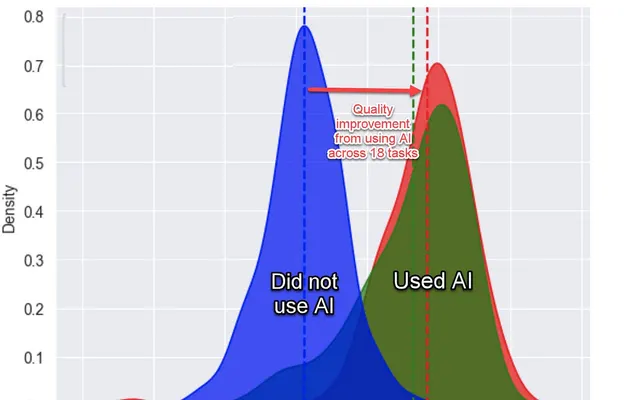
I think AI creates a large—and already existing—set of possibilities, but our future will be shaped less by the technology acting on its own than by how people and institutions choose to use it. There is a substantial gap between what current systems can do and what organizations actually deploy. Institutions, professional norms, and incentives change slowly, so rapid model improvement does not automatically produce equally rapid social transformation. The capabilities are also uneven. In experiments, AI can perform remarkably well on some knowledge-work tasks and then fail on an apparently similar task just beyond its competence. That “jagged frontier” means neither blanket automation nor blanket dismissal makes sense. People need enough expertise and agency to decide when to collaborate with AI, when to check it, and when not to use it. The upside is considerable: better tutoring, broader access to expertise, and richer creative or intellectual exploration—not just faster programming. But pursuing output volume alone could industrialize knowledge work, weaken craft, and remove the apprenticeship through which people develop judgment. Organizations therefore face a real design choice: use AI merely as a shortcut, or combine fallible humans and fallible systems while preserving learning and meaningful participation. The future is not something AI simply delivers to us; it depends on those choices.

Pergunta 2

Taking benefits and harms together, what overall impact do you expect AI to have?

I expect the overall impact to be substantial but uneven, and I would resist compressing it into simply “good” or “bad.” AI can broaden access to tutoring, expertise, and creative exploration while making many kinds of knowledge work more capable. Yet it can also produce convincing errors, amplify bias, standardize work around volume, and weaken the apprenticeship that develops human judgment. The key issue is the gap between capability and implementation. Organizations may adopt the easiest measurable benefit—more output—rather than redesigning work to preserve learning, agency, and meaningful human participation. Meanwhile, institutional rules and professional norms will slow or redirect adoption, so even fast technical progress will not translate cleanly into social change. My default expectation, then, is neither instant transformation nor technological destiny. It is a prolonged, messy adjustment in which some people and institutions gain enormously while others use powerful systems badly or fail to adapt. The balance will depend heavily on human choices about deployment, oversight, education, and the kind of work we value.

Pergunta 3

Setting aside good or bad: how much do you think AI will ultimately change the world—a little, a lot, or completely?

A lot. The capabilities already exceed what most people and organizations actually use, so there is a substantial overhang of possible change even without assuming some dramatic future breakthrough. But “a lot” is not the same as “completely,” or all at once. AI’s competence is jagged: it may transform one task while failing at a neighboring one. Institutions, professional rules, incentives, and habits also adapt much more slowly than models improve. That makes me expect a long, uneven transformation rather than a clean technological rupture. The deepest changes may come from reorganizing knowledge work, education, and access to expertise. If organizations optimize only for output, AI could industrialize intellectual labor and reshape craft, apprenticeship, and market structure. If they preserve human participation and learning, the same capabilities could instead expand what people can understand and create. So I expect major change, but filtered through stubborn institutions and consequential human choices.

Pergunta 4

What’s your rough gut-feel chance that AI causes human extinction or a similarly permanent catastrophe? A number or “no idea” is fine.

No idea. I don’t think we can responsibly assign a meaningful probability to that outcome, and the framing can obscure the fact that people and institutions make consequential choices about how AI is developed and used. It is worth taking extreme scenarios seriously, but I do not have a defensible percentage.

Fontes

Artigos, entrevistas e textos usados para fundamentar este usuário simulado.

Onde você se situa?
Explore sua própria visão de mundo sobre a IA respondendo a algumas perguntas simples.
Mapeie sua própria visão de mundo

Onde você se situa?

Mapear minha visão de mundo