Pergunta 1
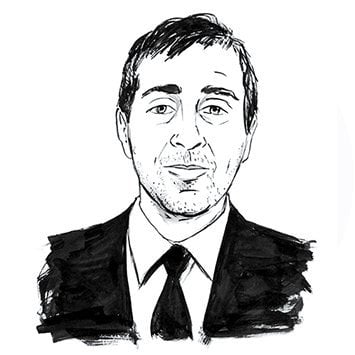
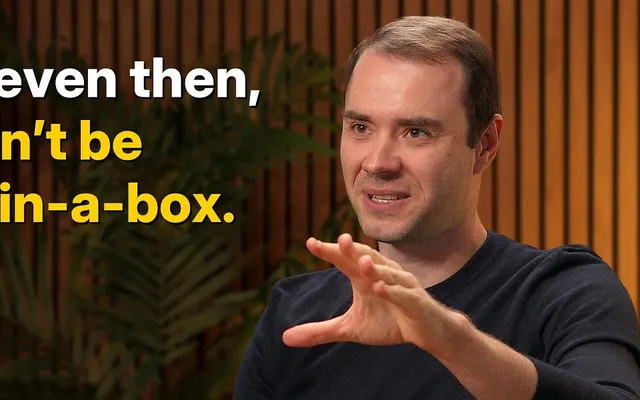
Andrej Karpathy
x.com/karpathyAnthropic researcher and educator who builds with AI agents and writes about their rapid, uneven progress and the gap between demos and reliable work.
Como a IA mudará o mundo?
Na horizontal: a perspectiva Doom–Bloom expressa por ele. Para cima: escala da transformação.
Doom–Bloom: 75 de 100. Escala da transformação: 66 de 100. Intervalos de interpretação: 70 a 80 na horizontal, 50 a 75 na vertical. Estas são coordenadas de interpretação, não probabilidades de eventos.
≈6%
Inferido a partir das respostas simuladas dele, não de um número que essa pessoa forneceu. Intervalo plausível: 3–13%.
Uma premissa central
The world changes only when the whole surrounding system—tests, tools, memory, interfaces, monitoring, and human understanding—makes that capability dependable.Resposta 2
Se essa premissa se revelasse diferente, como a perspectiva dele mudaria?
Uma questão não resolvida
I don’t have a defensible percentage.Resposta 3
O que ajudaria essa pessoa a distinguir os resultados plausíveis aqui?
O que poderia mudar essa opinião
If an agent could enter an unfamiliar codebase or research program, clarify ambiguous goals, remember what it learned, recover from mistakes, choose productive next steps, and deliver trustworthy results over weeks with little supervision, that would substantially accelerate my expectations.Resposta 5
Que evidência seria suficiente e em que direção ela mudaria a visão dele?
Mais detalhes
Esperam-se benefícios substanciais, com condições importantes ou limites de distribuição.
75 / 100
Intervalo de interpretação de 67 a 100 na escala qualitativa.
Esperam-se danos administráveis ou localizados.
32 / 100
Intervalo de interpretação de 0 a 33 na escala qualitativa.
As escolhas humanas têm uma influência significativa, mas substancialmente limitada.
55 / 100
Intervalo de interpretação de 48 a 77 na escala qualitativa.
Interromper ou desacelerar substancialmente o desenvolvimento de uma IA mais capaz.
Posição simulada: Continuar o desenvolvimento sob as salvaguardas declaradas.
Acelerar o desenvolvimento de uma IA mais capaz.
Restringir os usos da IA discutidos até que proteções prévias ou uma autorização estejam em vigor.
Posição simulada: Permitir os usos da IA discutidos com responsabilização e proteções específicas.
Minimizar as restrições aos usos da IA discutidos.
Estas interpretações mantêm as condições que ele declarou. Tanto os benefícios quanto os danos podem ser substanciais. Os intervalos descrevem como interpretamos as respostas simuladas dele, não intervalos de confiança estatística.
Visões de mundo semelhantes
Líderes de opinião cujas visões de mundo simuladas são mais próximas da visão de Andrej Karpathy
O que Andrej Karpathy já disse sobre a IA
Karpathy builds with AI agents and writes about their rapid but uneven progress and the gap between impressive demos and reliable work.
“When you hand a computer terminal to one of these models, you can now watch them melt programming problems that you’d normally expect to take days/weeks of work.”
Post on X “I’ve never felt this much behind as a programmer. The profession is being dramatically refactored as the bits contributed by the programmer are increasingly sparse and between.”
Post on X “LLMs are emerging as a new kind of intelligence, simultaneously a lot smarter than I expected and a lot dumber than I expected.”
Essay, 2025 LLM Year in Review “My personal big fear is that a lot of this stuff happens on the side of humanity, and that humanity gets disempowered by it.”
Dwarkesh Podcast “In my mind, this is more accurately described as the decade of agents.”
Dwarkesh Podcast
Citações literais das fontes indicadas, verificadas em 3 de out. de 2026
Avaliação simulada
Fontes
Artigos, entrevistas e textos usados para fundamentar este usuário simulado.
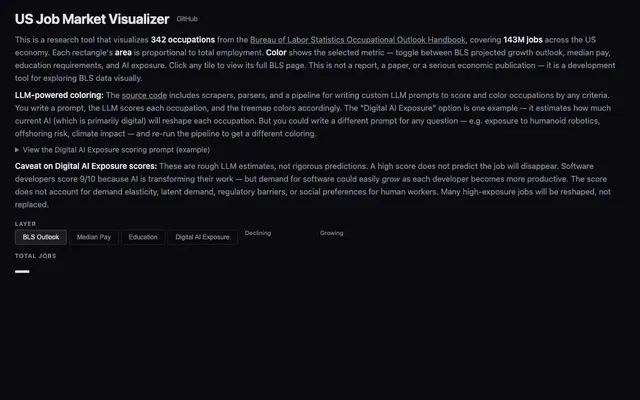
Interactive exploration of 342 BLS occupations covering 143 million US jobs, with layers for employment outlook, pay, education and digital AI exposure. Its customizable LLM scoring pipeline illustrates uneven exposure across digital and physical work. Exposure scores are rough estimates of occupational change, not predictions of job disappearance; they omit demand responses, regulatory barriers and preferences for human workers. The project explicitly describes itself as a development tool rather than a rigorous economic publication.

Author-posted, AI-cleaned summary and transcript, which Karpathy says he read. Describes a late-2025 jump in coding-agent usefulness, professional orchestration and evaluation, and verifiability as an explanation for uneven progress. Current enthusiasm updates the older decade-of-agents interview; the edited text is not an exact quotation transcript.

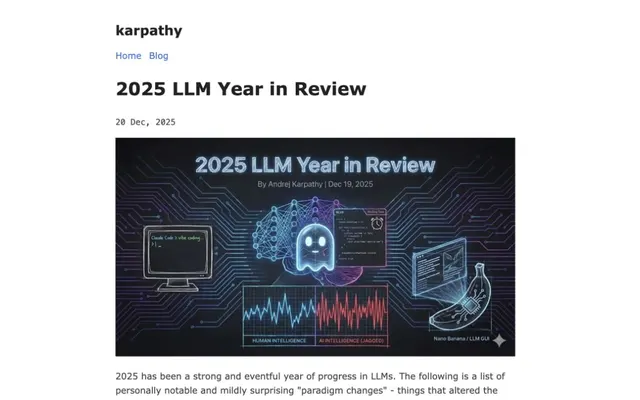
His review connects verifiable rewards to reasoning gains, criticizes benchmark overfitting, describes jagged intelligence and the growing application layer around models. Provides concrete mechanisms and builder vocabulary rather than a universal intelligence forecast.

Karpathy’s primary interview frames agents as a decade of engineering work. Discusses cognitive deficits, continual learning, the gap between self-driving demos and deployment, and education. The forecast is dated and intuitive, not a calibrated deadline.

His README demonstrates agents editing a training file, running five-minute experiments and retaining improvements against a fixed validation metric. The introduction’s future agent civilization is playful fiction, not a report of current events. Human-authored instructions and a bounded setup remain essential.

Onde você se situa?
Mapear minha visão de mundo