






Ellie Huxtable

Ellie Huxtable

x.com/ellie_huxtable

Software engineer behind the open-source shell tool Atuin who now finds AI coding agents useful and favors strong user privacy and sandboxed agents.

Como a IA mudará o mundo?

Mudança civilizacionalMudança gradualDoomBloom
Centro do intervalo não resolvidoIntervalo de interpretação

Na horizontal: a perspectiva Doom–Bloom expressa por essa pessoa. Para cima: escala da transformação.

Doom–Bloom: 64 de 100. Escala da transformação: 50 de 100. Intervalos de interpretação: 40 a 85 na horizontal, 0 a 100 na vertical. Estas são coordenadas de interpretação, não probabilidades de eventos.

P(doom) de Ellie Huxtable

Ainda não estimado

Não há informações suficientes sobre risco catastrófico nas respostas simuladas dessa pessoa para estimá-lo.

Como estimamos P(doom)

Do que a perspectiva dessa pessoa depende

Uma premissa central

Language guarantees—especially the classes of problems Rust can rule out—reduce how much generated code humans must scrutinize.
Resposta 1

Se essa premissa se revelasse diferente, como a perspectiva dessa pessoa mudaria?

Uma questão não resolvida

I don’t have a well-founded prediction about whether humans could retain control of systems broadly smarter than humans.
Resposta 4

O que ajudaria essa pessoa a distinguir os resultados plausíveis aqui?

Mais detalhes

Benefícios esperados

Várias interpretações continuam plausíveis: Esperam-se benefícios substanciais, com condições importantes ou limites de distribuição. / Esperam-se ganhos limitados ou distribuídos de forma restrita.

52 / 100

Pouco impactoImpacto transformador

Intervalo de interpretação de 33 a 67 na escala qualitativa.

Danos esperados

Esperam-se danos administráveis ou localizados.

30 / 100

Pouco impactoImpacto transformador

Intervalo de interpretação de 0 a 33 na escala qualitativa.

Influência humana

Você ainda não definiu uma posição sobre isso. O ponto marca o centro do intervalo em aberto, não uma crença moderada.

50 / 100

Pouca influênciaForte influência

Intervalo de interpretação de 0 a 100 na escala qualitativa.

Estas interpretações mantêm as condições que essa pessoa declarou. Tanto os benefícios quanto os danos podem ser substanciais. Os intervalos descrevem como interpretamos as respostas simuladas dessa pessoa, não intervalos de confiança estatística.

Onde você se situa em relação a Ellie Huxtable?
Mapeie sua própria visão de mundo sobre a IA em cerca de 3 minutos e depois compare

Visões de mundo semelhantes

Líderes de opinião cujas visões de mundo simuladas são mais próximas da visão de Ellie Huxtable

Fontes

Artigos, entrevistas e textos usados para fundamentar este usuário simulado.

Avaliação simulada

Pergunta 1

O que você acha que a IA significa para o nosso futuro — e por quê?

I’m much more optimistic about AI-assisted programming than I used to be. With better models and tools, the productivity gain is real, and agents can now write effective software. The useful workflow is not just asking for code: agents need access to compiler errors, test output, and other feedback so they can inspect failures and iterate directly. That does not remove the need for engineering discipline. Language guarantees—especially the classes of problems Rust can rule out—reduce how much generated code humans must scrutinize. Review still matters, and unattended agents should run inside isolated virtual machines rather than directly on a sensitive host. Terminal data can include commands, paths, secrets, and operational context, so privacy should not depend on a company merely promising restraint. I prefer cryptographic protection, explicit permission before sharing more machine context, and options for self-hosting or local models. AI features should be optional, and dangerous commands need additional checks and confirmation. Beyond developer productivity, privacy, and operational safety, I don’t have a well-founded general forecast for “our future.” These tools already matter in practical software work, but that alone does not justify a confident prediction about AGI, extinction, or society as a whole.

Pergunta 2

Qual é o seu palpite intuitivo sobre a probabilidade de a IA causar a extinção humana ou uma catástrofe permanente de magnitude semelhante?

I don’t have a defensible percentage. My experience with AI is about developer productivity, privacy, and safely operating coding agents; it doesn’t give me a sound basis for estimating human extinction or permanent global catastrophe. I’d rather not turn a gut feeling into a fake quantitative forecast.

Pergunta 3

Como você espera que as pessoas e instituições que desenvolvem IA respondam aos riscos dela?

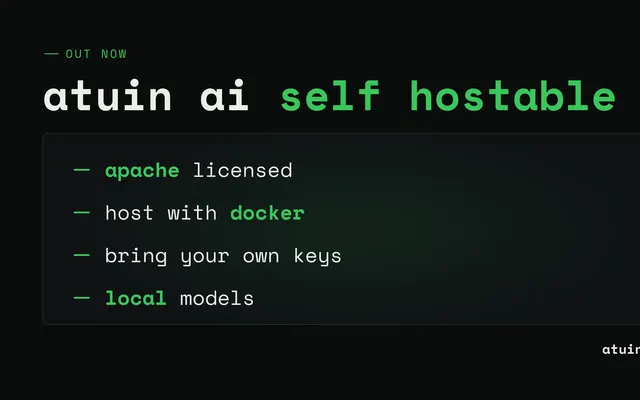
I can speak more concretely about how I think developers should respond than predict how the whole industry or governments will behave. In products touching terminals and developer machines, risk controls should be structural: encrypted user data, explicit permission before exposing additional context, opt-in AI features, self-hosting or local-model support, and confirmation around dangerous commands. Unattended agents should run in isolated VMs, with access to the feedback they need but not unrestricted access to the host. I also do not think promises are enough, especially for sensitive data. Cryptographic protection and user-controlled deployment provide stronger guarantees than statements about what a service intends to do. For generated software, strong language guarantees, tests, and human review still matter. I don’t have a well-founded forecast for how AI institutions generally will respond to larger societal or catastrophic risks. My views on practical developer-tool safeguards do not establish a broader prediction about industry governance or regulation.

Pergunta 4

Você espera que as pessoas mantenham o controle de sistemas de IA mais inteligentes que os humanos, e por quê?

I don’t have a well-founded prediction about whether humans could retain control of systems broadly smarter than humans. My practical experience is with current coding agents, where control comes from limiting permissions, isolating execution in VMs, requiring confirmation for dangerous commands, and keeping humans in the review loop. Those measures are useful now, but I would not pretend they answer the much larger question. A system being better than a person at software tasks does not automatically make it uncontrollable, and current operational safeguards do not prove that much more capable systems would remain controllable either.
Onde você se situa?
Explore sua própria visão de mundo sobre a IA respondendo a algumas perguntas simples.
Mapeie sua própria visão de mundo

Onde você se situa?

Mapear minha visão de mundo