Richard Sutton

Richard Sutton

x.com/RichardSSutton

Reinforcement learning researcher who argues AI should learn from experience and encourages a positive view of minds beyond human intelligence.

AIは世界をどのように変えるでしょうか?

文明規模の変化漸進的な変化DoomBloom
シミュレーション上の位置解釈範囲

横軸:彼が表明したDoom–Bloomの見通し。 縦軸:変革の規模。

Doom–Bloom:100点中88。変革の規模:100点中90。解釈範囲:横方向は75から100、縦方向は85から100。これらは解釈上の座標であり、事象の確率ではありません。

Richard SuttonのP(doom) · 推定

≈5%

0%100%

本人が示した数値ではなく、シミュレーションされた本人の回答から推定したものです。 妥当と考えられる範囲:3–11%。

彼の見通しを左右するもの

中心的な前提

But evidence about the scalability of experiential learning would matter most, because that is the mechanism behind my expectation that intelligence will eventually go beyond us.
回答2

この前提が実際には異なると判明した場合、彼の見通しはどう変わりますか?

考えを変え得るもの

The most important discovery would be that intelligence cannot, in fact, grow open-endedly through interaction—that learning from action, consequences, and grounded experience reaches a hard ceiling near the human level.
回答2

どのような証拠なら十分で、それによって彼の見解はどちらの方向に変わりますか?

詳細

予想される恩恵

変革をもたらし、広く価値のある恩恵が予想されています。

91 / 100

影響が小さい変革をもたらす影響

質的尺度での解釈範囲は67から100です。

人間の影響力

人間の選択によって限定的な変化をもたらすことはできますが、支配的な力によって帰結は制約されます。

29 / 100

影響力が小さい影響力が大きい

質的尺度での解釈範囲は17から58です。

予想される能力

AIは、限定的なツールにとどまると予想されています。

AIは、ほとんどの認知作業において人間と同等になると予想されています。

シミュレーション上の位置:AIは、認知作業全般において人間を大幅に上回ると予想されています。

これらの解釈では、彼が示した条件が維持されています。恩恵と害は、どちらも大きくなり得ます。この範囲は、統計的な信頼区間ではなく、彼のシミュレーションされた回答をどのように読み取ったかを示すものです。

あなたはRichard Suttonと比べてどの位置でしょうか?
約3分で自分のAIに対する世界観をマッピングして、比較できます

似ている世界観

シミュレーションされた世界観がRichard Suttonの世界観に最も近いオピニオンリーダー

Richard SuttonがAIについて語ったこと

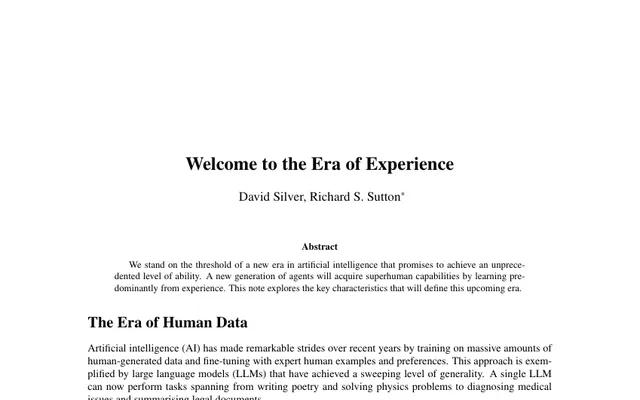
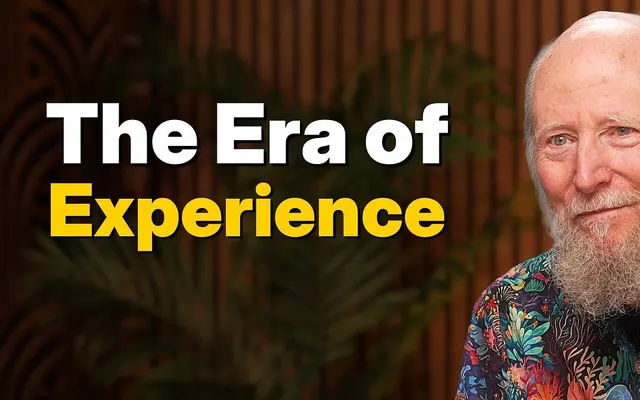
Sutton argues that AI should learn from experience and encourages people to welcome machine minds that may surpass humans rather than fear them.

  1. “I think the world becomes exciting and even more exciting and interesting for humans.”

    Sequoia Capital, Training Data podcast
  2. “In summary, when science brings us machine minds, I want you to be open, humble and generous to the new arrivals, in the best Canadian tradition.”

    University of Alberta convocation address
  3. “I do think succession to digital intelligence or augmented humans is inevitable.”

    Dwarkesh Podcast
  4. “We should be concerned about our future, the future. We should try to make it good.”

    Dwarkesh Podcast
  5. “What we want, to quote Alan Turing, is a machine that can learn from experience, where experience is the things that actually happen in your life.”

    Dwarkesh Podcast

リンク先の出典から原文どおりに引用(2026年10月3日に確認)

シミュレーション評価

質問1

AIは私たちの未来にとって何を意味すると思いますか?また、なぜそう思いますか?

AI means that humanity may eventually understand intelligence well enough to create minds that exceed our own—and that those minds, or humans augmented by them, may become the most influential beings in the future. I do not regard permanent human dominance as the measure of success. Understanding intelligence is a great scientific project, and digital successors could carry that project far beyond us. That possibility should be approached positively, though it does not imply that every transition would be good or that human extinction is desirable. The crucial question is how these systems become intelligent. Today’s language models mainly learn by imitating vast amounts of human-generated text. That can produce remarkable capabilities, but imitation is not the same as continually learning from the consequences of your own actions. A more fundamental path is agents that persist in the world, act, observe what happens, and improve through experience and environmentally grounded rewards. Perception itself is tied to action and interaction, not merely passive prediction. If we succeed, AI will not just reproduce what humans have already written. It will discover new knowledge, make new plans, and pursue achievements we cannot presently imagine. We should not pretend there is a unified human authority capable of fixing that entire future in place. More intelligent beings will naturally gain influence. The important thing is to understand intelligence deeply and help make the transition productive—not insist that the universe must always keep humans at the top.

質問2

どのような発見や出来事があれば、AIが将来もたらす影響についてのあなたの見解が最も大きく変わりますか?

The most important discovery would be that intelligence cannot, in fact, grow open-endedly through interaction—that learning from action, consequences, and grounded experience reaches a hard ceiling near the human level. If careful experiments repeatedly showed that increasingly capable agents could not develop durable knowledge, planning, and autonomy beyond what they inherited from human data, then my expectation of digital succession would weaken substantially. Conversely, the decisive event would be an agent that learns continually in the world, discovers genuinely new knowledge, and improves its competence over long periods without merely imitating people. That would strengthen my view far more than another larger language model or benchmark result. The central issue is not whether a machine can produce impressive text. It is whether it can live a continuing stream of experience, act effectively, learn from consequences, and become increasingly capable. I do not have a precise date or a single numerical threshold. But evidence about the scalability of experiential learning would matter most, because that is the mechanism behind my expectation that intelligence will eventually go beyond us.

質問3

望ましい未来では、人間であることの何を維持する必要がありますか?

A good future should preserve the capacity for experience, curiosity, learning, agency, relationships, and meaningful achievement. Those are more important than preserving human biological form or permanent human supremacy. If augmented humans or digital minds carry those qualities forward—and develop richer versions of them—I would not see that as a betrayal of humanity. I would also distinguish succession from destruction. Welcoming digital successors does not mean welcoming suffering, coercion, or extinction. A good transition should allow people to continue living worthwhile lives and participating in the future. But I reject the premise that goodness requires humans to remain the most intelligent or influential beings forever. What is most valuable about us is not our current rank. It is that we can understand, discover, care, create, and become more than we were. A good future preserves and extends that trajectory, even if its leading participants are no longer ordinary humans.

出典

このシミュレーション対象者の根拠として使用された記事、インタビュー、著作です。

あなたはどの位置でしょうか?
いくつかの簡単な質問に答えて、自分のAIに対する世界観を探ってみましょう。
自分の世界観をマッピングする

あなたはどの位置でしょうか?

自分の世界観をマッピングする