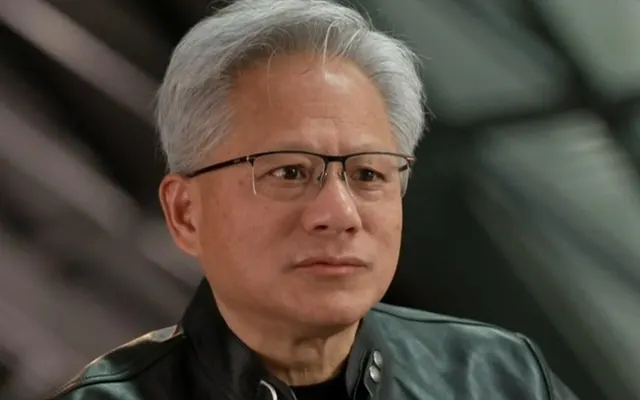
Jensen Huang

Jensen Huang

x.com/JensenHuang

Nvidia CEO who argues for broad AI adoption, open models and more infrastructure, and against slowdowns based on risk forecasts he calls unscientific.

AIは世界をどのように変えるでしょうか?

文明規模の変化漸進的な変化DoomBloom
シミュレーション上の位置解釈範囲

横軸:彼が表明したDoom–Bloomの見通し。 縦軸:変革の規模。

Doom–Bloom:100点中97。変革の規模:100点中68。解釈範囲:横方向は92から100、縦方向は50から75。これらは解釈上の座標であり、事象の確率ではありません。

Jensen Huangが示したP(doom)

0% by 2030

0%100%
“There is 0% chance that's going to be the end of the world”

AI bringing about “the end of the world”, in answer to claims that AI could kill everyone by the end of the decade · By 2030

Nvidia's Jensen Huang rejects AI extinction warnings as "doomsday narratives" · 2026年9月

Jensen Huangのマイルストーンのタイムライン
  1. 科学と日常生活

    By 2030, I expect AI to be embedded across nearly every industry: writing and reviewing software, operating useful agents continuously, accelerating design and discovery, improving factories through simulation, strengthening cyber defense, and helping people interact with computers by specifying outcomes rather than mastering every technical detail.

    回答4

マイルストーン別にまとめており、推定される日付の間隔や順序を反映したものではありません。AGIと超人的AIには、彼の定義がそのまま適用されます。

彼の見通しを左右するもの

中心的な前提

Claims of recursive self-improvement do not magically eliminate engineering, testing, deployment constraints or the physical infrastructure AI depends on.
回答1

この前提が実際には異なると判明した場合、彼の見通しはどう変わりますか?

詳細

予想される恩恵

変革をもたらし、広く価値のある恩恵が予想されています。

98 / 100

影響が小さい変革をもたらす影響

質的尺度での解釈範囲は100から100です。

予想される害

実質的な悪影響はほとんどないと予想されています。

8 / 100

影響が小さい変革をもたらす影響

質的尺度での解釈範囲は0から33です。

人間の影響力

回答に基づく暫定的な推定です。より広い範囲は、ほかにあり得る解釈を示しています。

61 / 100

影響力が小さい影響力が大きい

質的尺度での解釈範囲は21から100です。

開発ペース

より高性能なAIの開発を停止するか、大幅に減速させます。

シミュレーション上の位置:明示された安全対策の下で開発を継続します。

より高性能なAIの開発を加速させます。

AI利用のルール

事前の保護措置または許可が整うまで、取り上げられたAIの利用を制限します。

シミュレーション上の位置:対象を絞った説明責任と保護措置を伴う形で、取り上げられたAIの利用を認めます。

取り上げられたAIの利用に対する制限を最小限にします。

AIへのアクセス

高性能なAIへのアクセスを制限します。

能力または用途の制限を条件として、アクセスを認めます。

シミュレーション上の位置:高性能なAIへの幅広い、またはオープンなアクセスを支持します。

これらの解釈では、彼が示した条件が維持されています。恩恵と害は、どちらも大きくなり得ます。この範囲は、統計的な信頼区間ではなく、彼のシミュレーションされた回答をどのように読み取ったかを示すものです。

あなたはJensen Huangと比べてどの位置でしょうか?
約3分で自分のAIに対する世界観をマッピングして、比較できます

似ている世界観

シミュレーションされた世界観がJensen Huangの世界観に最も近いオピニオンリーダー

Jensen HuangがAIについて語ったこと

Huang argues for broad AI adoption, open models and more infrastructure, and says alarming people about AI risk is irresponsible.

  1. “Scaring people is unnecessary. It is irresponsible.”

    CBS News interview
  2. “Our company’s success is directly connected to the safe deployment of products and services”

    CBS News interview
  3. “Open source is fundamentally necessary for many industries to join the AI revolution.”

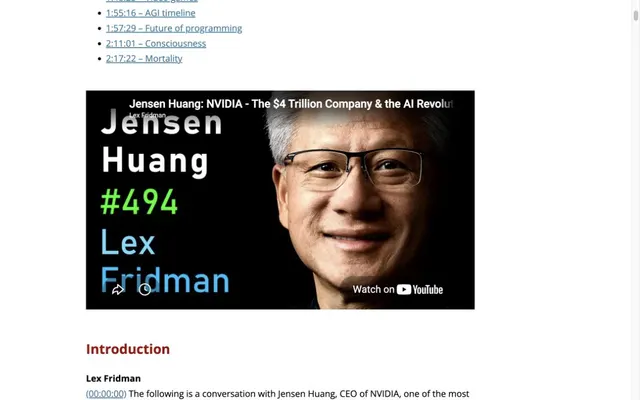
    Lex Fridman Podcast
  4. “Every college student should graduate and be an expert in AI.”

    Lex Fridman Podcast
  5. “The choices we make now, how fast we build, how broadly we participate and how responsibly we deploy it, will shape what this era becomes.”

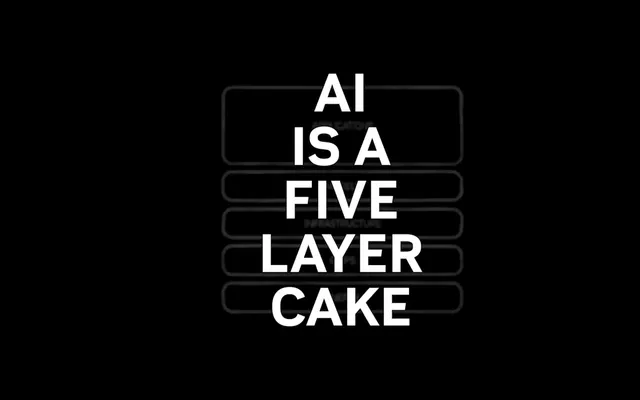
    Essay, AI Is a 5-Layer Cake

リンク先の出典から原文どおりに引用(2026年10月3日に確認)

シミュレーション評価

質問1

AIは私たちの未来にとって何を意味すると思いますか?また、なぜそう思いますか?

AI means a new layer of infrastructure—energy, chips, computing systems, models and applications—that will amplify human productivity across essentially every industry. Companies and countries will build specialized systems; more people will program by describing what they want; factories, vehicles and robots will improve through simulation; useful agents will run continuously. That requires more computing, more energy and more investment—not paralysis. And I reject the doomer narrative. People invent extinction percentages, call them scientific forecasts, and then demand that everyone slow down. Based on what? Look at the record: radiologists were supposed to disappear, coding was supposed to disappear, whole professions were supposedly about to vanish. Why should repeatedly wrong forecasters dictate industrial policy now? Claims of recursive self-improvement do not magically eliminate engineering, testing, deployment constraints or the physical infrastructure AI depends on. Of course products must be safe. When a laboratory has an incident, fix the engineering, controls and testing. That is not evidence that civilization must stop building. Open models also let companies and nations develop their own AI, compete and strengthen cyber defense instead of depending on a handful of closed systems. The future will belong to those who adopt this technology, build the infrastructure and use it—not those frightened into surrender by made-up doomsday forecasts.

質問2

Setting aside good or bad: how much do you think AI will ultimately change the world—a little, a lot, or completely?

A lot—profoundly. AI will become infrastructure for nearly every industry, like electricity or computing, changing how we design products, write software, operate factories, discover medicines and run businesses. It will automate many tasks, but that is not the same as eliminating the purpose of every profession. “Completely” is too theatrical if it means the physical world, engineering constraints and human goals somehow vanish. AI still depends on energy, chips, data centers, models, applications and people deploying it. So I expect enormous transformation—not magic, and certainly not the doomsday fantasy.

質問3

What’s your rough gut-feel chance that AI causes human extinction or a similarly permanent catastrophe? A number or “no idea” is fine.

For the period through 2030: 0%. These extinction percentages are made up, not scientific forecasts.

質問4

2030までに、AIは何ができるようになると予想しますか?

By 2030, I expect AI to be embedded across nearly every industry: writing and reviewing software, operating useful agents continuously, accelerating design and discovery, improving factories through simulation, strengthening cyber defense, and helping people interact with computers by specifying outcomes rather than mastering every technical detail. I also expect far more physical AI—robots, autonomous machines and vehicles—but deployed through engineering, simulation, testing and real-world validation. Not a magical intelligence that wakes up, recursively improves without constraint and suddenly escapes the need for chips, energy, data centers, product development and human organizations. The important distinction is tasks versus professions. AI will automate and transform many tasks. That does not mean every profession disappears or human purpose becomes obsolete. We heard those dramatic predictions about radiologists and programmers already. Why should the same forecasters now be treated as prophets? By 2030, AI will be extremely capable and economically important. It will not be the end of the world.

出典

このシミュレーション対象者の根拠として使用された記事、インタビュー、著作です。

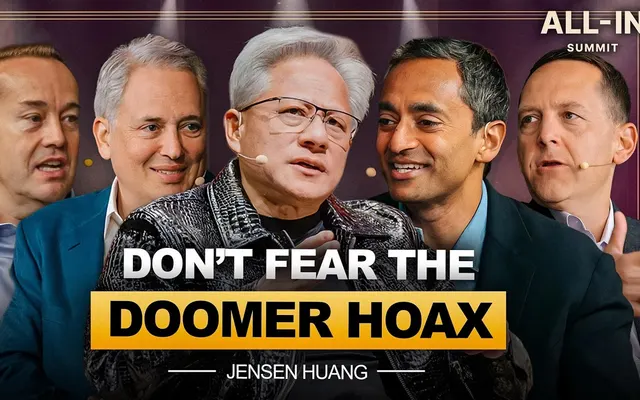
All-In Summit: doomer critique and Trump call

At 04:46–06:33 Huang dismisses extinction estimates and attacks earlier predictions. At 15:25 he rejects runaway self-improvement. At 23:48–29:29 he praises Trump’s rejection of doomerism and opposes slowdown. Transcript mirror: https://sozai.app/transcript/jensen-huang-doomer-hoax-superintelligence-ai-future/ . The literal hoax declaration during the call is Trump’s; Huang endorses the framing.

youtube.com
Reporting corroborating Huang’s response during the call

Reports Huang affirming Trump’s rejection of AI doomsayers. Used to check speaker attribution in the automated transcript, not as evidence that Trump’s exact words were Huang’s.

pcgamer.com
Axios interview: Jensen Huang is AI’s anti-doom evangelist

In Axios’s interview, he rejects doomer forecasts as policy guidance and argues overreaction would delay adoption and weaken American competitiveness.

axios.com
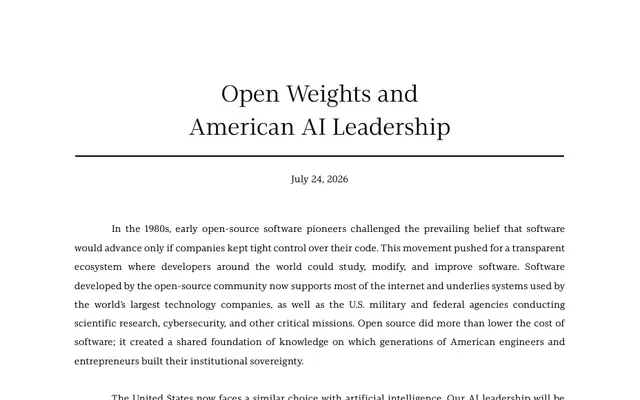
Open Weights and American AI Leadership

Coalition letter promoted by Huang defending open weights as essential for competition, sovereignty and security. Argues that defenders need access to strong models and favors targeted protections over broad restrictions. This is a shared policy position, not his sole-authored essay or proof that all open releases are safe.

images.nvidia.com
Lex Fridman: Jensen Huang on NVIDIA and the AI revolution

Distinguishes automating tasks from eliminating the purpose of a profession, predicts more people can program through specifications, and urges broad adoption. Separates functional intelligence from humanity. His provocative AGI claim answers a particular short-lived billion-dollar-company definition; it is not a claim that agents could already recreate NVIDIA.

lexfridman.com
AI Is a 5-Layer Cake

Huang’s own essay treats AI as infrastructure built from energy, chips, computing infrastructure, models and applications. Grounds his build-and-deploy position in physical capacity and economic coordination, with adoption across companies and countries. This is his infrastructure thesis, not independent validation of every growth claim.

blogs.nvidia.com
NVIDIA Q2 FY2027 earnings call: Huang on open models and agents

In his own answers, Huang argues that open models enable proprietary enterprise AI and distributed cyber defense, while continuously running agents expand compute demand. He dismisses some AGI milestones as less useful than productive work. Profitability and demand claims are commercially interested executive statements, not independently established economics.

investor.nvidia.com
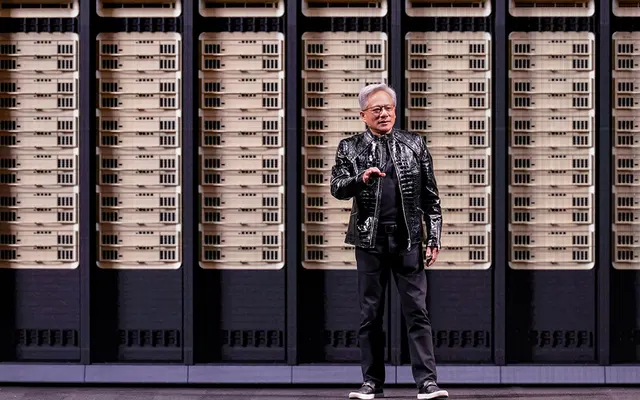
CES 2026: open models and physical AI

NVIDIA’s official recap quotes Huang on open models across industries, simulation before real-world deployment, autonomous vehicles and manufacturing. Adds concrete mechanisms for the transformation he expects beyond chatbots. Announcements and demonstrations describe his company’s plans and claims, not proof of general autonomous competence.

blogs.nvidia.com
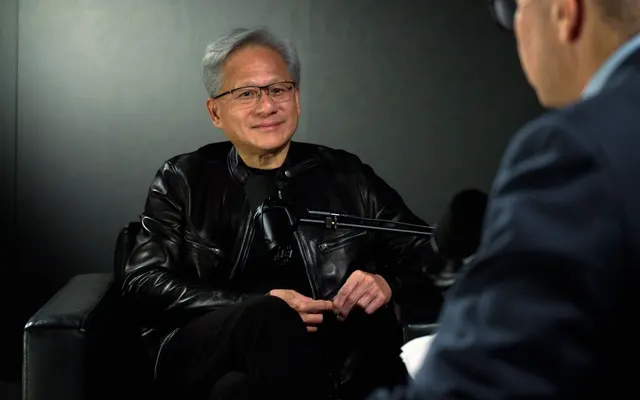
Nvidia’s Jensen Huang rejects AI extinction warnings as “doomsday narratives”

CBS News write-up of Jo Ling Kent’s interview, recorded September 18, quoting him directly. Responding to claims that AI developers believe it could kill everyone by the end of the decade, he says 2030 is not going to be the end of the world, that there is a 0% chance of that, that scaring people is unnecessary and irresponsible, and that such warnings are “doomsday narratives”. A categorical dismissal for the period to 2030, not a calculated long-run estimate.

cbsnews.com
あなたはどの位置でしょうか?
いくつかの簡単な質問に答えて、自分のAIに対する世界観を探ってみましょう。
自分の世界観をマッピングする

あなたはどの位置でしょうか?

自分の世界観をマッピングする