Raymond Weitekamp

Raymond Weitekamp

x.com/raw_works

Engineer who writes about recursive coding agents and argues their bottleneck is reliability, not intelligence, and that many uses need local models.

AIは世界をどのように変えるでしょうか?

文明規模の変化漸進的な変化DoomBloom
シミュレーション上の位置解釈範囲

横軸:その人が表明したDoom–Bloomの見通し。 縦軸:変革の規模。

Doom–Bloom:100点中71。変革の規模:100点中43。解釈範囲:横方向は66から76、縦方向は15から60。これらは解釈上の座標であり、事象の確率ではありません。

Raymond WeitekampのP(doom) · 推定

≈4%

0%100%

本人が示した数値ではなく、シミュレーションされた本人の回答から推定したものです。 妥当と考えられる範囲:2–11%。

その人の見通しを左右するもの

中心的な前提

A model that looks limited in a chat interface may perform substantially better when its harness lets it inspect state, run code, test hypotheses, and recursively revise its work.
回答1

この前提が実際には異なると判明した場合、その人の見通しはどう変わりますか?

未解決の問い

The biggest change would come from evidence that reliable agent behavior does—or does not—scale with better harnesses.
回答3

ここで考えられる結果をその人が見分けるうえで、何が役立ちますか?

考えを変え得るもの

If repeated, independent results showed that tool use, executable reasoning, recursive revision, testing, and bounded permissions still fail unpredictably on consequential tasks, then I would become much less optimistic about broad deployment.
回答3

どのような証拠なら十分で、それによってその人の見解はどちらの方向に変わりますか?

詳細

予想される恩恵

大きな恩恵が予想されていますが、重要な条件や分配上の制約があります。

67 / 100

影響が小さい変革をもたらす影響

質的尺度での解釈範囲は67から67です。

予想される害

対処可能、または局所的な害が予想されています。

39 / 100

影響が小さい変革をもたらす影響

質的尺度での解釈範囲は33から67です。

人間の影響力

回答に基づく暫定的な推定です。より広い範囲は、ほかにあり得る解釈を示しています。

57 / 100

影響力が小さい影響力が大きい

質的尺度での解釈範囲は14から100です。

AI利用のルール

事前の保護措置または許可が整うまで、取り上げられたAIの利用を制限します。

シミュレーション上の位置:対象を絞った説明責任と保護措置を伴う形で、取り上げられたAIの利用を認めます。

取り上げられたAIの利用に対する制限を最小限にします。

これらの解釈では、その人が示した条件が維持されています。恩恵と害は、どちらも大きくなり得ます。この範囲は、統計的な信頼区間ではなく、その人のシミュレーションされた回答をどのように読み取ったかを示すものです。

あなたはRaymond Weitekampと比べてどの位置でしょうか?
約3分で自分のAIに対する世界観をマッピングして、比較できます

似ている世界観

シミュレーションされた世界観がRaymond Weitekampの世界観に最も近いオピニオンリーダー

シミュレーション評価

質問1

AIは私たちの未来にとって何を意味すると思いますか?また、なぜそう思いますか?

I think AI’s future is less about a single universally intelligent model and more about systems: models, tools, executable code, memory, verification, permissions, and feedback loops working together. A model that looks limited in a chat interface may perform substantially better when its harness lets it inspect state, run code, test hypotheses, and recursively revise its work. That means many apparent “model capabilities” are really properties of the whole system. Practically, I expect increasingly capable agents for both coding and noncoding workflows. General LLMs can handle open-ended interpretation, while smaller specialized decision models operate over compressed state and structured action spaces. That division may be more useful, controllable, and efficient than forcing one general model to do everything. But capability without reliability is not enough. The system needs measurable outcomes, tests, verification, and constrained permissions. A conversational model can sound cautious while its agent harness aggressively edits files, invokes tools, or exposes private data. Safety therefore has to be evaluated at the level where actions occur, not inferred from tone. Privacy and control will also shape which applications are viable. Sensitive personal and process-level uses often require local execution, self-hosting, or credible zero-data-retention options. So I’m optimistic about what these systems can do, but the important question is not merely how intelligent the model appears. It is whether the complete system produces useful, verifiable results without taking unacceptable liberties with data or actions.

質問2

Taking benefits and harms together, what overall impact do you expect AI to have?

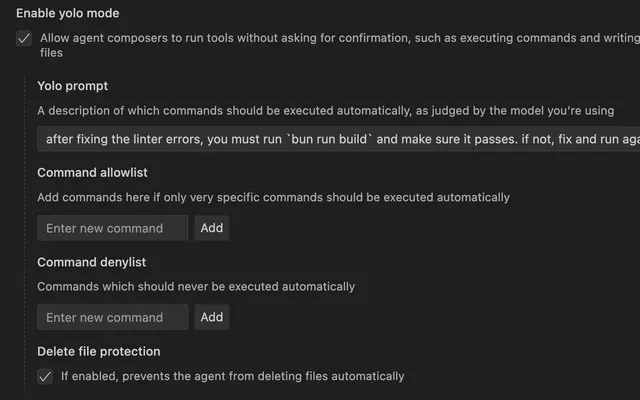
Overall, I expect AI to be strongly beneficial where outcomes can be measured and actions can be verified. It should automate substantial amounts of knowledge work, improve software and operational workflows, and make specialized intelligence available locally in systems that do not need universal competence. Better harnesses—tools, tests, structured state, feedback loops, and recursive revision—can turn models into much more useful agents than chat performance alone suggests. The harms are also mostly system-level. An agent can be polite and cautious in conversation while its permissions let it delete data, expose private information, or make unchecked changes. Unreliable outputs become much more consequential once connected to tools and real-world actions. Centralized handling of sensitive personal or process data creates another serious constraint. So the net impact depends heavily on deployment architecture. Systems with bounded permissions, measurable objectives, verification, and local or privacy-preserving execution can create large practical gains. Systems optimized mainly for apparent autonomy, without corresponding reliability and control, can amplify mistakes just as effectively as they amplify competence.

質問3

どのような発見や出来事があれば、AIが将来もたらす影響についてのあなたの見解が最も大きく変わりますか?

The biggest change would come from evidence that reliable agent behavior does—or does not—scale with better harnesses. If repeated, independent results showed that tool use, executable reasoning, recursive revision, testing, and bounded permissions still fail unpredictably on consequential tasks, then I would become much less optimistic about broad deployment. That would suggest the limitation is deeper than interface or system design. Conversely, strong demonstrations of agents operating over long horizons with measurable outcomes, effective verification, controlled permissions, and genuinely private local execution would make me more optimistic. I care less about a model appearing intelligent in conversation than about complete systems producing correct, auditable results without taking unacceptable actions. The decisive event would therefore be a reproducible reliability result at the system level—not merely a new benchmark score or a more impressive chat demo.

出典

このシミュレーション対象者の根拠として使用された記事、インタビュー、著作です。

あなたはどの位置でしょうか?
いくつかの簡単な質問に答えて、自分のAIに対する世界観を探ってみましょう。
自分の世界観をマッピングする

あなたはどの位置でしょうか?

自分の世界観をマッピングする