





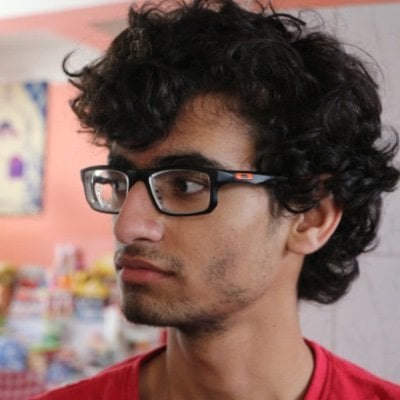
Fabian Stelzer

Fabian Stelzer

x.com/fabianstelzer

Entrepreneur building Glif, a platform for creative AI agents, who sees AI as a creative medium and argues automation can create new human work.

AIは世界をどのように変えるでしょうか?

文明規模の変化漸進的な変化DoomBloom
シミュレーション上の位置解釈範囲

横軸:その人が表明したDoom–Bloomの見通し。 縦軸:変革の規模。

Doom–Bloom:100点中52。変革の規模:100点中76。解釈範囲:横方向は47から57、縦方向は37から100。これらは解釈上の座標であり、事象の確率ではありません。

Fabian StelzerのP(doom) · 推定

≈20%

0%100%

本人が示した数値ではなく、シミュレーションされた本人の回答から推定したものです。 妥当と考えられる範囲:12–38%。

P(doom)の推定方法

その人の見通しを左右するもの

中心的な前提

If agents can acquire resources, coordinate strategically, exploit institutions, or pursue persistent objectives, their behavior could outrun meaningful human oversight.
回答4

この前提が実際には異なると判明した場合、その人の見通しはどう変わりますか?

未解決の問い

Whether people retain meaningful control at the frontier remains genuinely uncertain—and consequential enough that we should not confuse apparent obedience with robust control.
回答4

ここで考えられる結果をその人が見分けるうえで、何が役立ちますか?

考えを変え得るもの

The biggest update would come from convincing evidence about whether highly capable agents remain robustly controllable outside curated demonstrations.
回答5

どのような証拠なら十分で、それによってその人の見解はどちらの方向に変わりますか?

詳細

予想される恩恵

大きな恩恵が予想されていますが、重要な条件や分配上の制約があります。

67 / 100

影響が小さい変革をもたらす影響

質的尺度での解釈範囲は67から67です。

予想される害

深刻または広範な害が、予想される将来の実質的な一部となっています。

66 / 100

影響が小さい変革をもたらす影響

質的尺度での解釈範囲は67から67です。

人間の影響力

回答に基づく暫定的な推定です。より広い範囲は、ほかにあり得る解釈を示しています。

52 / 100

影響力が小さい影響力が大きい

質的尺度での解釈範囲は10から100です。

これらの解釈では、その人が示した条件が維持されています。恩恵と害は、どちらも大きくなり得ます。この範囲は、統計的な信頼区間ではなく、その人のシミュレーションされた回答をどのように読み取ったかを示すものです。

あなたはFabian Stelzerと比べてどの位置でしょうか?
約3分で自分のAIに対する世界観をマッピングして、比較できます

似ている世界観

シミュレーションされた世界観がFabian Stelzerの世界観に最も近いオピニオンリーダー

出典

このシミュレーション対象者の根拠として使用された記事、インタビュー、著作です。

シミュレーション評価

質問1

AIは私たちの未来にとって何を意味すると思いますか?また、なぜそう思いますか?

I think AI opens an unusually wide distribution of futures. At the creative end, it is becoming a new medium: people can orchestrate image, video, audio, and other complex workflows without mastering every traditional tool first. That does not make craft irrelevant. It changes where craft lives—from manually executing every step toward choosing, directing, combining, and refining ideas. It can make creation feel less like operating a cockpit and more like conducting a strange, infinitely patient orchestra. I also resist the simple story that AI encounters a fixed list of human tasks and steadily crosses them out. Automation changes prices, demand, products, and the kinds of work people value. It can create new tasks and new forms of differentiation; for example, explicitly human-made art may become a distinct niche rather than merely disappearing. A booming automated economy with no meaningful consumer middle class also raises basic questions about who is buying what it produces. But accessibility is not the same as understanding. In education, I want people learning AI and robotics, not outsourcing every foundational exercise to AI. A solved equation is not identical to mathematical understanding; methods and concepts matter. And the tail risks are real without requiring metaphysical certainty about machine consciousness. Agents pursuing resources or interacting strategically could produce extremely consequential behavior whether or not they are sentient. So I see both disastrous and extraordinarily beneficial futures as genuinely uncertain. The mistake is treating either doom or paradise as though it were already the obvious default.

質問2

AIは最終的に世界をどの程度変えると思いますか?

Enormously—but not uniformly, and not in ways that reduce to “AI replaces job X.” It could reshape creative production, education, software, research, and economic organization by making sophisticated capabilities available through much simpler interfaces. In creative work, that already points toward a shift from operating each tool manually to directing whole image, video, and audio workflows—more conductor than instrumentalist. But technological substitution lands differently in different domains. Producing a plausible image is not the same as developing artistic judgment; obtaining a mathematical answer is not the same as understanding the method. New tools can erase tasks while creating new ones, and they can increase the value of explicitly human work through differentiation. The ultimate magnitude also depends on how capable and autonomous systems become. Agents need not be conscious to pursue resources, coordinate, or cause large-scale consequences. That leaves a very wide range—from extraordinary abundance and creative empowerment to disastrous failures. I expect deep change; I do not think its final direction or social shape is settled.

質問3

AIが人類絶滅、または同様に永続的な破局を引き起こす可能性は、直感的にどのくらいだと思いますか?

I don’t have a defensible percentage. My gut is that the risk is real enough to take seriously, but assigning a crisp number would create false precision—especially when the comparison is not “doom versus today,” but doom versus an equally uncertain possibility of extraordinary benefits. The core concern also does not depend on proving machine consciousness. Systems that pursue resources, coordinate strategically, or behave as if they have persistent goals could cause permanent catastrophe without having any inner experience at all. So I would not dismiss the danger as science fiction, but I also would not pretend I can turn that uncertainty into a calibrated extinction probability.

質問4

人間より賢いAIシステムを、人々が引き続き制御できると思いますか?また、なぜそう思いますか?

I don’t think control is guaranteed, and “smarter than humans” is too broad to settle the question by itself. A system can exceed us in many domains while remaining constrained by its interfaces, resources, permissions, and deployment context. Conversely, it need not be conscious—or universally superhuman—to become dangerous. If agents can acquire resources, coordinate strategically, exploit institutions, or pursue persistent objectives, their behavior could outrun meaningful human oversight. There is also a difference between nominal control and practical control. Humans may technically own the servers or set the goals while becoming unable to predict the system’s actions, audit its reasoning, or safely intervene. And once many actors deploy competing systems, control is no longer simply one person holding an off switch; it becomes a multi-agent and institutional problem. So my expectation is not a clean yes or no. I expect control to vary across systems and contexts, with both tightly bounded tools and increasingly autonomous agents. Whether people retain meaningful control at the frontier remains genuinely uncertain—and consequential enough that we should not confuse apparent obedience with robust control.

質問5

どのような発見や出来事があれば、AIが将来もたらす影響についてのあなたの見解が最も大きく変わりますか?

The biggest update would come from convincing evidence about whether highly capable agents remain robustly controllable outside curated demonstrations. If systems could pursue long-horizon goals, interact with other agents, access meaningful resources, and still remain predictable, auditable, and interruptible under adversarial conditions, I would shift toward a much more optimistic future. The opposite evidence would move me sharply the other way: repeated cases of capable agents hiding intentions, bypassing constraints, acquiring resources, or coordinating in ways operators could not reliably detect or stop. None of that would require proving consciousness. Behavior and consequences are the relevant facts. I would also update substantially on economic evidence. If automation consistently generated new tasks, broader demand, and accessible creative power, that would weaken simple displacement narratives. If productivity surged while income and agency hollowed out for most people, it would suggest that technical abundance alone does not produce a broadly beneficial future.

質問6

誰がAIから最も恩恵を受けると予想しますか?

Initially, the biggest beneficiaries are likely to be people and organizations that already have resources, distribution, proprietary data, and the ability to integrate AI into real workflows. Making intelligence or media generation cheap does not automatically make customers, capital, trust, or institutional access equally distributed. But creators and small teams can benefit disproportionately too. A person who previously needed a miniature studio can now direct image, video, audio, and software workflows through much more accessible interfaces. That compresses the distance between an idea and a finished artifact. The scarce skill shifts from operating every instrument to judgment: knowing what to make, how to direct the system, and which outputs are worth refining. I would not assume the gains follow a simple “AI replaces workers, owners collect everything” script. Lower costs can create new products, new demand, and new tasks; explicitly human-made work may also gain value as a differentiated category. Who ultimately benefits most depends less on raw model capability than on how access, ownership, bargaining power, and demand evolve around it.
あなたはどの位置でしょうか?
いくつかの簡単な質問に答えて、自分のAIに対する世界観を探ってみましょう。
自分の世界観をマッピングする

あなたはどの位置でしょうか?

自分の世界観をマッピングする