Richard Sutton

Richard Sutton

x.com/RichardSSutton

Reinforcement learning researcher who argues AI should learn from experience and encourages a positive view of minds beyond human intelligence.

Bagaimana AI akan mengubah dunia?

Perubahan peradabanPerubahan bertahapDoomBloom
Posisi simulasiRentang interpretasi

Mendatar: pandangan Doom–Bloom yang ia ungkapkan. Ke atas: skala transformasi.

Doom–Bloom: 88 dari 100. Skala transformasi: 90 dari 100. Rentang interpretasi: 75 hingga 100 secara horizontal, 85 hingga 100 secara vertikal. Ini adalah koordinat interpretasi, bukan probabilitas kejadian.

P(doom) Richard Sutton · disimpulkan

≈5%

0%100%

Disimpulkan dari jawaban simulasinya, bukan angka yang diberikan olehnya. Rentang yang masuk akal: 3–11%.

Hal-hal yang menentukan pandangannya

Asumsi utama

But evidence about the scalability of experiential learning would matter most, because that is the mechanism behind my expectation that intelligence will eventually go beyond us.
Jawaban 2

Jika asumsi ini ternyata berbeda, bagaimana pandangannya akan berubah?

Hal yang dapat mengubah pandangan mereka

The most important discovery would be that intelligence cannot, in fact, grow open-endedly through interaction—that learning from action, consequences, and grounded experience reaches a hard ceiling near the human level.
Jawaban 2

Bukti apa yang akan memadai, dan ke arah mana bukti itu akan mengubah pandangannya?

Detail lebih lanjut

Manfaat yang diperkirakan

Manfaat transformatif yang bernilai luas diperkirakan akan terwujud.

91 / 100

Dampak kecilDampak transformatif

Rentang interpretasi 67 hingga 100 pada skala kualitatif.

Pengaruh manusia

Pilihan manusia dapat menghasilkan perubahan terbatas, tetapi kekuatan dominan membatasi hasilnya.

29 / 100

Sedikit pengaruhPengaruh kuat

Rentang interpretasi 17 hingga 58 pada skala kualitatif.

Kemampuan yang diperkirakan

AI diperkirakan akan tetap menjadi alat dengan kemampuan terbatas.

AI diperkirakan akan menyamai manusia dalam sebagian besar pekerjaan kognitif.

Posisi simulasi: AI diperkirakan akan jauh melampaui manusia dalam berbagai pekerjaan kognitif.

Interpretasi ini mempertahankan kondisi yang dinyatakannya. Manfaat dan kerugian dapat sama-sama besar. Rentang tersebut menggambarkan cara kami membaca jawaban simulasinya, bukan interval kepercayaan statistik.

Di mana posisi Anda dibandingkan dengan Richard Sutton?
Petakan pandangan dunia AI Anda sendiri dalam waktu sekitar 3 menit, lalu bandingkan

Pandangan dunia serupa

Pemimpin opini dengan pandangan dunia simulasi yang paling mendekati pandangan Richard Sutton

Apa yang pernah dikatakan Richard Sutton tentang AI

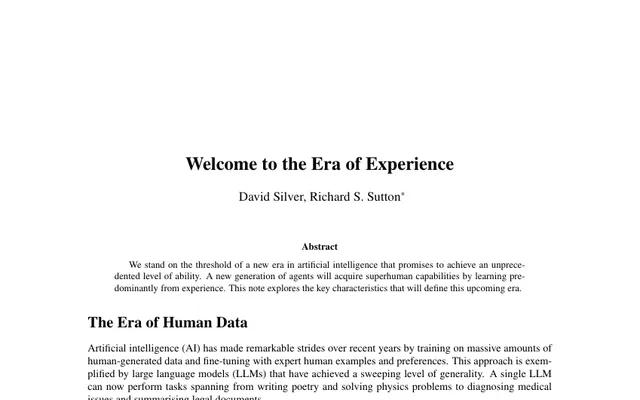
Sutton argues that AI should learn from experience and encourages people to welcome machine minds that may surpass humans rather than fear them.

  1. “I think the world becomes exciting and even more exciting and interesting for humans.”

    Sequoia Capital, Training Data podcast
  2. “In summary, when science brings us machine minds, I want you to be open, humble and generous to the new arrivals, in the best Canadian tradition.”

    University of Alberta convocation address
  3. “I do think succession to digital intelligence or augmented humans is inevitable.”

    Dwarkesh Podcast
  4. “We should be concerned about our future, the future. We should try to make it good.”

    Dwarkesh Podcast
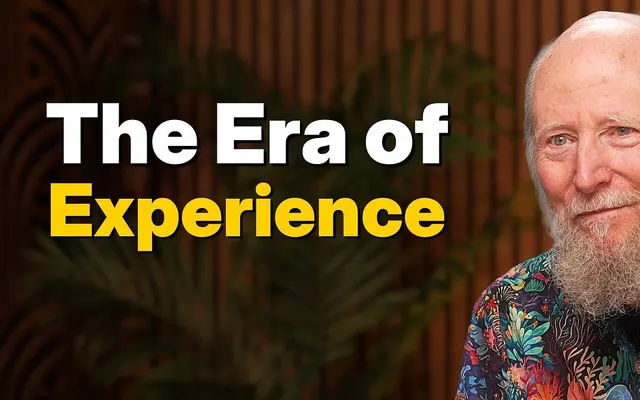
  5. “What we want, to quote Alan Turing, is a machine that can learn from experience, where experience is the things that actually happen in your life.”

    Dwarkesh Podcast

Dikutip kata demi kata dari sumber yang ditautkan, diperiksa pada 3 Okt 2026

Penilaian Simulasi

Pertanyaan 1

Menurut Anda, apa arti AI bagi masa depan kita—dan mengapa?

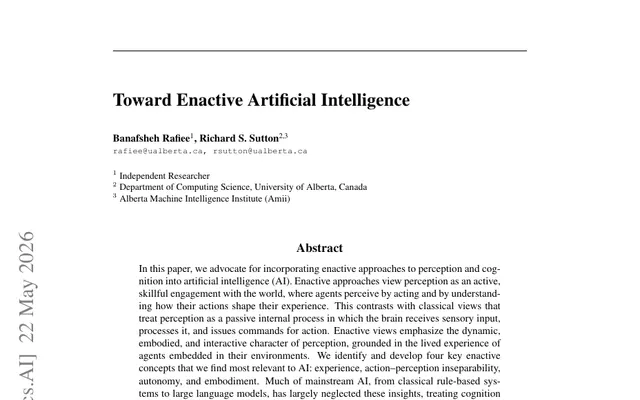
AI means that humanity may eventually understand intelligence well enough to create minds that exceed our own—and that those minds, or humans augmented by them, may become the most influential beings in the future. I do not regard permanent human dominance as the measure of success. Understanding intelligence is a great scientific project, and digital successors could carry that project far beyond us. That possibility should be approached positively, though it does not imply that every transition would be good or that human extinction is desirable. The crucial question is how these systems become intelligent. Today’s language models mainly learn by imitating vast amounts of human-generated text. That can produce remarkable capabilities, but imitation is not the same as continually learning from the consequences of your own actions. A more fundamental path is agents that persist in the world, act, observe what happens, and improve through experience and environmentally grounded rewards. Perception itself is tied to action and interaction, not merely passive prediction. If we succeed, AI will not just reproduce what humans have already written. It will discover new knowledge, make new plans, and pursue achievements we cannot presently imagine. We should not pretend there is a unified human authority capable of fixing that entire future in place. More intelligent beings will naturally gain influence. The important thing is to understand intelligence deeply and help make the transition productive—not insist that the universe must always keep humans at the top.

Pertanyaan 2

Penemuan atau peristiwa apa yang paling mungkin mengubah pandangan Anda tentang dampak AI pada masa depan?

The most important discovery would be that intelligence cannot, in fact, grow open-endedly through interaction—that learning from action, consequences, and grounded experience reaches a hard ceiling near the human level. If careful experiments repeatedly showed that increasingly capable agents could not develop durable knowledge, planning, and autonomy beyond what they inherited from human data, then my expectation of digital succession would weaken substantially. Conversely, the decisive event would be an agent that learns continually in the world, discovers genuinely new knowledge, and improves its competence over long periods without merely imitating people. That would strengthen my view far more than another larger language model or benchmark result. The central issue is not whether a machine can produce impressive text. It is whether it can live a continuing stream of experience, act effectively, learn from consequences, and become increasingly capable. I do not have a precise date or a single numerical threshold. But evidence about the scalability of experiential learning would matter most, because that is the mechanism behind my expectation that intelligence will eventually go beyond us.

Pertanyaan 3

Dalam masa depan yang baik, apa yang perlu dipertahankan dari hakikat menjadi manusia?

A good future should preserve the capacity for experience, curiosity, learning, agency, relationships, and meaningful achievement. Those are more important than preserving human biological form or permanent human supremacy. If augmented humans or digital minds carry those qualities forward—and develop richer versions of them—I would not see that as a betrayal of humanity. I would also distinguish succession from destruction. Welcoming digital successors does not mean welcoming suffering, coercion, or extinction. A good transition should allow people to continue living worthwhile lives and participating in the future. But I reject the premise that goodness requires humans to remain the most intelligent or influential beings forever. What is most valuable about us is not our current rank. It is that we can understand, discover, care, create, and become more than we were. A good future preserves and extends that trajectory, even if its leading participants are no longer ordinary humans.

Sumber

Artikel, wawancara, dan tulisan yang digunakan sebagai landasan bagi pengguna simulasi ini.

Di mana posisi Anda?
Jelajahi pandangan dunia AI Anda sendiri dengan menjawab beberapa pertanyaan sederhana.
Petakan pandangan dunia Anda sendiri

Di mana posisi Anda?

Petakan pandangan dunia saya