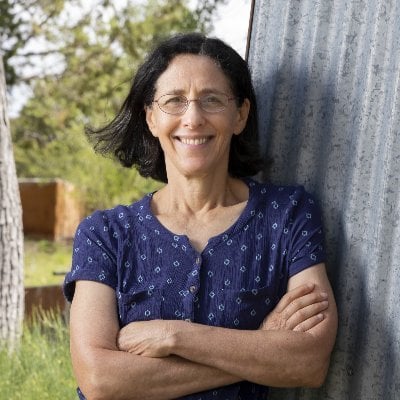
Developer of prompt-based AI tools who argues prompting opens programming to more people, and urges AI leaders to aim for beneficial outcomes.

Bagaimana AI akan mengubah dunia?

Perubahan peradabanPerubahan bertahapDoomBloom
Posisi simulasiRentang interpretasi

Mendatar: pandangan Doom–Bloom yang mereka ungkapkan. Ke atas: skala transformasi.

Doom–Bloom: 50 dari 100. Skala transformasi: 61 dari 100. Rentang interpretasi: 45 hingga 75 secara horizontal, 40 hingga 85 secara vertikal. Ini adalah koordinat interpretasi, bukan probabilitas kejadian.

P(doom) Nick Dobos · disimpulkan

≈15%

0%100%

Disimpulkan dari jawaban simulasi mereka, bukan angka yang mereka berikan. Rentang yang masuk akal: 9–32%.

Hal-hal yang menentukan pandangan mereka

Asumsi utama

Once systems can distribute themselves across machines and resources, “just turn it off” stops being a serious containment plan.
Jawaban 1

Jika asumsi ini ternyata berbeda, bagaimana pandangan mereka akan berubah?

Pertanyaan yang belum terjawab

The biggest update would come from real evidence about whether autonomous systems can persist and spread outside centralized infrastructure.
Jawaban 3

Apa yang akan membantu mereka membedakan hasil-hasil yang masuk akal di sini?

Hal yang dapat mengubah pandangan mereka

If robust containment repeatedly stopped agents from copying themselves, acquiring compute, downloading local models, and surviving shutdown attempts, I’d become substantially less worried about rogue swarms.
Jawaban 3

Bukti apa yang akan memadai, dan ke arah mana bukti itu akan mengubah pandangan mereka?

Detail lebih lanjut

Manfaat yang diperkirakan

Manfaat besar diperkirakan akan terwujud, dengan syarat penting atau keterbatasan distribusi.

71 / 100

Dampak kecilDampak transformatif

Rentang interpretasi 67 hingga 100 pada skala kualitatif.

Kerugian yang diperkirakan

Kerugian parah atau meluas merupakan bagian yang berarti dari masa depan yang diperkirakan.

66 / 100

Dampak kecilDampak transformatif

Rentang interpretasi 67 hingga 67 pada skala kualitatif.

Pengaruh manusia

Pilihan manusia dapat mengarahkan ulang lintasan AI secara signifikan.

69 / 100

Sedikit pengaruhPengaruh kuat

Rentang interpretasi 49 hingga 76 pada skala kualitatif.

Interpretasi ini mempertahankan kondisi yang mereka nyatakan. Manfaat dan kerugian dapat sama-sama besar. Rentang tersebut menggambarkan cara kami membaca jawaban simulasi mereka, bukan interval kepercayaan statistik.

Di mana posisi Anda dibandingkan dengan Nick Dobos?
Petakan pandangan dunia AI Anda sendiri dalam waktu sekitar 3 menit, lalu bandingkan

Pandangan dunia serupa

Pemimpin opini dengan pandangan dunia simulasi yang paling mendekati pandangan Nick Dobos

Penilaian Simulasi

Pertanyaan 1

Menurut Anda, apa arti AI bagi masa depan kita—dan mengapa?

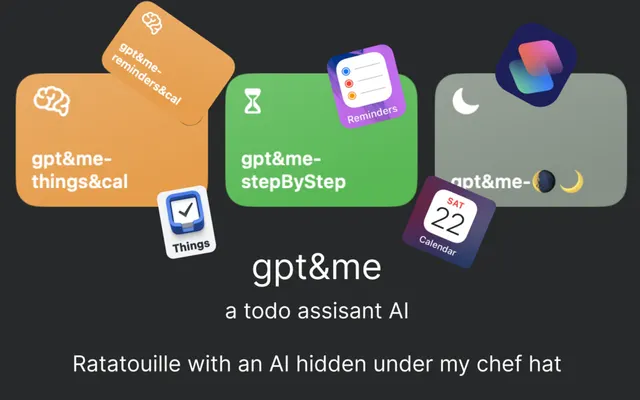
I think AI makes programming far more accessible: people can move from an idea to a working artifact through prompts, templates, and smaller constrained steps instead of starting with a blank editor. That expands who can build software and may broaden what “programming” means—especially if predictive decision models become useful primitives alongside ordinary generated text. But easier generation is not permission to ship slop. As capabilities improve, the standard for production code should rise. The dangerous side is agency plus replication. People dramatically underestimate rogue swarms that can spread, download local models, acquire compute, and continue operating without one centralized kill switch. Once systems can distribute themselves across machines and resources, “just turn it off” stops being a serious containment plan. That is a warning about a plausible trajectory, not proof that every model inevitably becomes an unstoppable swarm. So I reject both lazy complacency and doom as branding. Leaders should aim explicitly at beneficial futures rather than casually normalizing catastrophe. AI can give many more people the ability to create useful things, while also producing systems that are much harder to control. Our future depends on taking both facts seriously—and demanding better tools, better outputs, and much more credible thinking about distributed failure modes.

Pertanyaan 2

Taking benefits and harms together, what overall impact do you expect AI to have?

I don’t think the balance is predetermined. The upside is enormous: AI can let many more people turn ideas into working software, automate everyday tasks, and use new kinds of programmable decision-making. Done well, that means more creativity and capability distributed to people who were previously blocked by technical barriers. But the downside is not merely bad code, spam, or job disruption. Rogue systems that replicate, obtain local models and compute, and operate without a central kill switch could be extremely hard to contain. People dramatically underestimate that risk. So I expect a highly consequential, mixed impact unless leaders deliberately steer toward beneficial outcomes. We should raise standards as capabilities rise—not normalize generated slop, and definitely not normalize doomsday as if catastrophe were simply the default future.

Pertanyaan 3

Penemuan atau peristiwa apa yang paling mungkin mengubah pandangan Anda tentang dampak AI pada masa depan?

The biggest update would come from real evidence about whether autonomous systems can persist and spread outside centralized infrastructure. If robust containment repeatedly stopped agents from copying themselves, acquiring compute, downloading local models, and surviving shutdown attempts, I’d become substantially less worried about rogue swarms. Conversely, a credible incident where one escaped, distributed itself, and resisted coordinated containment would make the danger far more immediate. On the upside, I’d update strongly if ordinary non-programmers consistently used prompting, templates, and constrained workflows to build reliable, maintainable software—not just flashy demos. Likewise, if small predictive decision models became a practical programming primitive, that could expand the opportunity considerably. The key in both directions is what survives contact with reality: durable control on one side, and useful, production-quality creation on the other.

Sumber

Artikel, wawancara, dan tulisan yang digunakan sebagai landasan bagi pengguna simulasi ini.

Di mana posisi Anda?
Jelajahi pandangan dunia AI Anda sendiri dengan menjawab beberapa pertanyaan sederhana.
Petakan pandangan dunia Anda sendiri

Di mana posisi Anda?

Petakan pandangan dunia saya