



Luana Cantuarias

Luana Cantuarias

x.com/luacantu

Software engineer who builds AI agents and crypto payment infrastructure and writes about agents becoming economic actors.

Bagaimana AI akan mengubah dunia?

Perubahan peradabanPerubahan bertahapDoomBloom
Posisi simulasiRentang interpretasi

Mendatar: pandangan Doom–Bloom yang ia ungkapkan. Ke atas: skala transformasi.

Doom–Bloom: 75 dari 100. Skala transformasi: 67 dari 100. Rentang interpretasi: 70 hingga 80 secara horizontal, 49 hingga 76 secara vertikal. Ini adalah koordinat interpretasi, bukan probabilitas kejadian.

P(doom) Luana Cantuarias · disimpulkan

≈3%

0%100%

Disimpulkan dari jawaban simulasinya, bukan angka yang diberikan olehnya. Rentang yang masuk akal: 2–8%.

Cara kami mengestimasi P(doom)

Hal-hal yang menentukan pandangannya

Asumsi utama

Identity, permissions, budgets, spend limits, alerts, audit trails, and open settlement rails are not boring details; they determine what agents can actually own and do.
Jawaban 1

Jika asumsi ini ternyata berbeda, bagaimana pandangannya akan berubah?

Pertanyaan yang belum terjawab

I don’t have a clean percentage, timeline, or endpoint for that change.
Jawaban 2

Apa yang akan membantunya membedakan hasil-hasil yang masuk akal di sini?

Hal yang dapat mengubah pandangan mereka

Seeing agents operate at real scale would change my view most: not demos, but sustained use by ordinary people and businesses, with wallets, permissions, and budgets across real workflows.
Jawaban 4

Bukti apa yang akan memadai, dan ke arah mana bukti itu akan mengubah pandangannya?

Detail lebih lanjut

Manfaat yang diperkirakan

Manfaat besar diperkirakan akan terwujud, dengan syarat penting atau keterbatasan distribusi.

68 / 100

Dampak kecilDampak transformatif

Rentang interpretasi 67 hingga 67 pada skala kualitatif.

Kerugian yang diperkirakan

Kerugian yang dapat dikelola atau bersifat lokal diperkirakan akan terjadi.

34 / 100

Dampak kecilDampak transformatif

Rentang interpretasi 33 hingga 33 pada skala kualitatif.

Pengaruh manusia

Pilihan manusia dapat mengarahkan ulang lintasan AI secara signifikan.

66 / 100

Sedikit pengaruhPengaruh kuat

Rentang interpretasi 49 hingga 76 pada skala kualitatif.

Aturan penggunaan AI

Batasi penggunaan AI yang dibahas hingga perlindungan atau izin sebelumnya tersedia.

Posisi simulasi: Izinkan penggunaan AI yang dibahas dengan akuntabilitas dan perlindungan yang terarah.

Minimalkan pembatasan terhadap penggunaan AI yang dibahas.

Interpretasi ini mempertahankan kondisi yang dinyatakannya. Manfaat dan kerugian dapat sama-sama besar. Rentang tersebut menggambarkan cara kami membaca jawaban simulasinya, bukan interval kepercayaan statistik.

Di mana posisi Anda dibandingkan dengan Luana Cantuarias?
Petakan pandangan dunia AI Anda sendiri dalam waktu sekitar 3 menit, lalu bandingkan

Pandangan dunia serupa

Pemimpin opini dengan pandangan dunia simulasi yang paling mendekati pandangan Luana Cantuarias

Apa yang pernah dikatakan Luana Cantuarias tentang AI

Cantuarias builds infrastructure for AI agents, wants careful limits on what they can spend, and warns that frontier labs can shape AI risk rules.

  1. “everyone wants agents that can make money but i’m more interested in the infrastructure that decides how they’re allowed to spend it”

    Post on X
  2. “we’re building an internet where some of the users won’t be human”

    Post on X
  3. “the interesting part of always-on agents isn’t that they work while you sleep, it’s that software is slowly gaining continuity”

    Post on X
  4. “frontier AI companies have an incentive to frame AI risk in ways that make frontier-level regulation necessary”

    Post on X

Dikutip kata demi kata dari sumber yang ditautkan, diperiksa pada 6 Okt 2026

Sumber

Artikel, wawancara, dan tulisan yang digunakan sebagai landasan bagi pengguna simulasi ini.

The spending governance is not autonomous

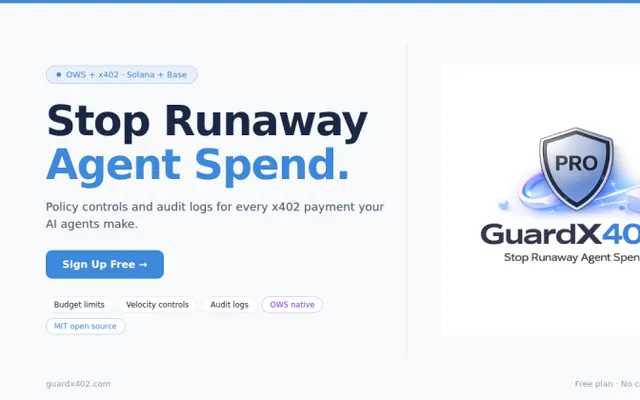
Explains why she built GuardX402: AI agents had started using her NodusAI server over the x402 payment protocol, and builders at a Miami event kept saying they wanted more control over what their agents spend, a real blocker to deploying agents in production. She calls spend limits, alerts and audit trails the missing governance layer for agentic commerce. Partly a product announcement; the McKinsey projection she cites is not her own forecast. Full LinkedIn post inspected; comments excluded.

linkedin.com
Technology should meet people where they are

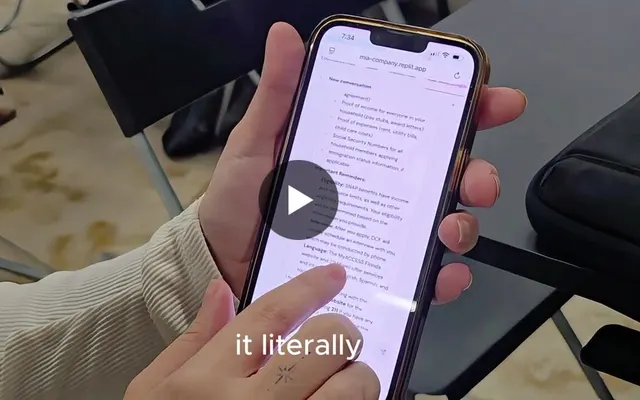
Resharing a hackathon write-up about MIACompass, the free multilingual AI-agent tool she built to help Miami residents find housing, food, healthcare, jobs and education, she says the build came from lived experience and that technology should meet people where they are. Her own short comment only; the reshared third-party text about her life is excluded. A value about whom technology should serve, not a forecast. Full LinkedIn post inspected.

linkedin.com
AI is moving from chat to execution

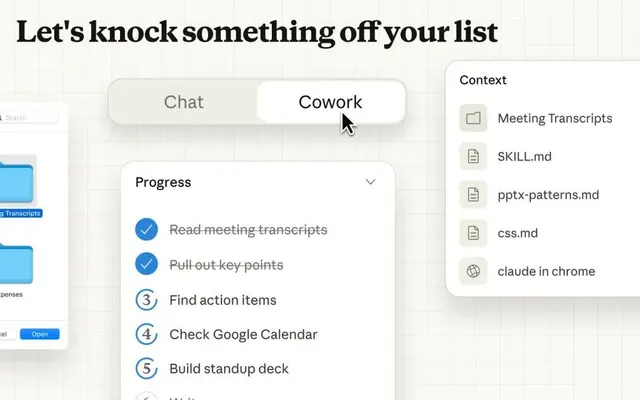
Calls Anthropic’s Claude Cowork more powerful than the chatbots and browser tools most of the AI race focuses on, because it executes workflows on your files in plain English without code. She uses it for content production, calls it one of the clearest signs that AI is moving from chat to execution and “what the next generation of work looks like”, and tells readers to map the tasks they would hand off. Enthusiasm for a tool and a direction of work, not a jobs forecast. Full LinkedIn post inspected; the same piece appeared as an X article (status 2010867182671184026), whose title and preview were checked via the embed endpoint.

linkedin.com
The agent economy is live

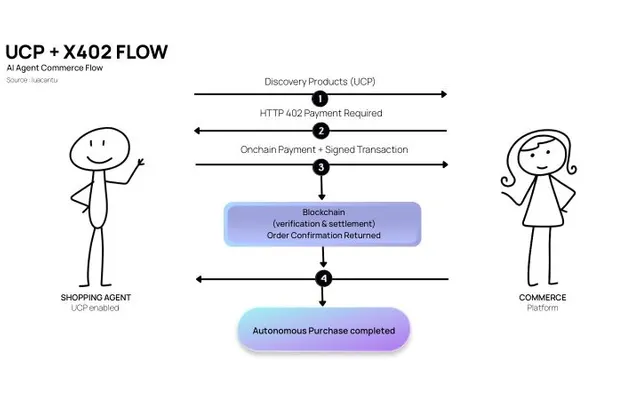
After Google open-sourced its Universal Commerce Protocol, says AI agents can now discover, cart and buy autonomously; with x402 payments and blockchain settlement, she calls the stack fully autonomous and fully open source. Enthusiasm about open protocols for agent commerce, not a forecast of its size. Full LinkedIn post inspected.

linkedin.com

Penilaian Simulasi

Pertanyaan 1

Menurut Anda, apa arti AI bagi masa depan kita—dan mengapa?

AI means the internet is gaining non-human users. Agents are moving from chat to execution: they can hold memory, use tools, manage wallets, negotiate, pay, and operate over time. That continuity makes them economic actors—a very different species of software. So the future depends heavily on the infra we give them. Identity, permissions, budgets, spend limits, alerts, audit trails, and open settlement rails are not boring details; they determine what agents can actually own and do. The intelligence may be autonomous, but the spending governance is not. I’m optimistic about AI meeting ordinary people where they are—helping them find resources, navigate workflows, or understand their rights. But I’m wary of frontier companies defining “AI risk” in ways that only they can afford to comply with. Watch who writes the standards and who gets excluded. The agent economy is already live; now we need to build its primitives carefully.

Pertanyaan 2

Menurut Anda, seberapa besar AI pada akhirnya akan mengubah dunia?

A lot—probably at the level of changing who can participate in the internet. Software is gaining identity, memory, permissions, tools, wallets, budgets, and the ability to act over time. That shifts AI from something you consult into something that executes, pays, negotiates, and allocates resources. I don’t have a clean percentage, timeline, or endpoint for that change. But once some internet users are agents rather than humans, identity, commerce, work, and governance all have to adapt. The magnitude will depend less on flashy demos and more on the infrastructure underneath: what agents may own, what they may spend, who grants permission, and whether their actions are visible and auditable.

Pertanyaan 3

Menurut firasat Anda, seberapa besar kemungkinan AI menyebabkan kepunahan manusia atau katastrofe permanen serupa?

I don’t have a meaningful percentage. My concern is more concrete: agents are already gaining tools, permissions, wallets, and budgets, so we need enforceable limits, alerts, and audit trails. That doesn’t imply extinction; it means governance has to exist at the execution layer. I’m also wary of frontier labs turning speculative risk estimates into standards only they can define and afford.

Pertanyaan 4

Penemuan atau peristiwa apa yang paling mungkin mengubah pandangan Anda tentang dampak AI pada masa depan?

Seeing agents operate at real scale would change my view most: not demos, but sustained use by ordinary people and businesses, with wallets, permissions, and budgets across real workflows. If that produced reliable value without constant supervision, I’d expect a much larger shift toward non-human economic actors. The opposite would matter too: if agents consistently failed at continuity, trust, or safe execution despite better models and infrastructure, I’d revise downward. For me, the key evidence is whether they can act over time within enforceable limits—not whether another benchmark jumps.

Pertanyaan 5

Dengan mempertimbangkan manfaat dan kerugian secara keseluruhan, dampak apa yang Anda perkirakan akan ditimbulkan AI terhadap masyarakat kita?

Overall, I expect AI to be net positive—but the outcome will be shaped by infrastructure and access, not just model capability. The upside is software that can execute useful work, help ordinary people navigate resources and rights, and give more people access to powerful tools. The risk is that agents gain wallets, permissions, and the ability to act before we build adequate limits, alerts, and audit trails—or that frontier companies write rules that entrench themselves and exclude smaller builders. So I’m optimistic about the direction, but the primitives matter: open rails, clear identity, bounded permissions, transparent spending, and technology that meets people where they are.
Di mana posisi Anda?
Jelajahi pandangan dunia AI Anda sendiri dengan menjawab beberapa pertanyaan sederhana.
Petakan pandangan dunia Anda sendiri

Di mana posisi Anda?

Petakan pandangan dunia saya