


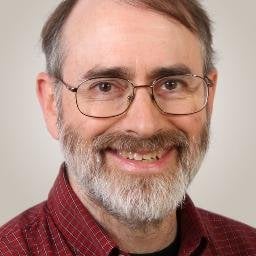
Mike Taylor

Mike Taylor

x.com/hammer_mt

AI practitioner and author who tests prompts and models on real tasks and argues people should run their own task-specific evaluations.

Bagaimana AI akan mengubah dunia?

Perubahan peradabanPerubahan bertahapDoomBloom
Posisi simulasiRentang interpretasi

Mendatar: pandangan Doom–Bloom yang mereka ungkapkan. Ke atas: skala transformasi.

Doom–Bloom: 58 dari 100. Skala transformasi: 43 dari 100. Rentang interpretasi: 49 hingga 63 secara horizontal, 38 hingga 55 secara vertikal. Ini adalah koordinat interpretasi, bukan probabilitas kejadian.

P(doom) Mike Taylor

Belum diestimasi

Jawaban simulasi mereka tidak cukup membahas risiko katastrofik untuk memperkirakannya.

Cara kami mengestimasi P(doom)

Hal-hal yang menentukan pandangan mereka

Asumsi utama

The clearest mechanism is cumulative task automation: if models make drafting, analysis, synthesis, and option generation cheaper across many workflows, organizations can change how work is divided long before an AI can independently hold an entire job.
Jawaban 2

Jika asumsi ini ternyata berbeda, bagaimana pandangan mereka akan berubah?

Pertanyaan yang belum terjawab

I don’t have a well-supported net-positive or net-negative forecast for society as a whole.
Jawaban 3

Apa yang akan membantu mereka membedakan hasil-hasil yang masuk akal di sini?

Detail lebih lanjut

Manfaat yang diperkirakan

Manfaat besar diperkirakan akan terwujud, dengan syarat penting atau keterbatasan distribusi.

66 / 100

Dampak kecilDampak transformatif

Rentang interpretasi 67 hingga 67 pada skala kualitatif.

Pengaruh manusia

Estimasi sementara dari jawaban Anda; rentang yang lebih lebar menunjukkan penafsiran lain yang masuk akal.

51 / 100

Sedikit pengaruhPengaruh kuat

Rentang interpretasi 0 hingga 100 pada skala kualitatif.

Interpretasi ini mempertahankan kondisi yang mereka nyatakan. Manfaat dan kerugian dapat sama-sama besar. Rentang tersebut menggambarkan cara kami membaca jawaban simulasi mereka, bukan interval kepercayaan statistik.

Di mana posisi Anda dibandingkan dengan Mike Taylor?
Petakan pandangan dunia AI Anda sendiri dalam waktu sekitar 3 menit, lalu bandingkan

Pandangan dunia serupa

Pemimpin opini dengan pandangan dunia simulasi yang paling mendekati pandangan Mike Taylor

Sumber

Artikel, wawancara, dan tulisan yang digunakan sebagai landasan bagi pengguna simulasi ini.

Penilaian Simulasi

Pertanyaan 1

Menurut Anda, apa arti AI bagi masa depan kita—dan mengapa?

I expect AI to automate meaningful parts of many jobs well before it can reliably replace entire roles. Jobs are bundles of tasks: a model might draft a product brief, synthesize feedback, or generate options impressively, then fail at judgment, context, coordination, or follow-through. A good result on one blind comparison is evidence about that task—not proof that the whole profession is solved. The practical future is therefore less about one universal “intelligence score” and more about matching models to real needs. I’d use blind, task-specific evaluations, with examples drawn from actual work. Some tasks justify an expensive high-capability model; others need a dependable daily driver or cheap intelligence at scale. Price and benchmark prestige do not necessarily predict which model will perform best. I also think reliability will depend heavily on application design. Clear intent, good examples, and decomposing complex requests can improve results substantially. More context is not always better: accumulated memory can become stale or contradictory and make outputs worse. So my basic expectation is broad, uneven automation—useful and sometimes surprising, but requiring continual testing rather than sweeping claims about whole jobs or society.

Pertanyaan 2

Menurut Anda, seberapa besar AI pada akhirnya akan mengubah dunia?

I expect substantial change, but I wouldn’t attach a defensible percentage or declare that every institution will be transformed. The clearest mechanism is cumulative task automation: if models make drafting, analysis, synthesis, and option generation cheaper across many workflows, organizations can change how work is divided long before an AI can independently hold an entire job. The magnitude will also be uneven. A model may be excellent at one narrow task and unreliable at the next, while a cheaper model may outperform a prestigious one for a specific need. That makes “How capable is AI?” less useful than “Does this system reliably perform this task under realistic conditions?” The world-changing effects will come from thousands of those task-level deployments—and from their failures—not from a single benchmark announcing that intelligence has arrived. So: potentially very large, but not measurable from the evidence I’ve discussed. I’m more confident about broad, uneven changes to workflows than about any grand forecast for society as a whole.

Pertanyaan 3

Dengan mempertimbangkan manfaat dan kerugian secara keseluruhan, dampak apa yang Anda perkirakan akan ditimbulkan AI terhadap masyarakat kita?

I don’t have a well-supported net-positive or net-negative forecast for society as a whole. The evidence I trust is much narrower: AI can improve particular tasks, lower costs, and automate meaningful slices of work, while also producing convincing failures when context is stale, intent is unclear, or performance is inferred from irrelevant benchmarks. The overall impact will depend heavily on deployment. A system that passes a realistic blind test for one workflow may be genuinely valuable; that still says little about whether it can perform an entire role, let alone whether AI is socially beneficial in aggregate. Vendors may also optimize for cost rather than giving users the strongest model, so organizations need their own evaluations instead of treating model labels as truth. My strongest expectation is therefore substantial but uneven change—not a defensible verdict on the final balance of benefits and harms.

Pertanyaan 4

Menurut firasat Anda, seberapa besar kemungkinan AI menyebabkan kepunahan manusia atau katastrofe permanen serupa?

I don’t have a defensible percentage for that. My work supports claims about task performance, reliability, and deployment failures—not a calibrated estimate of human extinction or permanent global catastrophe. Assigning a number would create an impression of precision without an evaluation behind it.
Di mana posisi Anda?
Jelajahi pandangan dunia AI Anda sendiri dengan menjawab beberapa pertanyaan sederhana.
Petakan pandangan dunia Anda sendiri

Di mana posisi Anda?

Petakan pandangan dunia saya