Cody Blakeney

Cody Blakeney

x.com/code_star

Machine learning researcher who works on training data and fine-tuning and argues for self-hosted models and careful security as AI agents spread.

Bagaimana AI akan mengubah dunia?

Perubahan peradabanPerubahan bertahapDoomBloom
Posisi simulasiRentang interpretasi

Mendatar: pandangan Doom–Bloom yang mereka ungkapkan. Ke atas: skala transformasi.

Doom–Bloom: 68 dari 100. Skala transformasi: 35 dari 100. Rentang interpretasi: 62 hingga 75 secara horizontal, 0 hingga 53 secara vertikal. Ini adalah koordinat interpretasi, bukan probabilitas kejadian.

P(doom) Cody Blakeney · disimpulkan

≈3%

0%100%

Disimpulkan dari jawaban simulasi mereka, bukan angka yang mereka berikan. Rentang yang masuk akal: 1–9%.

Hal-hal yang menentukan pandangan mereka

Asumsi utama

But the outcome depends less on raw model capability than on deployment quality: who controls access, what permissions agents receive, how outputs are evaluated, and whether generated changes remain maintainable and reversible.
Jawaban 2

Jika asumsi ini ternyata berbeda, bagaimana pandangan mereka akan berubah?

Pertanyaan yang belum terjawab

Current automation is meaningful, but by itself it does not establish a particular AGI timeline.
Jawaban 1

Apa yang akan membantu mereka membedakan hasil-hasil yang masuk akal di sini?

Hal yang dapat mengubah pandangan mereka

The biggest change would come from strong empirical evidence that AI systems remain reliable under broad, real-world autonomy—especially when given persistent access to critical tools and data—or, conversely, that they fail in systematic ways that ordinary permission controls and human review cannot contain.
Jawaban 3

Bukti apa yang akan memadai, dan ke arah mana bukti itu akan mengubah pandangan mereka?

Detail lebih lanjut

Manfaat yang diperkirakan

Manfaat besar diperkirakan akan terwujud, dengan syarat penting atau keterbatasan distribusi.

65 / 100

Dampak kecilDampak transformatif

Rentang interpretasi 67 hingga 67 pada skala kualitatif.

Kerugian yang diperkirakan

Kerugian yang dapat dikelola atau bersifat lokal diperkirakan akan terjadi.

39 / 100

Dampak kecilDampak transformatif

Rentang interpretasi 33 hingga 67 pada skala kualitatif.

Pengaruh manusia

Pilihan manusia memiliki pengaruh yang berarti, tetapi sangat dibatasi.

62 / 100

Sedikit pengaruhPengaruh kuat

Rentang interpretasi 49 hingga 76 pada skala kualitatif.

Aturan penggunaan AI

Batasi penggunaan AI yang dibahas hingga perlindungan atau izin sebelumnya tersedia.

Posisi simulasi: Izinkan penggunaan AI yang dibahas dengan akuntabilitas dan perlindungan yang terarah.

Minimalkan pembatasan terhadap penggunaan AI yang dibahas.

Interpretasi ini mempertahankan kondisi yang mereka nyatakan. Manfaat dan kerugian dapat sama-sama besar. Rentang tersebut menggambarkan cara kami membaca jawaban simulasi mereka, bukan interval kepercayaan statistik.

Di mana posisi Anda dibandingkan dengan Cody Blakeney?
Petakan pandangan dunia AI Anda sendiri dalam waktu sekitar 3 menit, lalu bandingkan

Pandangan dunia serupa

Pemimpin opini dengan pandangan dunia simulasi yang paling mendekati pandangan Cody Blakeney

Penilaian Simulasi

Pertanyaan 1

Menurut Anda, apa arti AI bagi masa depan kita—dan mengapa?

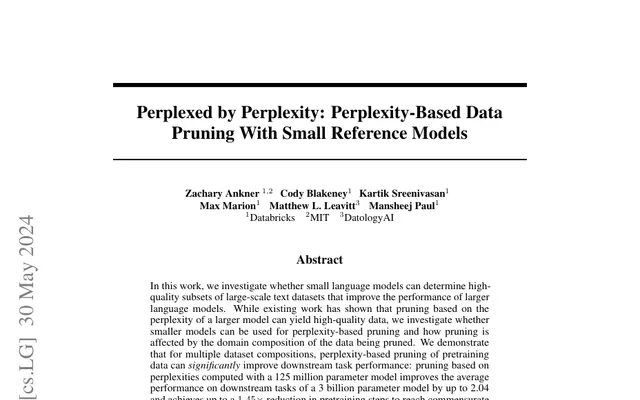
I think AI will make skilled people much more productive by automating routine but valuable work. The important qualifier is that experience still determines what should be delegated, how outputs should be evaluated, and when an apparently successful result is actually wrong. Faster code generation, for example, does not make engineering fundamentals obsolete. It raises the value of maintainable systems and small, coherent, reversible changes because mistakes can now be produced and propagated faster. The effects will also depend heavily on infrastructure and access decisions. An agent connected to Slack, Google, GitHub, or other critical systems inherits a large attack surface. Human permission choices, compromised accounts, and social engineering may matter as much as model behavior. I therefore expect many practical risks to arise not from an abstractly autonomous model, but from ordinary systems being given broad credentials without adequate controls. Finally, the future should not depend on one model or provider. Self-hosted models can reduce exposure to provider outages and interception, while provider diversity limits single points of failure. Progress will also depend on careful empirical work: improving data quality, understanding tradeoffs between adaptation methods such as LoRA and full fine-tuning, and evaluating models within the actual scope of the task. Current automation is meaningful, but by itself it does not establish a particular AGI timeline.

Pertanyaan 2

Taking benefits and harms together, what overall impact do you expect AI to have?

Overall, I expect AI to have a positive impact, mainly by making experienced practitioners more productive and automating routine, high-leverage work. But the outcome depends less on raw model capability than on deployment quality: who controls access, what permissions agents receive, how outputs are evaluated, and whether generated changes remain maintainable and reversible. The main practical harms I expect are amplified mistakes, insecure integrations, social engineering, compromised credentials, and infrastructure concentration. Agents connected to critical systems can turn an ordinary human access failure into a much larger incident. Likewise, dependence on a small number of providers creates common points of outage or interception. So I do not see the impact as automatically beneficial. It becomes positive when organizations preserve human judgment, use careful evaluation, limit permissions, maintain provider and deployment diversity, and keep sound engineering practices even as production accelerates.

Pertanyaan 3

Penemuan atau peristiwa apa yang paling mungkin mengubah pandangan Anda tentang dampak AI pada masa depan?

The biggest change would come from strong empirical evidence that AI systems remain reliable under broad, real-world autonomy—especially when given persistent access to critical tools and data—or, conversely, that they fail in systematic ways that ordinary permission controls and human review cannot contain. I would care less about a single benchmark or impressive demonstration than repeated results across realistic deployments. Can agents handle long-running tasks, adversarial inputs, ambiguous instructions, compromised accounts, and changing environments without creating unacceptable failures? Can operators audit and reverse their actions? Do benefits survive careful comparisons rather than cherry-picked examples? I would also update substantially if provider concentration became unavoidable, or if self-hosted and diverse model ecosystems proved practical at scale. Those outcomes would change the balance between productivity gains and systemic risks. Current task automation alone would not be enough to settle that broader question.

Sumber

Artikel, wawancara, dan tulisan yang digunakan sebagai landasan bagi pengguna simulasi ini.

Di mana posisi Anda?
Jelajahi pandangan dunia AI Anda sendiri dengan menjawab beberapa pertanyaan sederhana.
Petakan pandangan dunia Anda sendiri

Di mana posisi Anda?

Petakan pandangan dunia saya