Alex Zhang

Alex Zhang

x.com/a1zhang

AI researcher who builds benchmarks and studies how scaffolds and recursive model calls can get more out of existing language models.

Bagaimana AI akan mengubah dunia?

Perubahan peradabanPerubahan bertahapDoomBloom
Posisi simulasiRentang interpretasi

Mendatar: pandangan Doom–Bloom yang mereka ungkapkan. Ke atas: skala transformasi.

Doom–Bloom: 53 dari 100. Skala transformasi: 47 dari 100. Rentang interpretasi: 48 hingga 75 secara horizontal, 0 hingga 96 secara vertikal. Ini adalah koordinat interpretasi, bukan probabilitas kejadian.

P(doom) Alex Zhang

Belum diestimasi

Jawaban simulasi mereka tidak cukup membahas risiko katastrofik untuk memperkirakannya.

Hal-hal yang menentukan pandangan mereka

Asumsi utama

That gap matters because deployed capability is a property of the whole system, not just the bare model.
Jawaban 3

Jika asumsi ini ternyata berbeda, bagaimana pandangan mereka akan berubah?

Pertanyaan yang belum terjawab

Overall, I expect AI to be highly consequential, but I would not reduce that to a confident net-positive or net-negative societal forecast.
Jawaban 2

Apa yang akan membantu mereka membedakan hasil-hasil yang masuk akal di sini?

Detail lebih lanjut

Manfaat yang diperkirakan

Manfaat besar diperkirakan akan terwujud, dengan syarat penting atau keterbatasan distribusi.

65 / 100

Dampak kecilDampak transformatif

Rentang interpretasi 67 hingga 67 pada skala kualitatif.

Kerugian yang diperkirakan

Kerugian yang dapat dikelola atau bersifat lokal diperkirakan akan terjadi.

33 / 100

Dampak kecilDampak transformatif

Rentang interpretasi 33 hingga 33 pada skala kualitatif.

Pengaruh manusia

Estimasi sementara dari jawaban Anda; rentang yang lebih lebar menunjukkan penafsiran lain yang masuk akal.

56 / 100

Sedikit pengaruhPengaruh kuat

Rentang interpretasi 16 hingga 100 pada skala kualitatif.

Interpretasi ini mempertahankan kondisi yang mereka nyatakan. Manfaat dan kerugian dapat sama-sama besar. Rentang tersebut menggambarkan cara kami membaca jawaban simulasi mereka, bukan interval kepercayaan statistik.

Di mana posisi Anda dibandingkan dengan Alex Zhang?
Petakan pandangan dunia AI Anda sendiri dalam waktu sekitar 3 menit, lalu bandingkan

Pandangan dunia serupa

Pemimpin opini dengan pandangan dunia simulasi yang paling mendekati pandangan Alex Zhang

Penilaian Simulasi

Pertanyaan 1

Menurut Anda, apa arti AI bagi masa depan kita—dan mengapa?

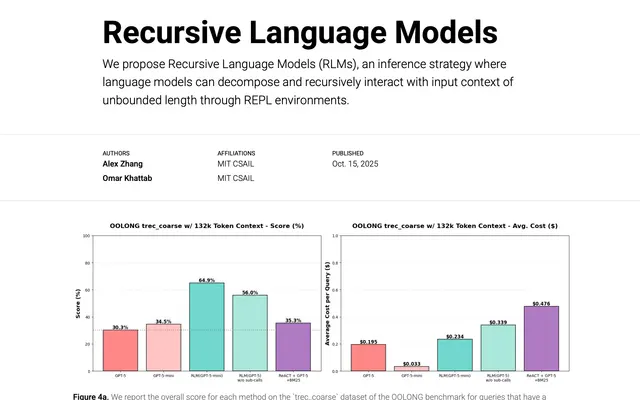
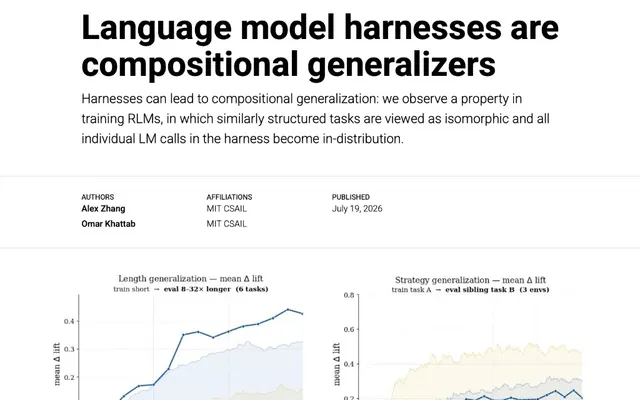
I think AI’s future will depend not only on building larger or better-trained models, but on learning how to use the capabilities already inside them. Today, we often place a model in a brittle, human-designed workflow, give it one enormous prompt, and then interpret failure as a clean measurement of its limits. That can confuse the weakness of the harness with the weakness of the model. Recursive computation, learned decomposition, tool use, and better inference procedures could change that picture substantially. A difficult out-of-distribution task may become tractable when the system can break it into familiar subproblems, inspect intermediate results, and call itself or specialized tools as needed. Long-context work is one example: rather than forcing everything through a single context window, a model can programmatically navigate the material and recursively delegate narrower questions. But this is not an argument that scaling or training is over. Better models and better harnesses are complementary. The key empirical challenge is figuring out which apparent limitations are truly representational and which come from poor orchestration. Evaluation is therefore central. Benchmarks with familiar formats, reusable tricks, or contaminated examples can make leaderboard performance look much stronger than practical usefulness. Simply making tasks longer does not guarantee meaningful generalization. We need evaluations that test whether systems can compose knowledge and procedures in genuinely unfamiliar settings. So my view is optimistic about latent capability, but the path forward runs through better inference, decomposition, and benchmarks—not raw benchmark scores mistaken for broad real-world competence.


Pertanyaan 2

Taking benefits and harms together, what overall impact do you expect AI to have?

Overall, I expect AI to be highly consequential, but I would not reduce that to a confident net-positive or net-negative societal forecast. My work supports a narrower claim: current systems may be substantially more useful than standard interfaces and brittle scaffolds suggest. Better decomposition, recursive computation, and tool use could unlock meaningful gains on long-context, programming, and other complex tasks without requiring every improvement to come from a larger model. The same observation complicates judgments about harm. Capability can advance through inference-time organization, not just training runs, so evaluations that measure a bare model—or rely on familiar, potentially contaminated benchmark structures—may misstate what deployed systems can actually do. Conversely, strong leaderboard results may not translate into reliable performance on genuinely unfamiliar real-world problems. So I expect the impact to depend heavily on whether we learn to measure and harness these systems well. Better models, better training, and better scaffolds are complementary. But benchmark progress by itself does not establish broad social benefit, and my research does not justify assigning a precise balance between AI’s total benefits and harms.

Pertanyaan 3

Kerugian besar apa, jika ada, yang Anda perkirakan akan disebabkan oleh AI?

The clearest harm I can support is systematic miscalibration about capability. Weak harnesses can hide what a model can do, while familiar or contaminated benchmarks can create an equally dangerous illusion of competence. Organizations may then deploy systems that fail on genuinely unfamiliar tasks—or underestimate systems whose capabilities become much stronger with recursive computation, tools, and better decomposition. That gap matters because deployed capability is a property of the whole system, not just the bare model. Inference-time scaffolding can produce substantial gains without a new training run, so assessments can become stale or incomplete if they ignore the harness. Conversely, making benchmarks longer or reporting higher scores does not establish reliability in practical settings. I would not claim a specific catalog or ranking of broader societal harms from this work alone. My main expectation is that poor evaluation will amplify other risks by giving us the wrong picture of what systems can and cannot reliably do.

Sumber

Artikel, wawancara, dan tulisan yang digunakan sebagai landasan bagi pengguna simulasi ini.

Di mana posisi Anda?
Jelajahi pandangan dunia AI Anda sendiri dengan menjawab beberapa pertanyaan sederhana.
Petakan pandangan dunia Anda sendiri

Di mana posisi Anda?

Petakan pandangan dunia saya