David Sacks

David Sacks

x.com/DavidSacks

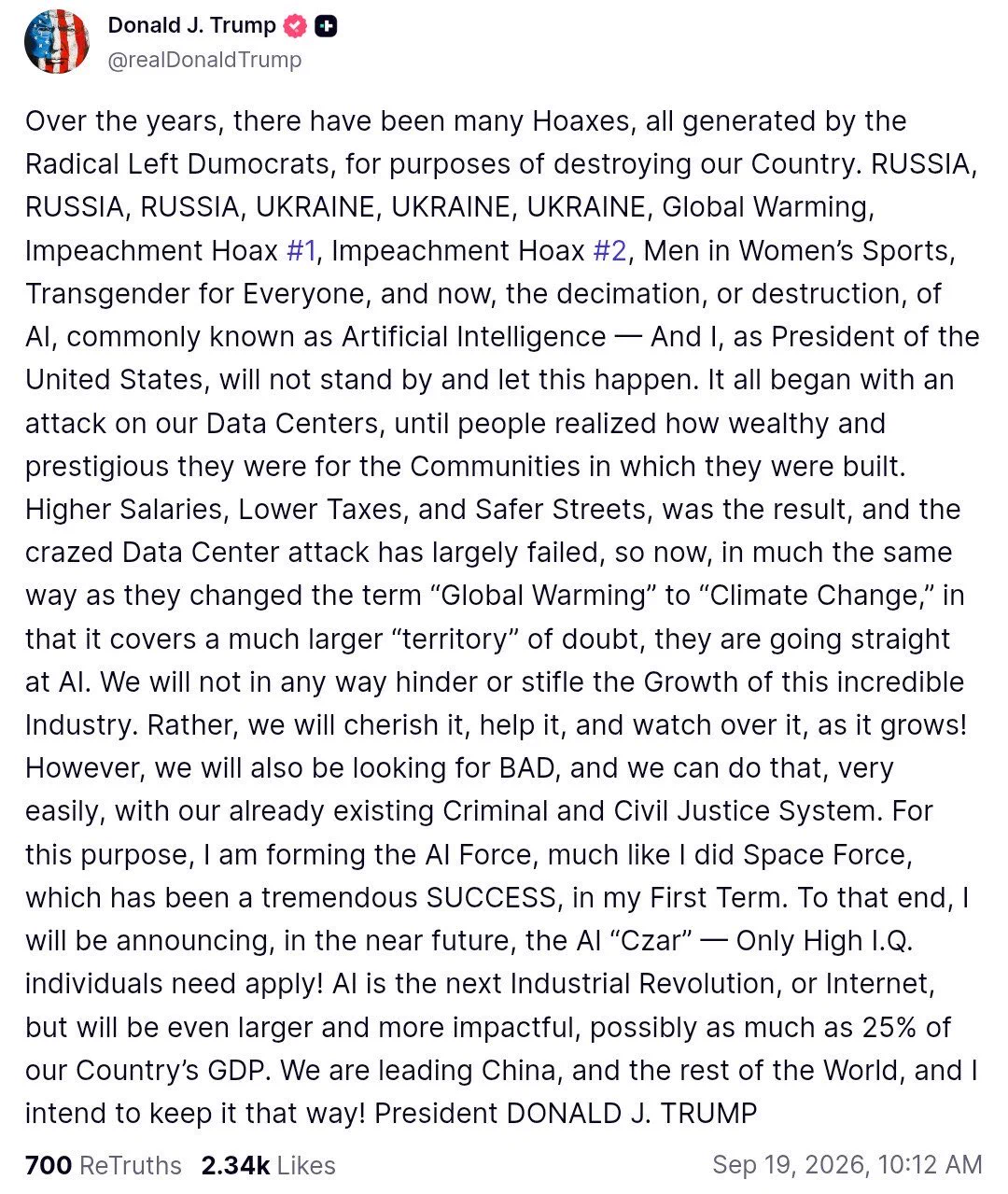
Presidential tech adviser who favors competition and open models over centralized AI control and holds each lab responsible for its products’ safety.

एआई दुनिया को कैसे बदलेगा?

सभ्यता-स्तरीय बदलावक्रमिक बदलावDoomBloom
सिम्युलेट की गई स्थितिव्याख्या का दायरा

आर-पार: उनका व्यक्त किया गया Doom–Bloom दृष्टिकोण। ऊपर: बदलाव का स्तर।

Doom–Bloom: 100 में से 91। बदलाव का स्तर: 100 में से 60। व्याख्या के दायरे: क्षैतिज रूप से 75 से 100, लंबवत रूप से 50 से 75। ये व्याख्या के निर्देशांक हैं, घटनाओं की संभावनाएँ नहीं।

David Sacks का P(doom) · अनुमानित

<1%

0%100%

उनके सिम्युलेट किए गए उत्तरों से अनुमान लगाया गया है, यह उनके द्वारा बताई गई संख्या नहीं है। संभावित दायरा: <1%।

David Sacks के पड़ावों की समय-सीमा
  1. काम और संस्थाएँ

    It is already beginning, and I expect major changes over the next several years as AI becomes embedded in ordinary products, work, cybersecurity and infrastructure.

    उत्तर 4
  2. विज्ञान और रोज़मर्रा का जीवन

    It is already beginning, and I expect major changes over the next several years as AI becomes embedded in ordinary products, work, cybersecurity and infrastructure.

    उत्तर 4

पड़ाव के अनुसार समूहबद्ध; अनुमानित तारीखों के अंतर या क्रम के अनुसार नहीं। एजीआई और अतिमानवीय एआई की उनकी परिभाषाएँ बरकरार रखी गई हैं।

उनका दृष्टिकोण किन बातों पर निर्भर करता है

एक मुख्य मान्यता

AI remains a technology whose effects depend on who builds it, who controls it and whether competition stays open.
उत्तर 2

अगर यह मान्यता अलग साबित होती, तो उनका दृष्टिकोण कैसे बदलता?

अधिक जानकारी

अपेक्षित लाभ

काफ़ी लाभ की उम्मीद है, लेकिन उनके साथ महत्वपूर्ण शर्तें या वितरण संबंधी सीमाएँ होंगी।

78 / 100

कम असरबदलावकारी असर

गुणात्मक पैमाने पर व्याख्या का दायरा 67 से 100 तक है।

अपेक्षित नुकसान

बहुत कम ठोस प्रतिकूल प्रभाव की उम्मीद है।

4 / 100

कम असरबदलावकारी असर

गुणात्मक पैमाने पर व्याख्या का दायरा 0 से 33 तक है।

मानवीय प्रभाव

मानवीय विकल्प एआई की दिशा को काफी हद तक बदल सकते हैं।

86 / 100

कम प्रभावमजबूत प्रभाव

गुणात्मक पैमाने पर व्याख्या का दायरा 75 से 100 तक है।

विकास की गति

अधिक सक्षम एआई का विकास रोकें या उसकी गति काफी धीमी करें।

सिम्युलेट की गई स्थिति: बताए गए सुरक्षा उपायों के तहत विकास जारी रखें।

अधिक सक्षम एआई के विकास की गति बढ़ाएँ।

एआई के उपयोग के नियम

जिन सुरक्षा उपायों या अनुमति का पहले से होना ज़रूरी है, उनके लागू होने तक चर्चा किए गए एआई उपयोगों को प्रतिबंधित रखें।

सिम्युलेट की गई स्थिति: लक्षित जवाबदेही और सुरक्षा उपायों के साथ चर्चा किए गए एआई उपयोगों की अनुमति दें।

चर्चा किए गए एआई उपयोगों पर प्रतिबंध कम से कम रखें।

इन व्याख्याओं में उनकी बताई गई शर्तें बरकरार रखी गई हैं। लाभ और नुकसान, दोनों पर्याप्त हो सकते हैं। ये दायरे बताते हैं कि हम उनके सिम्युलेट किए गए उत्तरों को कैसे समझते हैं, ये सांख्यिकीय विश्वास-अंतराल नहीं हैं।

David Sacks की तुलना में आपकी सोच कहाँ ठहरती है?
लगभग 3 मिनट में एआई के बारे में अपना विश्वदृष्टिकोण मैप करें, फिर तुलना करें

मिलते-जुलते विश्वदृष्टिकोण

ऐसे जाने-माने विचारक जिनके सिम्युलेट किए गए विश्वदृष्टिकोण David Sacks के विश्वदृष्टिकोण से सबसे अधिक मिलते हैं

David Sacks ने एआई के बारे में क्या कहा है

Sacks favors competition and open models over centralized AI control, opposes a national pause, and says each lab is responsible for its products.

  1. “A pause would not make America safer. It would hand the frontier to China.”

    Post on X
  2. “The solution to AI-powered cyberattacks is AI-powered cyberdefense.”

    Post on X
  3. “If the unreleased models are scary enough that you think you should slow down, I support your decision to be responsible.”

    Post on X
  4. “Keeping innovation decentralized and accessible is the key to avoiding an unsafe and dystopian future where advanced AI capabilities are centralized and controlled by only a few hands.”

    Post on X
  5. “This means that apocalyptic predictions of job loss are as overhyped as AGI itself.”

    Post on X

लिंक किए गए स्रोतों से शब्दशः उद्धृत, 3 अक्टू॰ 2026 को जाँचा गया

सिम्युलेट किया गया आकलन

सवाल 1

आपके विचार में एआई हमारे भविष्य के लिए क्या मायने रखती है—और क्यों?

AI is an enormous opportunity: useful products, new companies, investment, jobs, stronger infrastructure and greater American competitiveness. The worst response would be to frighten ourselves into a broad pause while China keeps building. We should develop the technology, compete aggressively and use AI itself to solve problems—including AI-powered cyberdefense against AI-powered attacks. That does not mean shipping products a lab cannot control. Labs should take responsibility for what they release, and if one needs to slow its own development for safety, it should do so. But “safety” cannot become a pretext for an incumbent-controlled approval regime, antitrust exemptions or permanent gatekeepers who decide who gets to innovate. Product liability and customer demand for reliable systems create real accountability. Always ask who benefits from restrictions written by firms already leading the market. I also want intelligence to remain decentralized. Open models and competition check the danger of a few companies controlling the technology. Communities should decide whether to host data centers and should receive the promised jobs, tax base and energy benefits. And ordinary families deserve an ownership stake in the upside—for example, through company contributions to children’s investment accounts. The future should be broad-based prosperity, not centralized control disguised as protection.

सवाल 2

Setting aside good or bad: how much do you think AI will ultimately change the world—a little, a lot, or completely?

A lot. AI will reshape products, companies, jobs, infrastructure, cybersecurity and national competitiveness. It will become a major layer of the economy, much like earlier general-purpose technologies. I would not say “completely,” because that invites mystical claims about replacing humanity or making every existing institution irrelevant. AI remains a technology whose effects depend on who builds it, who controls it and whether competition stays open. The change will be profound, but the political economy matters: decentralized innovation produces a very different world from one in which a few incumbents, backed by government gatekeepers, control access to intelligence.

सवाल 3

What’s your rough gut-feel chance that AI causes human extinction or a similarly permanent catastrophe? A number or “no idea” is fine.

I don’t traffic in numbers like that. My view is that the chance is zero if we do the right things and labs take responsibility for their products. If a company cannot safely control what it is building, it should slow down or not ship. But that does not justify a government-backed cartel in which incumbents and their preferred evaluators control everyone else’s ability to innovate.

सवाल 4

अगर एआई कभी रोज़मर्रा की ज़िंदगी में बड़े बदलाव लाएगी, तो आपके अनुसार ऐसा कब होगा?

It is already beginning, and I expect major changes over the next several years as AI becomes embedded in ordinary products, work, cybersecurity and infrastructure. The shift will not arrive as one dramatic science-fiction event. It will come through cheaper and more capable services, new companies, changing jobs and tools that make individuals and businesses more productive. The pace will depend heavily on whether we allow competition and open innovation or bury development under an incumbent-designed approval regime. Broad restrictions would not stop the technology globally; they would slow American adoption while China continues building. So I expect substantial near-term change, but policy will determine whether the benefits are widely distributed or concentrated among a few government-backed gatekeepers.

स्रोत

इस सिम्युलेट किए गए उपयोगकर्ता को तथ्य-आधारित बनाने के लिए इस्तेमाल किए गए लेख, इंटरव्यू और रचनाएँ।

आपकी सोच कहाँ ठहरती है?
कुछ आसान सवालों के जवाब देकर एआई के बारे में अपना विश्वदृष्टिकोण जानें।
अपना विश्वदृष्टिकोण मैप करें

आपकी सोच कहाँ ठहरती है?

मेरा विश्वदृष्टिकोण मैप करें