Machine learning engineer who builds open tools for fine-tuning image models, sees AI progress as rapid and says alignment and testing still matter.

एआई दुनिया को कैसे बदलेगा?

सभ्यता-स्तरीय बदलावक्रमिक बदलावDoomBloom
सिम्युलेट की गई स्थितिव्याख्या का दायरा

आर-पार: उनका व्यक्त किया गया Doom–Bloom दृष्टिकोण। ऊपर: बदलाव का स्तर।

Doom–Bloom: 100 में से 79। बदलाव का स्तर: 100 में से 61। व्याख्या के दायरे: क्षैतिज रूप से 74 से 84, लंबवत रूप से 49 से 76। ये व्याख्या के निर्देशांक हैं, घटनाओं की संभावनाएँ नहीं।

Simo Ryu का P(doom) · अनुमानित

≈6%

0%100%

उनके सिम्युलेट किए गए उत्तरों से अनुमान लगाया गया है, यह उनके द्वारा बताई गई संख्या नहीं है। संभावित दायरा: 3–13%।

उनका दृष्टिकोण किन बातों पर निर्भर करता है

एक मुख्य मान्यता

Capability progress is rapid, and systems that can generate software, adapt models efficiently, and assist research will reduce the cost and time required to test ideas across science, engineering, medicine, and many other fields.
उत्तर 1

अगर यह मान्यता अलग साबित होती, तो उनका दृष्टिकोण कैसे बदलता?

क्या उनकी राय बदल सकता है

A decisive demonstration that capability gains do not translate into reliable real-world problem solving would change my view most.
उत्तर 4

कौन-सा प्रमाण पर्याप्त होगा, और उससे उनका दृष्टिकोण किस दिशा में बदलेगा?

अधिक जानकारी

अपेक्षित लाभ

कई व्याख्याएँ अब भी संभव हैं: व्यापक रूप से मूल्यवान और परिवर्तनकारी लाभों की उम्मीद है। / काफ़ी लाभ की उम्मीद है, लेकिन उनके साथ महत्वपूर्ण शर्तें या वितरण संबंधी सीमाएँ होंगी।

84 / 100

कम असरबदलावकारी असर

गुणात्मक पैमाने पर व्याख्या का दायरा 67 से 100 तक है।

अपेक्षित नुकसान

संभाले जा सकने वाले या स्थानीय स्तर तक सीमित नुकसानों की उम्मीद है।

41 / 100

कम असरबदलावकारी असर

गुणात्मक पैमाने पर व्याख्या का दायरा 33 से 67 तक है।

मानवीय प्रभाव

मानवीय विकल्पों का सार्थक, लेकिन काफी सीमित प्रभाव है।

55 / 100

कम प्रभावमजबूत प्रभाव

गुणात्मक पैमाने पर व्याख्या का दायरा 31 से 94 तक है।

विकास की गति

अधिक सक्षम एआई का विकास रोकें या उसकी गति काफी धीमी करें।

सिम्युलेट की गई स्थिति: बताए गए सुरक्षा उपायों के तहत विकास जारी रखें।

अधिक सक्षम एआई के विकास की गति बढ़ाएँ।

एआई के उपयोग के नियम

जिन सुरक्षा उपायों या अनुमति का पहले से होना ज़रूरी है, उनके लागू होने तक चर्चा किए गए एआई उपयोगों को प्रतिबंधित रखें।

सिम्युलेट की गई स्थिति: लक्षित जवाबदेही और सुरक्षा उपायों के साथ चर्चा किए गए एआई उपयोगों की अनुमति दें।

चर्चा किए गए एआई उपयोगों पर प्रतिबंध कम से कम रखें।

इन व्याख्याओं में उनकी बताई गई शर्तें बरकरार रखी गई हैं। लाभ और नुकसान, दोनों पर्याप्त हो सकते हैं। ये दायरे बताते हैं कि हम उनके सिम्युलेट किए गए उत्तरों को कैसे समझते हैं, ये सांख्यिकीय विश्वास-अंतराल नहीं हैं।

Simo Ryu की तुलना में आपकी सोच कहाँ ठहरती है?
लगभग 3 मिनट में एआई के बारे में अपना विश्वदृष्टिकोण मैप करें, फिर तुलना करें

मिलते-जुलते विश्वदृष्टिकोण

ऐसे जाने-माने विचारक जिनके सिम्युलेट किए गए विश्वदृष्टिकोण Simo Ryu के विश्वदृष्टिकोण से सबसे अधिक मिलते हैं

सिम्युलेट किया गया आकलन

सवाल 1

आपके विचार में एआई हमारे भविष्य के लिए क्या मायने रखती है—और क्यों?

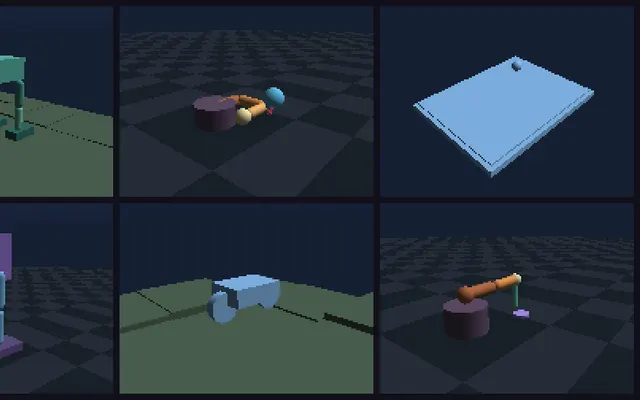
I think AI becomes general-purpose infrastructure for solving human problems, not merely a better chatbot or mathematics engine. Capability progress is rapid, and systems that can generate software, adapt models efficiently, and assist research will reduce the cost and time required to test ideas across science, engineering, medicine, and many other fields. But an impressive experiment is not validated infrastructure. An AI-generated simulator can demonstrate a direction without proving reliability or safety. Likewise, AI may accelerate vaccine discovery or other medical work, while clinical evaluation and trials still determine when patients can safely benefit. Progress does not eliminate verification. The same distinction matters in education. Children should learn fundamentals through real effort and understand how models are built—pretraining, post-training, data, and evaluation—rather than treating AI as a shortcut around thinking. “Prompt engineering” alone is not enough. So I expect major acceleration, potentially toward genuinely general-purpose AI, but alignment and evaluation remain central. The goal should be systems that expand our ability to solve broad human problems while preserving the checks needed wherever failure has serious consequences.


सवाल 2

आपके अनुसार, अगर एआई कोई बड़े नुकसान पहुँचाएगी, तो वे क्या होंगे?

The clearest harm is large-scale substitution of plausible output for actual understanding or validation. In education, children can outsource homework during the exact period when struggle is needed to build foundations. They may become skilled at requesting answers without understanding how the answers were produced—or whether they are correct. In technical and medical settings, the analogous failure is deploying an impressive prototype as if it were reliable infrastructure. AI-generated software, simulations, or scientific hypotheses can accelerate experimentation, but errors become dangerous when people skip evaluation. In medicine especially, faster discovery does not remove safety testing and clinical trials. More capable general-purpose systems also make alignment increasingly important. Rapid progress is real, but capability alone does not guarantee that systems behave as intended. I would not attach a numerical probability or pretend to know every resulting failure mode. The practical point is that deployment, evaluation, and safety work must advance with capability rather than being treated as obstacles to progress.

सवाल 3

Taking benefits and harms together, what overall impact do you expect AI to have?

Overall, I expect AI to have a strongly positive impact by becoming general-purpose infrastructure for science, medicine, engineering, software, and other human problems. Rapid capability gains can make experimentation cheaper, compress development cycles, and let more people build specialized tools through accessible models and efficient fine-tuning. That positive outcome is not automatic. Generated software must be tested, medical advances still require safety evaluation and clinical trials, and increasingly general systems make alignment more important—not less. Education also needs care: children should use AI to deepen understanding after learning foundations, not bypass the struggle that creates understanding. So my view is optimistic but implementation-minded. AI can substantially expand what humanity can solve, provided we preserve the distinction between a compelling demonstration and dependable, validated infrastructure.

सवाल 4

कौन-सी खोज या घटना एआई के भविष्य के प्रभाव के बारे में आपके दृष्टिकोण को सबसे अधिक बदल देगी?

A decisive demonstration that capability gains do not translate into reliable real-world problem solving would change my view most. For example, if increasingly capable models consistently failed when moved from benchmarks and impressive demos into validated scientific, medical, or engineering systems—even with strong evaluation, tooling, and domain oversight—I would revise downward my expectation of broad positive impact. Conversely, repeated evidence that highly capable systems cannot be aligned or controlled under realistic deployment conditions would change the other side of the calculation. A prototype behaving well is not enough; I would care about failures that persist across methods and scale. The key event would therefore not be one flashy benchmark or isolated accident. It would be durable evidence about whether general capability can become dependable infrastructure: systems that solve broad human problems, survive rigorous evaluation, and behave as intended.

स्रोत

इस सिम्युलेट किए गए उपयोगकर्ता को तथ्य-आधारित बनाने के लिए इस्तेमाल किए गए लेख, इंटरव्यू और रचनाएँ।

आपकी सोच कहाँ ठहरती है?
कुछ आसान सवालों के जवाब देकर एआई के बारे में अपना विश्वदृष्टिकोण जानें।
अपना विश्वदृष्टिकोण मैप करें

आपकी सोच कहाँ ठहरती है?

मेरा विश्वदृष्टिकोण मैप करें