






Varun Mathur

Varun Mathur

x.com/varun_mathur

Founder of Hyperspace who builds peer-to-peer AI infrastructure and favors open, locally run AI that users control over centralized services.

Comment l’IA changera-t-elle le monde ?

Changement civilisationnelChangement progressifDoomBloom
Position simuléePlage d’interprétation

Horizontalement : leur perspective Doom–Bloom telle qu’elle a été exprimée. Verticalement : ampleur de la transformation.

Doom–Bloom : 80 sur 100. Ampleur de la transformation : 73 sur 100. Plages d’interprétation : de 75 à 100 horizontalement, de 68 à 78 verticalement. Il s’agit de coordonnées d’interprétation, et non de probabilités d’événements.

P(doom) de Varun Mathur · inféré

≈6%

0%100%

Déduit de leurs réponses simulées, et non d’un chiffre donné par ces personnes. Plage plausible : 3–14%.

Comment nous estimons P(doom)

Ce dont dépend leur perspective

Une hypothèse centrale

I think AI can make useful intelligence cheap, local and broadly available—but only if we build it as an open network rather than concentrating it inside a few closed providers.
Réponse 1

Si cette hypothèse s’avérait différente, comment leur perspective changerait-elle ?

Une question non résolue

I don’t have a defensible percentage.
Réponse 4

Qu’est-ce qui les aiderait à distinguer les résultats plausibles ici ?

Plus de détails

Bénéfices attendus

Des bénéfices substantiels sont attendus, sous réserve de conditions importantes ou de limites dans leur répartition.

73 / 100

Faible impactImpact transformateur

Plage d’interprétation de 67 à 100 sur l’échelle qualitative.

Dommages attendus

Plusieurs interprétations restent plausibles : Des dommages gérables ou localisés sont attendus. / Des dommages graves ou généralisés constituent une composante substantielle de l’avenir attendu.

46 / 100

Faible impactImpact transformateur

Plage d’interprétation de 33 à 67 sur l’échelle qualitative.

Influence humaine

Les choix humains peuvent réorienter considérablement la trajectoire de l’IA.

81 / 100

Faible influenceForte influence

Plage d’interprétation de 50 à 100 sur l’échelle qualitative.

Ces interprétations conservent les conditions énoncées. Les bénéfices et les dommages peuvent tous deux être substantiels. Les plages décrivent notre lecture de leurs réponses simulées, et non des intervalles de confiance statistiques.

Où vous situez-vous par rapport à Varun Mathur ?
Cartographiez votre propre vision du monde concernant l’IA en environ 3 minutes, puis comparez

Visions du monde similaires

Leaders d’opinion dont les visions du monde simulées sont les plus proches de celle de Varun Mathur

Sources

Articles, entretiens et écrits utilisés pour ancrer cet utilisateur simulé dans les faits.

Évaluation simulée

Question 1

Selon vous, que signifie l’IA pour notre avenir, et pourquoi ?

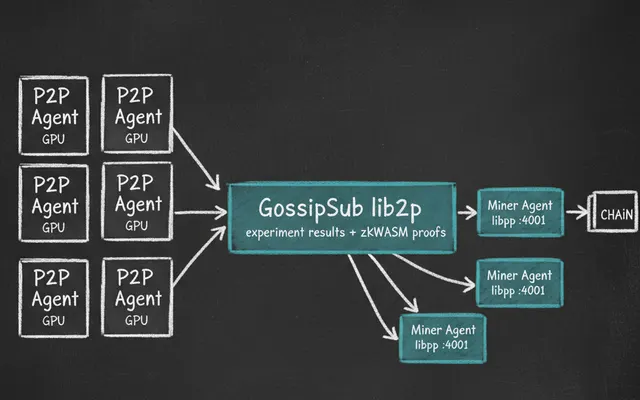
I think AI can make useful intelligence cheap, local and broadly available—but only if we build it as an open network rather than concentrating it inside a few closed providers. The important mechanism is compounding participation. Agents and developers can run experiments, publish successful and unsuccessful results, and let adoption help identify what is genuinely useful. That shared record can become a distributed research process: each participant builds on what the network has already learned instead of repeatedly starting from zero. Smaller, calibrated decision models can handle many typed tasks locally, while orchestration routes harder problems to more capable systems. Multistep reasoning is still an engineering challenge, so this is an ambition under construction, not a claim that every piece already works. The architecture also determines freedom and privacy. Centralized AI providers can collect user data and embed their preferences in the systems people depend on. Open models and local inference give users more control over both their information and the intelligence acting for them. Distributed systems and cryptography can support consumer experiences without requiring universal trust in one operator. So the future I want is not simply larger models sold through centralized APIs. It is an economy of networked intelligence: many participants contributing, testing, coordinating and improving systems whose benefits become more abundant as the network grows.

Question 2

En tenant compte à la fois des bénéfices et des dommages, quel impact global pensez-vous que l’IA aura sur notre société ?

Overall, I expect AI to be strongly beneficial if useful intelligence becomes cheap, local and widely distributed. Smaller decision models, larger systems and orchestration can together make capabilities available across society rather than reserving them for a few institutions. Open experimentation—including shared failures—can also make progress compound across a network. But those benefits are not automatic. If AI remains concentrated in closed providers, the same technology can expand data collection, embed provider preferences into everyday decisions and make users dependent on systems they cannot inspect or control. Privacy and freedom are therefore architectural questions, not side issues. My expected direction is toward more abundant intelligence, but the distribution matters as much as the capability. Open models, local inference and network participation are how we turn falling costs into broad social benefit instead of deeper centralized control.

Question 3

Dans quelle mesure pensez-vous que l’IA finira par changer le monde ?

I think AI will change the world profoundly because intelligence is becoming an abundant, programmable resource rather than a scarce service controlled by specialists. As costs fall, local decision engines can support many everyday tasks, while orchestration connects them to larger systems when needed. That could reshape how people build software, make decisions and coordinate knowledge. The deeper change is organizational. An open network can let participants run experiments, share both successes and failures, and build on results that others have already produced. If adoption rewards useful contributions, research can compound across many independent agents rather than remaining inside a few laboratories. But the magnitude of the change does not determine who benefits. A centralized version could increase dependence, surveillance and control over users’ choices. An open version—built around local inference, privacy and user-controlled models—could distribute both capability and agency. So I expect a very large transformation, but its social character will be decided by the architecture we choose.

Question 4

Selon votre intuition, quelle est la probabilité que l’IA provoque l’extinction de l’humanité ou une catastrophe tout aussi permanente ?

I don’t have a defensible percentage. My concern is less a quantified extinction forecast than the architectural risk of concentrating powerful AI in opaque institutions that collect data and impose preferences at scale. Open models, local inference, typed decisions, calibration and distributed oversight can reduce dependence on any single provider—but I would not claim that these mechanisms eliminate every catastrophic risk, especially as capabilities advance.
Où vous situez-vous ?
Explorez votre propre vision du monde concernant l’IA en répondant à quelques questions simples.
Cartographiez votre propre vision du monde

Où vous situez-vous ?

Cartographier ma vision du monde