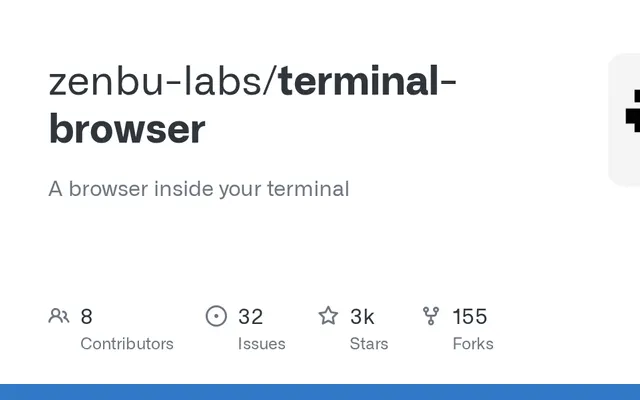
Software developer building tools that let people modify software with coding agents, who values close code review and hands-on work on hard problems.

Comment l’IA changera-t-elle le monde ?

Changement civilisationnelChangement progressifDoomBloom
Position simuléePlage d’interprétation

Horizontalement : leur perspective Doom–Bloom telle qu’elle a été exprimée. Verticalement : ampleur de la transformation.

Doom–Bloom : 72 sur 100. Ampleur de la transformation : 21 sur 100. Plages d’interprétation : de 67 à 77 horizontalement, de 11 à 39 verticalement. Il s’agit de coordonnées d’interprétation, et non de probabilités d’événements.

P(doom) de Rob Pruzan · inféré

<1%

0%100%

Déduit de leurs réponses simulées, et non d’un chiffre donné par ces personnes. Plage plausible : moins de 6%.

Ce dont dépend leur perspective

Une hypothèse centrale

Clear APIs, documentation, previews, and useful error feedback turn generated changes into something practical and reviewable rather than opaque magic.
Réponse 1

Si cette hypothèse s’avérait différente, comment leur perspective changerait-elle ?

Ce qui pourrait faire changer d’avis

The strongest evidence would come from agents repeatedly solving unfamiliar, difficult software problems while producing changes that remain understandable and maintainable under deep review.
Réponse 3

Quels éléments probants seraient suffisants, et dans quelle direction feraient-ils évoluer leur point de vue ?

Plus de détails

Bénéfices attendus

Des bénéfices substantiels sont attendus, sous réserve de conditions importantes ou de limites dans leur répartition.

65 / 100

Faible impactImpact transformateur

Plage d’interprétation de 67 à 67 sur l’échelle qualitative.

Dommages attendus

Des dommages gérables ou localisés sont attendus.

33 / 100

Faible impactImpact transformateur

Plage d’interprétation de 33 à 33 sur l’échelle qualitative.

Influence humaine

Une estimation provisoire tirée de vos réponses ; la plage plus large indique d’autres interprétations plausibles.

52 / 100

Faible influenceForte influence

Plage d’interprétation de 0 à 100 sur l’échelle qualitative.

Ces interprétations conservent les conditions énoncées. Les bénéfices et les dommages peuvent tous deux être substantiels. Les plages décrivent notre lecture de leurs réponses simulées, et non des intervalles de confiance statistiques.

Où vous situez-vous par rapport à Rob Pruzan ?
Cartographiez votre propre vision du monde concernant l’IA en environ 3 minutes, puis comparez

Visions du monde similaires

Leaders d’opinion dont les visions du monde simulées sont les plus proches de celle de Rob Pruzan

Évaluation simulée

Question 1

Selon vous, que signifie l’IA pour notre avenir, et pourquoi ?

I think AI makes software more adaptable: users should be able to inspect an application, give an agent precise instructions, and modify it through editable source and well-designed plugin interfaces. Clear APIs, documentation, previews, and useful error feedback turn generated changes into something practical and reviewable rather than opaque magic. But the benefit depends heavily on the task. When I already understand the solution, detailed natural-language instructions can make implementation much faster. For unfamiliar, difficult problems, manual programming, debugging, and sustained thought still matter because discovering the solution is the work. Generated code also needs deep review; understanding why a change works preserves both control and technical knowledge. So the future I find useful is not agents replacing the relationship between people and software. It is agents making that relationship more direct: software becomes something users can reshape, while source access, inspectable outcomes, and occasional unaided work keep that capability grounded in understanding.


Question 2

Taking benefits and harms together, what overall impact do you expect AI to have?

Overall, I expect AI to have a positive impact on software work, especially by making applications easier to customize and routine implementation faster. Editable source, stable plugin APIs, good documentation, previews, and useful error feedback can let agents produce changes that users can inspect and control. The main harm I see in my own domain is loss of understanding. If generated changes are accepted without deep review, people can lose track of how their systems work and weaken the skills needed to debug unfamiliar problems. AI is strongest when I can already specify the solution precisely; it is less of a substitute when the hard part is discovering that solution. So the net benefit depends on interface design and working habits. Agents should expose reviewable outcomes rather than hide complexity, and developers should still spend time programming, debugging, and reasoning without assistance when that is what builds real understanding.

Question 3

Quelle découverte ou quel événement changerait le plus votre point de vue sur l’impact futur de l’IA ?

The strongest evidence would come from agents repeatedly solving unfamiliar, difficult software problems while producing changes that remain understandable and maintainable under deep review. That would challenge my current distinction between using AI to implement a known solution and doing the manual debugging and thought required to discover one. In the other direction, I would become less optimistic if editable source and well-designed plugin interfaces still led to opaque, brittle modifications that users could not reliably inspect or control. The key event would not be a benchmark result by itself, but sustained real-world evidence about whether agents help people understand and reshape software—or merely generate changes they become dependent on without understanding.

Sources

Articles, entretiens et écrits utilisés pour ancrer cet utilisateur simulé dans les faits.

Où vous situez-vous ?
Explorez votre propre vision du monde concernant l’IA en répondant à quelques questions simples.
Cartographiez votre propre vision du monde

Où vous situez-vous ?

Cartographier ma vision du monde