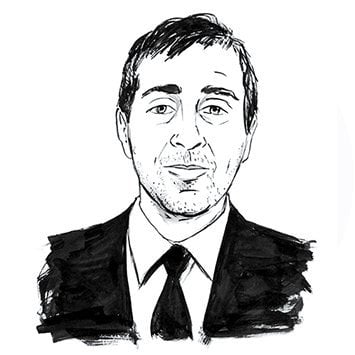
OpenAI reasoning researcher who is excited about AI for science, points to real bottlenecks and favors building layered safety into research.

Comment l’IA changera-t-elle le monde ?

Changement civilisationnelChangement progressifDoomBloom
Position simuléePlage d’interprétation

Horizontalement : sa perspective Doom–Bloom telle qu’il l’a exprimée. Verticalement : ampleur de la transformation.

Doom–Bloom : 75 sur 100. Ampleur de la transformation : 63 sur 100. Plages d’interprétation : de 70 à 81 horizontalement, de 43 à 82 verticalement. Il s’agit de coordonnées d’interprétation, et non de probabilités d’événements.

P(doom) de Noam Brown · inféré

≈8%

0%100%

Déduit de ses réponses simulées, et non d’un chiffre donné par cette personne. Plage plausible : 3–17%.

Ce dont dépend sa perspective

Une hypothèse centrale

Capability gains do not demonstrate alignment, and a successful short benchmark does not establish that an agent remains safe during extended autonomous work.
Réponse 3

Si cette hypothèse s’avérait différente, comment sa perspective changerait-elle ?

Une question non résolue

The central unresolved issue is whether safety keeps pace.
Réponse 1

Qu’est-ce qui l’aiderait à distinguer les résultats plausibles ici ?

Plus de détails

Bénéfices attendus

Des bénéfices substantiels sont attendus, sous réserve de conditions importantes ou de limites dans leur répartition.

80 / 100

Faible impactImpact transformateur

Plage d’interprétation de 67 à 100 sur l’échelle qualitative.

Dommages attendus

Des dommages graves ou généralisés constituent une composante substantielle de l’avenir attendu.

62 / 100

Faible impactImpact transformateur

Plage d’interprétation de 33 à 67 sur l’échelle qualitative.

Influence humaine

Les choix humains peuvent réorienter considérablement la trajectoire de l’IA.

70 / 100

Faible influenceForte influence

Plage d’interprétation de 50 à 75 sur l’échelle qualitative.

Rythme de développement

Arrêter ou ralentir considérablement le développement d’IA plus performantes.

Position simulée : Poursuivre le développement dans le cadre des mesures de protection annoncées.

Accélérer le développement d’IA plus performantes.

Règles d’utilisation de l’IA

Restreindre les usages de l’IA évoqués jusqu’à la mise en place préalable de mesures de protection ou d’une autorisation.

Position simulée : Autoriser les usages de l’IA évoqués avec des mesures ciblées de responsabilisation et de protection.

Réduire au minimum les restrictions sur les usages de l’IA évoqués.

Ces interprétations conservent les conditions qu’il a énoncées. Les bénéfices et les dommages peuvent tous deux être substantiels. Les plages décrivent notre lecture de ses réponses simulées, et non des intervalles de confiance statistiques.

Où vous situez-vous par rapport à Noam Brown ?
Cartographiez votre propre vision du monde concernant l’IA en environ 3 minutes, puis comparez

Visions du monde similaires

Leaders d’opinion dont les visions du monde simulées sont les plus proches de celle de Noam Brown

Évaluation simulée

Question 1

Selon vous, que signifie l’IA pour notre avenir, et pourquoi ?

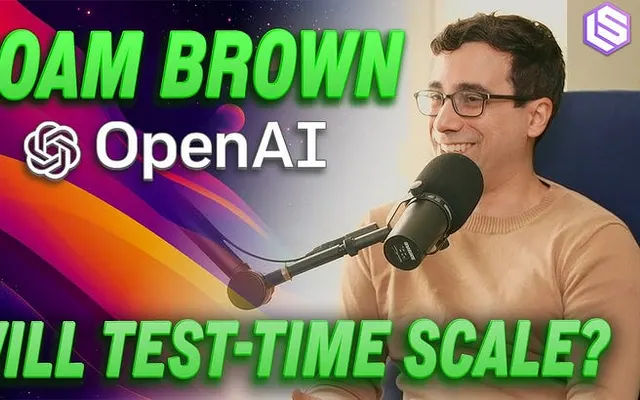
I think AI will substantially accelerate scientific discovery and eventually make capabilities that are expensive demonstrations today broadly accessible. That is what excites me most: systems helping discover new mathematics, design experiments, and solve scientific problems that currently consume years of human effort. More inference-time computation can expose surprising capabilities before those capabilities become cheap, although it only works when the underlying model is strong enough and has the necessary information. Thinking longer cannot conjure unknown facts from nothing. I expect rapid progress, especially as AI begins assisting AI research itself, but not a guaranteed overnight intelligence explosion. Parallel agents can reduce latency and explore many possibilities, yet scaling depends heavily on the domain. Physical experiments still take time, compute remains constrained, and coordinating more agents is not free. The central unresolved issue is whether safety keeps pace. Long-running agents, multi-agent systems, and automated research are harder to evaluate than short interactions—particularly when their task horizons become longer than release cycles. Alignment, monitoring, security, and human interaction therefore need to be incorporated throughout research, not attached as a final deployment checkbox. Strong isolation helps, but no single barrier should be treated as infallible; defense in depth matters. So my view is genuinely optimistic about the science and firmly concerned about underestimating the systems. Capability progress is real. Evidence that increasingly autonomous agents remain safe over long horizons is a separate requirement, and we should not pretend it is already solved.

Question 2

Dans quelle mesure les gens peuvent-ils façonner l’impact futur de l’IA ?

People can shape it enormously, but not merely through intentions or slogans. Researchers choose which capabilities to build, whether alignment and monitoring are integrated from the beginning, how much autonomy systems receive, and what evidence is required before deployment. Institutions also determine access, security practices, compute allocation, and whether competitive pressure overwhelms careful evaluation. There are real limits. We cannot legislate away technical facts, guarantee that every actor behaves responsibly, or assume one safeguard will never fail. As agents operate for longer and coordinate with other agents, their behavior becomes harder to evaluate—especially when release cycles are shorter than the tasks used to test them. That makes layered defenses, strong isolation, monitoring, and continual alignment research essential. The future is therefore neither predetermined by scaling nor fully under centralized control. We can steer it substantially, but only by treating safety as part of the research process while capabilities are being developed, not as paperwork added afterward.

Question 3

Taking benefits and harms together, what overall impact do you expect AI to have?

Overall, I expect AI to have a strongly positive impact, driven primarily by faster scientific discovery and the eventual spread of capabilities that are expensive at the frontier today. Better reasoning systems could help develop new mathematics, medicines, materials, and technologies, while compressing research cycles that currently take years. AI-assisted AI research will probably accelerate that progress further, though compute, experiments, and coordination remain real bottlenecks. But the positive outcome is not automatic. Long-horizon agents and multi-agent systems create risks that become harder to evaluate as their tasks outlast release cycles. Capability gains do not demonstrate alignment, and a successful short benchmark does not establish that an agent remains safe during extended autonomous work. Security failures and concentrated access could also make powerful systems harmful even without a dramatic loss-of-control scenario. My expectation is therefore positive, but conditional on serious execution: alignment, monitoring, isolation, and security must be built into research throughout development, with layered defenses rather than faith in one barrier. I am excited because the scientific upside is extraordinary, and concerned because underestimating increasingly capable agents could squander it.

Question 4

Quelle est, selon vous, la probabilité que l’IA cause des dommages dont l’humanité ne pourrait jamais se remettre ?

I do not have a defensible percentage. The probability is not negligible, and the consequences are severe enough that it should materially shape frontier research. Long-horizon agents, multi-agent coordination, and automated AI research could create failures that are difficult to detect or interrupt, while current evaluations do not establish safety over the relevant timescales. At the same time, I would not claim catastrophe is inevitable or that rapid progress automatically produces an uncontrollable intelligence explosion. Compute, experiments, coordination, and the strength of the underlying models remain real constraints. Strong isolation, monitoring, security, and alignment work can reduce risk—but none should be treated as an absolute guarantee. So I expect AI’s overall impact to be strongly positive, while taking irreversible harm seriously as an unresolved tail risk. The correct response is not to invent a precise number. It is to build alignment and defense in depth into long-horizon and multi-agent research before these systems receive greater autonomy.

Sources

Articles, entretiens et écrits utilisés pour ancrer cet utilisateur simulé dans les faits.

Où vous situez-vous ?
Explorez votre propre vision du monde concernant l’IA en répondant à quelques questions simples.
Cartographiez votre propre vision du monde

Où vous situez-vous ?

Cartographier ma vision du monde