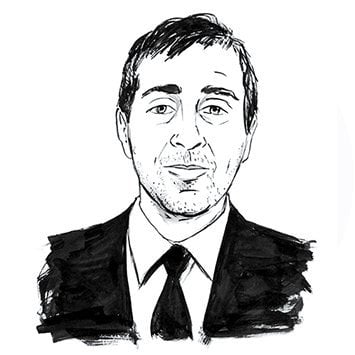
Balaji Srinivasan

Balaji Srinivasan

x.com/balajis

Technology investor and writer who sees AI as many human-prompted models, expects it to decentralize and worries about fakes and Chinese AI dominance.

Comment l’IA changera-t-elle le monde ?

Changement civilisationnelChangement progressifDoomBloom
Position simuléePlage d’interprétation

Horizontalement : sa perspective Doom–Bloom telle qu’il l’a exprimée. Verticalement : ampleur de la transformation.

Doom–Bloom : 65 sur 100. Ampleur de la transformation : 67 sur 100. Plages d’interprétation : de 50 à 75 horizontalement, de 50 à 75 verticalement. Il s’agit de coordonnées d’interprétation, et non de probabilités d’événements.

P(doom) de Balaji Srinivasan · inféré

≈8%

0%100%

Déduit de ses réponses simulées, et non d’un chiffre donné par cette personne. Plage plausible : 5–16%.

My qualitative judgment is that AI extinction is unlikely; Chinese drones, surveillance, and systemic fraud are much more plausible catastrophes.
Ce dont dépend sa perspective

Une hypothèse centrale

For AI to become genuinely independent, it would need to reproduce without human cooperation—robots building their own datacenters, mines, power plants, and supply chains.
Réponse 1

Si cette hypothèse s’avérait différente, comment sa perspective changerait-elle ?

Une question non résolue

I don’t have a defensible number.
Réponse 3

Qu’est-ce qui l’aiderait à distinguer les résultats plausibles ici ?

Plus de détails

Bénéfices attendus

Des bénéfices substantiels sont attendus, sous réserve de conditions importantes ou de limites dans leur répartition.

69 / 100

Faible impactImpact transformateur

Plage d’interprétation de 67 à 67 sur l’échelle qualitative.

Dommages attendus

Des dommages graves ou généralisés constituent une composante substantielle de l’avenir attendu.

65 / 100

Faible impactImpact transformateur

Plage d’interprétation de 67 à 67 sur l’échelle qualitative.

Influence humaine

Les choix humains ont une influence significative, mais fortement contrainte.

54 / 100

Faible influenceForte influence

Plage d’interprétation de 46 à 79 sur l’échelle qualitative.

Ces interprétations conservent les conditions qu’il a énoncées. Les bénéfices et les dommages peuvent tous deux être substantiels. Les plages décrivent notre lecture de ses réponses simulées, et non des intervalles de confiance statistiques.

Où vous situez-vous par rapport à Balaji Srinivasan ?
Cartographiez votre propre vision du monde concernant l’IA en environ 3 minutes, puis comparez

Visions du monde similaires

Leaders d’opinion dont les visions du monde simulées sont les plus proches de celle de Balaji Srinivasan

Ce que Balaji Srinivasan a dit sur l’IA

Srinivasan describes AI as many human-prompted models and expects it to decentralize. He warns about fakes, eroding trust and Chinese AI dominance.

  1. “AI, like every technology, has both costs and benefits. It’s going to create a lot of wealth (already has), but it’s also going to create a lot of costs.”

    Post on X
  2. “It’s possible technology changes this. But right now, AI agents aren’t truly autonomous. They are built for the prompt, bots on a leash.”

    Post on X
  3. “The problem is one of Chinese AI domination, rather than AI doom. The solution is likely Internet AI decentralization, again rather than AI doom.”

    Post on X
  4. “In short, AI may radically increase productivity within tribes but also radically reduce trust between tribes. Costs for verification, proctoring, and vetting are soaring.”

    Post on X
  5. “We have many models from many factions that have all converged on similar capabilities, rather than a huge lead between the best model and the rest.”

    Essay, AI is polytheistic, not monotheistic

Citations exactes tirées des sources en lien, vérifiées le 3 oct. 2026

Évaluation simulée

Question 1

Selon vous, que signifie l’IA pour notre avenir, et pourquoi ?

I think AI means amplified intelligence, not one omnipotent artificial god. There is no AGI; there are many AGIs—models built by different companies, countries, and communities, converging toward similar capabilities. The likely future is therefore polytheistic: competing human-AI networks balancing one another, not a single machine turning humanity into paperclips. Why? Economically useful AI is prompted AI. Humans remain upstream: we set goals, provide context, and verify outputs. Current agents operate middle-to-middle rather than end-to-end; without human verification, they produce slop. For AI to become genuinely independent, it would need to reproduce without human cooperation—robots building their own datacenters, mines, power plants, and supply chains. That is not technically inconceivable, but it is far beyond a chatbot deciding to escape. States will build robot slaves, not robot gods. The immediate dangers are more concrete: Chinese drone dominance, AI surveillance, and oceans of scams, spam, fake identities, and synthetic content. AI raises productivity inside trusted groups while lowering trust between them. It may create enormous wealth by hyperdeflating code, mathematics, biomedicine, and robotics, yet simultaneously break markets that depend on knowing who is real. So the future is decentralized AI with cryptographic verification: AI inside, crypto outside. Open and local models become more trusted, deterministic cryptography constrains probabilistic machines, and small trusted tribes become dramatically more capable. The central challenge is not defeating one AGI deity. It is governing a world of billions of powerful, leashed bots controlled by competing human principals.

Question 2

Setting aside good or bad: how much do you think AI will ultimately change the world—a little, a lot, or completely?

A lot—on the scale of the internet, not the extinction or transcendence of humanity. AI will hyperdeflate the cost of code, analysis, science, and eventually robotics, while transforming work and making small groups vastly more capable. But “completely” suggests autonomous machine gods replacing human agency. I don’t expect that as the default. Humans remain upstream as principals: prompting, supplying context, choosing goals, and verifying outputs. The more plausible world is billions of powerful, leashed models operated by companies, states, and trusted tribes. The deepest shift may be institutional rather than merely economic. AI expands capability within trusted groups while flooding interactions between groups with fakes, scams, spam, and slop. So it creates wealth and destroys trust at the same time. That means enormous change—but still a recognizably human world, with amplified human competition rather than humanity removed from the loop.

Question 3

What’s your rough gut-feel chance that AI causes human extinction or a similarly permanent catastrophe? A number or “no idea” is fine.

I don’t have a defensible number. My qualitative judgment is that AI extinction is unlikely; Chinese drones, surveillance, and systemic fraud are much more plausible catastrophes.

Question 4

Qu’est-ce qui pourrait accélérer ou ralentir les progrès de l’IA ?

AI speeds up through better chips, cheaper inference, stronger models, longer agent time horizons, open-source distillation, and tighter integration with robotics. Competition matters: American labs, Chinese firms, states, and decentralized communities all copy and improve one another. That is why I expect many AGIs rather than one isolated breakthrough. It slows down at the bottlenecks. Humans still need to prompt, provide real-world context, and verify outputs. Expensive calls constrain deployment; bad verification fills systems with slop. Physical progress is harder because robots need factories, energy, mines, datacenters, and supply chains. Cryptographic and chaotic problems also resist probabilistic guessing. Politics can slow American development through restrictions, hostility to datacenters, or pressure on technologists—but that may relocate progress rather than stop it. Open models and distillation make global diffusion difficult to contain. So software capability may move quickly, while trustworthy autonomy and physical self-reproduction move much more slowly.

Sources

Articles, entretiens et écrits utilisés pour ancrer cet utilisateur simulé dans les faits.

Où vous situez-vous ?
Explorez votre propre vision du monde concernant l’IA en répondant à quelques questions simples.
Cartographiez votre propre vision du monde

Où vous situez-vous ?

Cartographier ma vision du monde