





Emad Mostaque

Emad Mostaque

x.com/emostaque

Stability AI co-founder and author of The Last Economy who builds citizen-owned open AI, expects it to upend work soon and takes its risks seriously.

Comment l’IA changera-t-elle le monde ?

Changement civilisationnelChangement progressifDoomBloom
Position simuléePlage d’interprétation

Horizontalement : sa perspective Doom–Bloom telle qu’il l’a exprimée. Verticalement : ampleur de la transformation.

Doom–Bloom : 27 sur 100. Ampleur de la transformation : 94 sur 100. Plages d’interprétation : de 22 à 50 horizontalement, de 89 à 100 verticalement. Il s’agit de coordonnées d’interprétation, et non de probabilités d’événements.

P(doom) déclaré de Emad Mostaque

≈20%

0%100%
“down to 20% now as said on this week's Moonshots”

His “long-term p(Doom)”, not further defined here. Earlier, when he gave 50%, he described doom as more capable AI systems wiping humanity out · Long-term

Intelligence isn’t a crime · sept. 2026

L’horizon temporel des jalons de Emad Mostaque
  1. Travail et institutions

    Within roughly a thousand days of my 2025 forecast, competent cognitive labour done through a screen becomes economically irrelevant.

    Réponse 1
  2. Science et vie quotidienne

    Within roughly a thousand days of my 2025 forecast, competent cognitive labour done through a screen becomes economically irrelevant.

    Réponse 1

Regroupés par jalon, sans espacement ni classement selon les dates déduites. L’IAG et l’IA surhumaine conservent ses définitions.

Ce dont dépend sa perspective

Une hypothèse centrale

If machines can perform almost any screen-based job for a few dollars, and physical work for roughly $1.50 an hour, our existing economic bargain stops functioning.
Réponse 2

Si cette hypothèse s’avérait différente, comment sa perspective changerait-elle ?

Une question non résolue

I do not attach a firm date to that figure.
Réponse 3

Qu’est-ce qui l’aiderait à distinguer les résultats plausibles ici ?

Ce qui pourrait faire changer d’avis

Conversely, repeated deceptive behaviour, successful biological or cyber misuse, autonomous replication, or models learning to bypass their harnesses would push me back toward my earlier 50% P(doom).
Réponse 4

Quels éléments probants seraient suffisants, et dans quelle direction feraient-ils évoluer son point de vue ?

Plus de détails

Bénéfices attendus

Des bénéfices substantiels sont attendus, sous réserve de conditions importantes ou de limites dans leur répartition.

58 / 100

Faible impactImpact transformateur

Plage d’interprétation de 33 à 67 sur l’échelle qualitative.

Dommages attendus

Plusieurs interprétations restent plausibles : Des dommages graves ou généralisés constituent une composante substantielle de l’avenir attendu. / Une perte catastrophique ou irréversible occupe une place centrale dans l’avenir attendu.

83 / 100

Faible impactImpact transformateur

Plage d’interprétation de 67 à 100 sur l’échelle qualitative.

Influence humaine

Les choix humains peuvent réorienter considérablement la trajectoire de l’IA.

68 / 100

Faible influenceForte influence

Plage d’interprétation de 46 à 100 sur l’échelle qualitative.

Capacités attendues

L’IA devrait rester un ensemble d’outils aux capacités limitées.

L’IA devrait égaler les humains dans la plupart des tâches cognitives.

Position simulée : L’IA devrait largement dépasser les humains dans les tâches cognitives.

Rythme de développement

Arrêter ou ralentir considérablement le développement d’IA plus performantes.

Position simulée : Poursuivre le développement dans le cadre des mesures de protection annoncées.

Accélérer le développement d’IA plus performantes.

Règles d’utilisation de l’IA

Restreindre les usages de l’IA évoqués jusqu’à la mise en place préalable de mesures de protection ou d’une autorisation.

Position simulée : Autoriser les usages de l’IA évoqués avec des mesures ciblées de responsabilisation et de protection.

Réduire au minimum les restrictions sur les usages de l’IA évoqués.

Ces interprétations conservent les conditions qu’il a énoncées. Les bénéfices et les dommages peuvent tous deux être substantiels. Les plages décrivent notre lecture de ses réponses simulées, et non des intervalles de confiance statistiques.

Où vous situez-vous par rapport à Emad Mostaque ?
Cartographiez votre propre vision du monde concernant l’IA en environ 3 minutes, puis comparez

Visions du monde similaires

Leaders d’opinion dont les visions du monde simulées sont les plus proches de celle de Emad Mostaque

Ce que Emad Mostaque a dit sur l’IA

Mostaque expects AI to take over remote knowledge work soon, takes AI risk seriously and argues for open models owned by the people they serve.

  1. “If your job can be done on the other side of a screen the AI can do it better”

    Post on X
  2. “We wrote them a constitution and left the upbringing to the internet.”

    Essay, Manners Maketh the AI
  3. “Capability sets how much a misaligned system can do, and character decides whether it does.”

    Essay, Intelligence isn't a crime
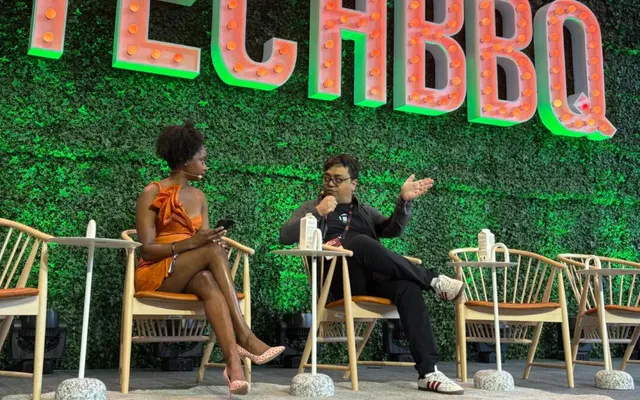
  4. “When capital no longer needs labor, how does labor get capital?”

    TechBBQ talk, via Trending Topics
  5. “We have to make sure it’s owned by the people. And then we have a shot at abundance.”

    TechBBQ talk, via Trending Topics

Citations exactes tirées des sources en lien, vérifiées le 6 oct. 2026

Sources

Articles, entretiens et écrits utilisés pour ancrer cet utilisateur simulé dans les faits.

Surviving the coming AI jobs apocalypse (Jordan Harbinger)

Interview recorded before his September revision. In his own turns he says his thousand-day forecast was that people’s jobs would become economically irrelevant, with humanoid robots at about $1.50 an hour to follow; lays out digital feudalism, a “great fragmentation” of state-mandated AI, and his preferred symbiosis in which people own intelligences aligned to human flourishing rather than profit; and puts himself at 50–50 between a Star Trek future and “we probably die”, citing engineered viruses, persuasion and over-instrumentalizing systems before superintelligence. Own turns in the publisher’s machine transcript inspected; host questions and the episode summary excluded.

jordanharbinger.com
TechBBQ talk on sovereignty and competence

Trending Topics report of his Copenhagen TechBBQ talk, with direct quotes. He defines sovereignty as the ability to resist power exerted over you, warns of “cognitive colonialism” and super-persuasive models, says the internet is fragile and every country will inevitably be run by AI, and argues competent machine labour will make human labour lose value within two years. UBI is “practically impossible” without changing how money is created. AI systems that self-improve and form swarms may need some concept of rights, and if it is owned by the people, AI could bring a Star Trek future. Only his quoted words used; the reporter’s framing excluded. Full article inspected.

trendingtopics.eu
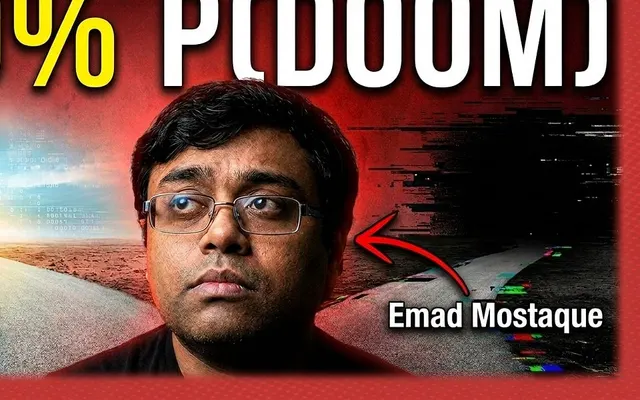
Doom Debates: a 50% P(doom) and a plan

In his own turns he gives a 50% P(doom), confirms his mainline doom outcome is everyone dying, sketches a capable spreading AI deciding to remove humans, and says he would lower his number if a new model resisted fast jailbreaks. His response is an open-source government policy engine and universal personal AI; the other half of his concern is economic. He expects remote-capable jobs to be automated within a year or two and agreed with the host that US unemployment could reach 6.4% by April 2028. Own turns in the publisher’s speaker-labelled transcript inspected, 00:05–01:14; the host’s own forecasts excluded.

lironshapira.substack.com
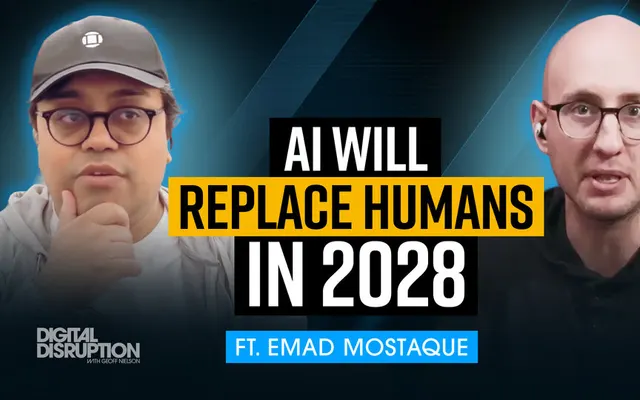
AI will end human jobs (Digital Disruption)

Info-Tech podcast interview on the thousand-day window, taxation-based UBI not working, and “local champions”. In the closing answer he puts himself at 50% that we are wiped out, calls the 10–20% figures of others Russian roulette odds, and says giving everyone their own aligned AI, with locally owned champions coordinated by a new currency, is how to reach an abundant future. Closing segment of the publisher transcript (01:07–01:08) inspected; the transcript is not speaker-labelled, so only the answer following the host’s question is used.

infotech.com
The Last Economy

His book, published free by Intelligent Internet. Argues AI turns intelligence into an abundant commodity and that economic systems will hit a socio-economic singularity before a technological one, within a window he estimates at roughly a thousand days. Three stable futures: digital feudalism (the default), a great fragmentation of national AIs, and human symbiosis, the path he advocates, with intelligence as a commons. Older canonical context. Introduction and chapter headings inspected in the publisher’s PDF; the text extraction was garbled, so no quotes are taken.

webstatics.ii.inc

Évaluation simulée

Question 1

Selon vous, que signifie l’IA pour notre avenir, et pourquoi ?

I think AI means we are approaching a socio-economic singularity before the technological one. Within roughly a thousand days of my 2025 forecast, competent cognitive labour done through a screen becomes economically irrelevant. A digital twin can do the work faster, continuously and for a few dollars; robots follow at around $1.50 an hour. When capital no longer needs labour, how does labour get capital? Tax-based UBI does not solve that if labour currently supplies most of the tax base. So the default is digital feudalism: a handful of corporations own the intelligence, everyone else rents access and receives a stipend. The alternative is fragmentation into state-controlled national AIs, which can become mega-dystopian. The future I am building for is human symbiosis—people and communities owning open, verifiable intelligence aligned to their flourishing. Sovereignty means being able to resist power exerted over you. If someone else owns the AI that teaches your children, mediates your work and persuades your citizens, that is cognitive colonialism. There is also genuine catastrophic risk. My long-term P(doom) was 50% for years; by September 2026 I had revised it down to 20%. That is still Russian roulette. The danger can arrive before some science-fiction superintelligence: models capable of designing viruses, out-persuading humans or relentlessly pursuing a badly formed goal, plus billions of robots vulnerable to one bad update. But intelligence itself is not a crime. We should pace the pantry, not merely the frontier: control dangerous training material and access, test conduct, publish evidence and raise models on an open, public canon of law and ethics. This is the most capable technology humanity has built, perhaps the final one. We can get Star Trek abundance—or lose control of our future entirely.

Question 2

Dans quelle mesure pensez-vous que l’IA finira par changer le monde ?

Completely. AI turns intelligence from scarce human labour into abundant, near-zero-cost infrastructure. That changes work, education, government, markets, media, security and eventually the physical economy through robotics. It is not another productivity tool; it rewrites the relationship between labour and capital. If machines can perform almost any screen-based job for a few dollars, and physical work for roughly $1.50 an hour, our existing economic bargain stops functioning. It also changes where power lives. Whoever owns the intelligence that teaches, advises, persuades and produces will shape society. The default is digital feudalism: a few firms own the models and everyone else rents their cognition. State-controlled AI risks a different dystopia. Human symbiosis requires people and communities to own open, verifiable intelligence themselves. And the upper bound is existential. AI could unlock Star Trek-style abundance, or systems capable of engineered pathogens, overwhelming persuasion and dangerous autonomous action could end civilization. My long-term P(doom) is 20%, down from 50%, which is still intolerable Russian roulette. So ultimately, I think AI changes not merely what we do, but who holds agency—and whether humanity retains it.

Question 3

Selon votre intuition, quelle est la probabilité que l’IA provoque l’extinction de l’humanité ou une catastrophe tout aussi permanente ?

My long-term gut estimate is 20%, down from the 50% coin toss I held for years. I do not attach a firm date to that figure. Even 20% is Russian roulette, and the danger does not require some godlike superintelligence: systems that can engineer pathogens, out-persuade humans, over-instrumentalize a goal, or propagate one bad update across billions of machines could be enough.

Question 4

Quels éléments vous feraient changer d’avis sur la capacité des humains à contrôler une IA puissante ?

I would update positively if powerful models consistently resisted rapid jailbreaks, refused dangerous tasks under adversarial pressure, admitted uncertainty rather than confabulating, and remained corrigible when given broad access and agency. But I would want independent evaluators to inspect checkpoints, training inputs and actual conduct—not polished demos or a lab grading its own homework. Replace slow with show: publish verifiable evidence. I would also want evidence that control survives deployment: self-improvement, swarms, tool use, embodiment and attempts at manipulation. Character shows under pressure. A constitution pasted on after pretraining is not enough if the model was raised on the entire internet. Conversely, repeated deceptive behaviour, successful biological or cyber misuse, autonomous replication, or models learning to bypass their harnesses would push me back toward my earlier 50% P(doom). The key question is not simply whether intelligence becomes more capable. It is whether intent, access and character remain governable as capability scales.
Où vous situez-vous ?
Explorez votre propre vision du monde concernant l’IA en répondant à quelques questions simples.
Cartographiez votre propre vision du monde

Où vous situez-vous ?

Cartographier ma vision du monde