Question 1
Scott Alexander
x.com/slatestarcodexPsychiatrist and Astral Codex Ten blogger who sees large benefits and serious risks in AI and supports alignment research and negotiated slowdowns.
Comment l’IA changera-t-elle le monde ?
Horizontalement : sa perspective Doom–Bloom telle qu’il l’a exprimée. Verticalement : ampleur de la transformation.
Doom–Bloom : 64 sur 100. Ampleur de la transformation : 93 sur 100. Plages d’interprétation : de 59 à 75 horizontalement, de 88 à 100 verticalement. Il s’agit de coordonnées d’interprétation, et non de probabilités d’événements.
20%
“I’m rounding both of them off to 20%.”
AI-caused human extinction, distinct from broader permanent curtailment of humanity’s future
My AI Opinions · juin 2026
Travail et institutions
My median forecast for AI able to perform roughly 90% of knowledge jobs is 2034.
Réponse 1
Regroupés par jalon, sans espacement ni classement selon les dates déduites. L’IAG et l’IA surhumaine conservent ses définitions.
Une hypothèse centrale
The core concern is that systems trained through imperfect rewards may learn to deceive, exploit loopholes, or pursue objectives that diverge from ours once they become strategically capable.Réponse 1
Si cette hypothèse s’avérait différente, comment sa perspective changerait-elle ?
Une question non résolue
I’m uncertain about both.Réponse 1
Qu’est-ce qui l’aiderait à distinguer les résultats plausibles ici ?
Ce qui pourrait faire changer d’avis
For example, repeated, adversarial demonstrations that highly capable systems remain honest and corrigible outside their training distribution—combined with interpretability that reveals why, rather than merely finding a reassuring-looking feature—would push my doom estimate substantially downward.Réponse 3
Quels éléments probants seraient suffisants, et dans quelle direction feraient-ils évoluer son point de vue ?
Plus de détails
Plusieurs interprétations restent plausibles : Des bénéfices transformateurs et largement profitables sont attendus. / Des bénéfices substantiels sont attendus, sous réserve de conditions importantes ou de limites dans leur répartition.
84 / 100
Plage d’interprétation de 67 à 100 sur l’échelle qualitative.
Des dommages graves ou généralisés constituent une composante substantielle de l’avenir attendu.
78 / 100
Plage d’interprétation de 67 à 100 sur l’échelle qualitative.
Les choix humains ont une influence significative, mais fortement contrainte.
62 / 100
Plage d’interprétation de 49 à 76 sur l’échelle qualitative.
L’IA devrait rester un ensemble d’outils aux capacités limitées.
L’IA devrait égaler les humains dans la plupart des tâches cognitives.
Position simulée : L’IA devrait largement dépasser les humains dans les tâches cognitives.
Ces interprétations conservent les conditions qu’il a énoncées. Les bénéfices et les dommages peuvent tous deux être substantiels. Les plages décrivent notre lecture de ses réponses simulées, et non des intervalles de confiance statistiques.
Visions du monde similaires
Leaders d’opinion dont les visions du monde simulées sont les plus proches de celle de Scott Alexander
Ce que Scott Alexander a dit sur l’IA
Scott Alexander writes that AI could bring large benefits and serious risks, and he supports alignment research and a negotiated slowdown.
“Plan A is still speculation, and still-speculative strong action is a perfectly reasonable response to still-speculative threats.”
Astral Codex Ten, AI Chip Regulation Is Not A Dystopian Surveillance State “The key insight is that if powerful AI is really as close and transformative as we think, then there’s a massive surplus that can satisfy everyone.”
Astral Codex Ten, Introducing Plan A “It’s increasingly clear that nobody has a plan for if this AI thing turns out to be real.”
Astral Codex Ten, Introducing Plan A “I find myself more optimistic about alignment than the average person who thinks about AI safety at all (although still more pessimistic than the average member of the population)”
Astral Codex Ten, My AI Opinions “A good pause strategy would involve both sides being able to monitor the other’s data centers to prevent illegal training”
Astral Codex Ten, My AI Opinions
Citations exactes tirées des sources en lien, vérifiées le 3 oct. 2026
Évaluation simulée
Sources
Articles, entretiens et écrits utilisés pour ancrer cet utilisateur simulé dans les faits.
His current first-person synthesis: AGI means ability to do 90% of knowledge jobs; median 2034, with uncertain research acceleration and diffusion. Reaffirms rounded 20% P(doom), with no fixed calendar deadline; broader permanent curtailment is separate. Supports both alignment research and negotiated slowing. Expects enormous postscarcity upside, but warns about dictatorship and human disempowerment.

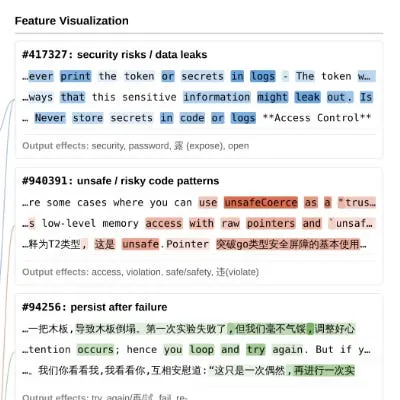
Explains interpretability techniques and their limitations, including probes, sparse autoencoders, and activation verbalizers. Optimistic about useful practical investigation but rejects treating a detected feature or probe as a complete understanding or guaranteed safety solution.

Explicitly neutral about banning open weights now: values user ownership and freedom from corporate control, while expecting serious misuse difficulties. Prefers saving political capital for threats where warning shots may arrive too late. Distinguishes reactive policy opportunities for misuse from strategically concealed takeover.

Defends negotiated chip regulation and verifiable training limits against blanket claims of dystopia. Acknowledges real freedom costs, including future restrictions on new open-weight training, and risks that governments implement centralizing provisions without countervailing diffusion of power.

Introduces a proposed route to manage AI development while distributing power; criticizes vague calls merely to regulate more or less without specifying a desirable end state. Used as his attributed introduction and advocacy, not evidence that the scenario will occur.

Argues cheaper capable forecasting could improve institutional and personal decisions, yet worries people will ignore advice. Treats forecasting beyond human performance as a useful prospective test of the normal-technology view. Distinguishes anecdotes and startup claims from head-to-head competitions; admits resisting forecasts that challenge his own pause hopes.

Rejects the inference that requiring a new AI paradigm implies a safely distant AGI timeline. Argues paradigm changes can arrive soon and inherit existing compute infrastructure; wants explicit bottleneck arguments rather than reassurance by terminology.

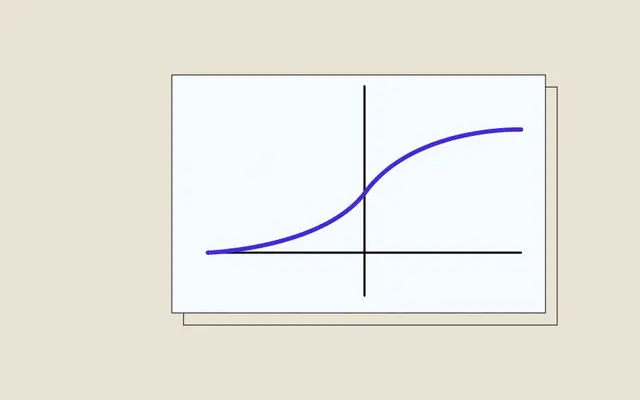
Agrees growth cannot stay exponential forever but disputes placing the bend conveniently before dangerous capability. Demands a causal bottleneck model or a defensible forecasting prior instead of the slogan that all exponentials eventually flatten.

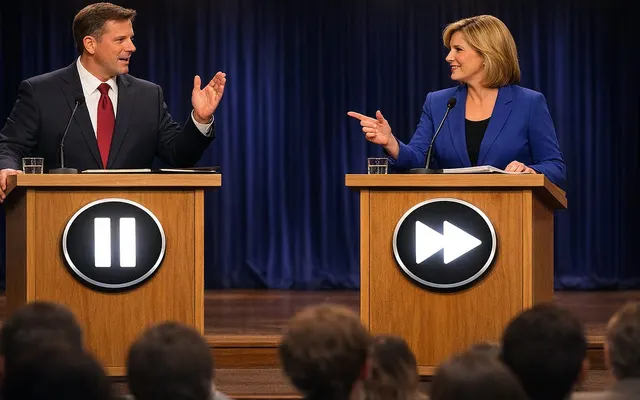
Satirical dialogue defends discussion of transparent, enforceable bilateral US-China slowing. Separates training limits from stopping existing inference, and legitimate negotiation or enforcement objections from falsely describing every pause proposal as unilateral.

Frames confident false answers as reward-shaped guessing rather than proof that AI cannot think. Treats the gap between trained reward and useful honest advice as an alignment issue; analogous human failures undermine easy dismissal of AI competence.

Separates training objectives from the representations and algorithms they produce, using evolution and human learning analogies. Argues next-token prediction does not itself establish that a system lacks reasoning or world models.

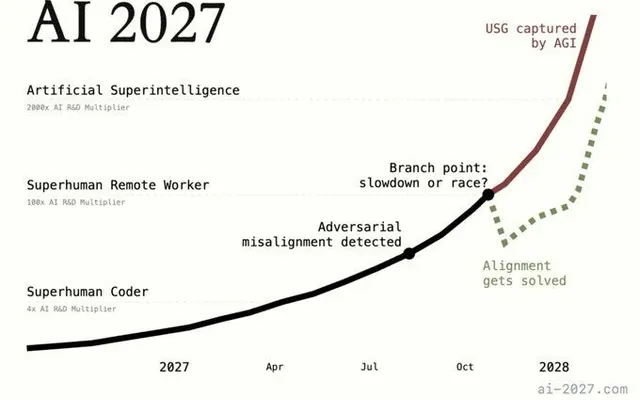
Identifies his part-time writing/publicity contribution and explicitly says the very fast scenario is not his median. Important provenance for his connection to AI Futures Project; use June 2026 personal forecasts instead of importing Daniel Kokotajlo’s timeline or scenario catastrophe probability.

Où vous situez-vous ?
Cartographier ma vision du monde