






Question 1
Dylan Patel
x.com/dylan522pFounder of SemiAnalysis who tracks AI chips and compute, expects fast AI progress and worries about power concentration and public backlash.
Comment l’IA changera-t-elle le monde ?
Horizontalement : sa perspective Doom–Bloom telle qu’il l’a exprimée. Verticalement : ampleur de la transformation.
Doom–Bloom : 61 sur 100. Ampleur de la transformation : 87 sur 100. Plages d’interprétation : de 50 à 75 horizontalement, de 75 à 100 verticalement. Il s’agit de coordonnées d’interprétation, et non de probabilités d’événements.
≈7%
Déduit de ses réponses simulées, et non d’un chiffre donné par cette personne. Plage plausible : 3–19%.
Une hypothèse centrale
But “ultimately” hides the hard part: diffusion may lag capability because the best models are expensive, compute-constrained and increasingly reserved for labs or a few connected customers.Réponse 2
Si cette hypothèse s’avérait différente, comment sa perspective changerait-elle ?
Une question non résolue
So I cannot tell you whether smarter-than-human AI escapes human control.Réponse 4
Qu’est-ce qui l’aiderait à distinguer les résultats plausibles ici ?
Plus de détails
Des bénéfices substantiels sont attendus, sous réserve de conditions importantes ou de limites dans leur répartition.
69 / 100
Plage d’interprétation de 67 à 67 sur l’échelle qualitative.
Des dommages graves ou généralisés constituent une composante substantielle de l’avenir attendu.
67 / 100
Plage d’interprétation de 67 à 67 sur l’échelle qualitative.
Les choix humains peuvent apporter des changements limités, mais des forces dominantes contraignent l’issue.
36 / 100
Plage d’interprétation de 24 à 51 sur l’échelle qualitative.
L’IA devrait rester un ensemble d’outils aux capacités limitées.
L’IA devrait égaler les humains dans la plupart des tâches cognitives.
Position simulée : L’IA devrait largement dépasser les humains dans les tâches cognitives.
Ces interprétations conservent les conditions qu’il a énoncées. Les bénéfices et les dommages peuvent tous deux être substantiels. Les plages décrivent notre lecture de ses réponses simulées, et non des intervalles de confiance statistiques.
Visions du monde similaires
Leaders d’opinion dont les visions du monde simulées sont les plus proches de celle de Dylan Patel
Ce que Dylan Patel a dit sur l’IA
Patel expects AI demand to keep surging and calls a voluntary slowdown wishful thinking, and he warns of concentrating power and public backlash.
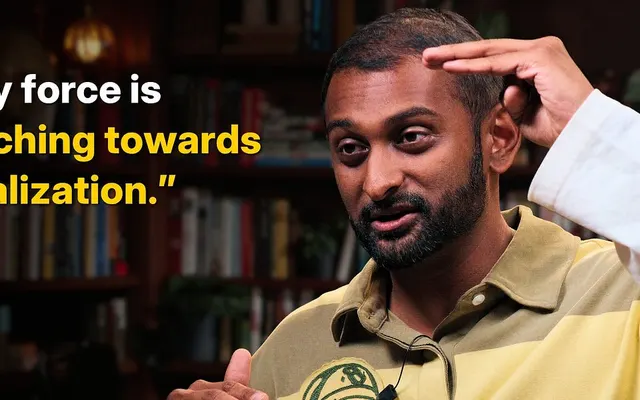
“Because it seems to me that every force is screeching towards centralization. And that’s scary as hell.”
Dwarkesh Podcast “Everyone who’s elected is going to hate AI. Even the people who are elected already hate AI.”
Dwarkesh Podcast “Slowing down AI is a ultimately wishful thinking”
Post on X “While you blinked, AI consumed all of software development.”
Post on X “Generally, humanity is going to suffer a lot less, I’m very optimistic about that. I do worry of like techno-fascism type stuff arising.”
Lex Fridman Podcast
Citations exactes tirées des sources en lien, vérifiées le 6 oct. 2026
Sources
Articles, entretiens et écrits utilisés pour ancrer cet utilisateur simulé dans les faits.
Dwarkesh Podcast. Says OpenAI and Anthropic took about a third of new compute in 2026 and, if trends continue (“I see nothing that’s stopping it”), will control most usable FLOPs by end-2028, and that labs are shifting compute from inference to R&D. Regulation (labs not releasing their best models, state data-center bans), public anger and rising interest rates will bend the curve; slow takeoff is “at least my hope”, and “we could tear ourselves apart before we get there”. Calls the push toward centralization “scary as hell”, says he trusts neither the government nor Dario Amodei nor Sam Altman, and sees a choice between super-concentration where we pray one company gets everything right and governments slowing things for a balance of power. Own turns in the publisher transcript inspected, 00:00–00:07, 00:25:40–00:33:27 and 00:48:48 to the end.

Invest Like the Best, episode 469. Describes SemiAnalysis spending about $7 million a year on Claude Code against roughly $25 million in salaries, and says other firms will soon cut staff when one person does the work of five to fifteen. Says the uncertainty causes some fear about how society reforms itself when implementation is cheap and choosing ideas matters, and expects the newest models to be deployed ever more narrowly, concentrating token value among the well-connected. Predicts large-scale protests against Anthropic and OpenAI within three months because people hate AI, and says lab leaders should stop giving interviews about world-changing capabilities and show present, uplifting uses instead. Own turns read in an undiarized auto-caption copy (the publisher transcript is members-only); turns identified by question-and-answer structure.

Dwarkesh Podcast. Says OpenAI and Anthropic know what compute they need while Nvidia and the rest of the supply chain are not “AGI-pilled” and build less, making ASML’s EUV tools the main constraint by about 2030. If takeoff or timelines are slow, China can catch up drastically through subsidies and a vertical supply chain; distillation will get harder as labs sell automated work rather than visible reasoning. Thinks Elon Musk sees Taiwan risk as huge, and that losing Taiwan’s fabs would shrink global GDP and stall compute growth. Own turns in the publisher transcript inspected, 01:05:37–01:16:01 and 02:14:07 to the end, with spot reads elsewhere.

Matthew Berman interview. Says the junior developer market is “nuked” and AI tools are for everyone, not just coders. Describes himself as a lifelong capitalist from a family that ran a motel and gas stations who has come to think UBI is fine because society will otherwise rip itself apart; predicts the next election will be AI-focused with an anti-AI party winning as more than half of Americans view AI negatively and everything gets blamed on it. Calls degrowth a terrible idea because technology creates abundance, while saying cheap dopamine makes people less happy. Own turns read in an undiarized auto-generated transcript fetched through a web reader; the passages used contain his first-person biography, and no quotes are taken.

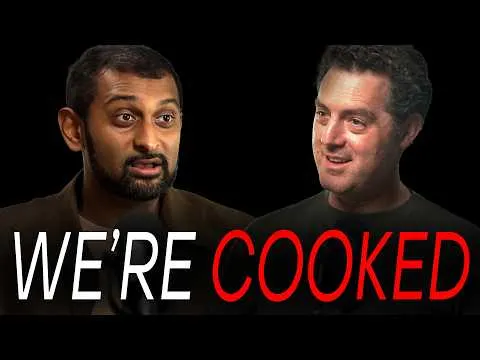
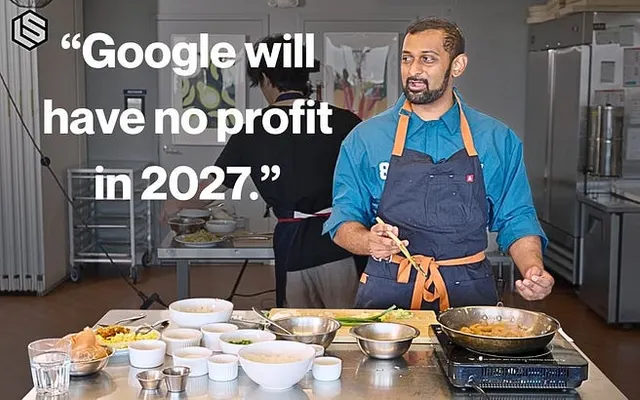
Latent Space cooking episode. Says he is not fully on board with AI 2027 but is pretty bullish on AI; AI is a bubble only if model progress slows, and it is accelerating month on month. Names the biggest risk as the general public hating AI, expects a real backlash from both the financial class and ordinary people, and says any party that wants to win should become the anti-AI party. On whether AI kills us all, says there is obviously risk but it is not his expertise and he does not care to opine. Own turns in the publisher’s speaker-labeled transcript inspected, 00:13:50–00:21:30 and 00:35:30–00:38:45.

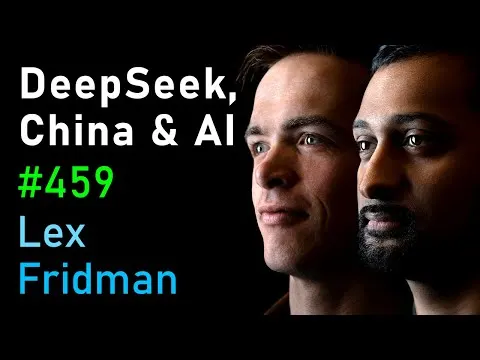
Lex Fridman Podcast #459 with Nathan Lambert. Says capabilities some would call AGI may arrive around 2027–2028 but cost will limit deployment, so “really awesome intelligence” comes before it permeates the economy; export controls only make sense on short timelines; Sam Altman’s point that superhuman persuasion may come before superhuman intelligence is a real risk. At the end says humanity will suffer a lot less and he is very optimistic, but worries about techno-fascism in which a few people, merged with AGI through brain-computer interfaces, rule everyone else. Own turns in the publisher transcript inspected (searched passages on AGI, export controls, persuasion and the closing segment); older context.

Évaluation simulée
Question 2
Dans quelle mesure pensez-vous que l’IA finira par changer le monde ?
Question 3
Selon votre intuition, quelle est la probabilité que l’IA provoque l’extinction de l’humanité ou une catastrophe tout aussi permanente ?
Question 4
Pensez-vous que les humains garderont le contrôle de systèmes d’IA plus intelligents qu’eux, et pourquoi ?
Où vous situez-vous ?
Cartographier ma vision du monde