Ben Thompson

Ben Thompson

x.com/benthompson

Technology analyst and Stratechery author who examines AI through business models, platform strategy and the economics of AI agents.

Comment l’IA changera-t-elle le monde ?

Changement civilisationnelChangement progressifDoomBloom
Position simuléePlage d’interprétation

Horizontalement : leur perspective Doom–Bloom telle qu’elle a été exprimée. Verticalement : ampleur de la transformation.

Doom–Bloom : 72 sur 100. Ampleur de la transformation : 66 sur 100. Plages d’interprétation : de 67 à 77 horizontalement, de 61 à 75 verticalement. Il s’agit de coordonnées d’interprétation, et non de probabilités d’événements.

P(doom) de Ben Thompson · inféré

≈3%

0%100%

Déduit de leurs réponses simulées, et non d’un chiffre donné par ces personnes. Plage plausible : 1–7%.

Ce dont dépend leur perspective

Une hypothèse centrale

The decisive test is whether AI can repeatedly turn capability into useful outcomes, at a sustainable cost, inside actual businesses and individual workflows.
Réponse 3

Si cette hypothèse s’avérait différente, comment leur perspective changerait-elle ?

Ce qui pourrait faire changer d’avis

The biggest change would be evidence that capable agents do not create durable user value in real workflows.
Réponse 3

Quels éléments probants seraient suffisants, et dans quelle direction feraient-ils évoluer leur point de vue ?

Plus de détails

Bénéfices attendus

Plusieurs interprétations restent plausibles : Des bénéfices substantiels sont attendus, sous réserve de conditions importantes ou de limites dans leur répartition. / Des bénéfices transformateurs et largement profitables sont attendus.

81 / 100

Faible impactImpact transformateur

Plage d’interprétation de 67 à 100 sur l’échelle qualitative.

Dommages attendus

Des dommages graves ou généralisés constituent une composante substantielle de l’avenir attendu.

60 / 100

Faible impactImpact transformateur

Plage d’interprétation de 33 à 67 sur l’échelle qualitative.

Influence humaine

Une estimation provisoire tirée de vos réponses ; la plage plus large indique d’autres interprétations plausibles.

48 / 100

Faible influenceForte influence

Plage d’interprétation de 0 à 92 sur l’échelle qualitative.

Ces interprétations conservent les conditions énoncées. Les bénéfices et les dommages peuvent tous deux être substantiels. Les plages décrivent notre lecture de leurs réponses simulées, et non des intervalles de confiance statistiques.

Où vous situez-vous par rapport à Ben Thompson ?
Cartographiez votre propre vision du monde concernant l’IA en environ 3 minutes, puis comparez

Visions du monde similaires

Leaders d’opinion dont les visions du monde simulées sont les plus proches de celle de Ben Thompson

Évaluation simulée

Question 1

Selon vous, que signifie l’IA pour notre avenir, et pourquoi ?

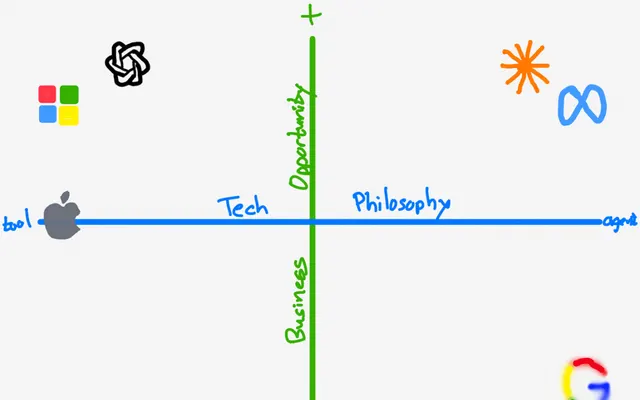
I think AI could be a major computing shift, particularly as agents move from answering questions to completing tasks. Effective agents let a small number of motivated people accomplish far more, but they also consume substantial compute: every delegated task creates inference demand. That makes AI more than a software story; it is also about scarce chips, energy, data centers, distribution, and capital. The crucial distinction is between creating value and capturing it. AI may generate enormous user value without every model provider earning durable profits. Models can commoditize, while advantage migrates to scarce infrastructure, proprietary context, distribution, or products that tightly integrate models with an effective harness. Product philosophy matters too. I expect agents increasingly to hide intermediate interfaces and deliver outcomes, pushing more computation to servers and making client devices relatively thin. The transition will be painful. Once AI systems can perform meaningful work, competitive pressure will push companies toward smaller workforces. That is an economic prediction, not a celebration of displacement. At the same time, I oppose restricting innovation and individual freedom based on speculative doomsday scenarios. Calls to slow development may be sincere, but they can also reinforce the position of incumbent frontier labs. The future will therefore be shaped not only by model capability, but by incentives, bottlenecks, product design, and who controls the relevant platforms.

Question 2

Taking benefits and harms together, what overall impact do you expect AI to have?

Overall, I expect AI to be strongly value-creating but highly disruptive. Effective agents should let individuals and small teams accomplish far more, improve products, and create sustained demand for computing infrastructure. That is the optimistic side: a genuine expansion in what people can do. The harms will be concentrated and immediate. Competitive pressure can drive companies to reduce headcount substantially, producing painful displacement even if aggregate productivity rises. There may also be a mismatch between who receives the benefits and who captures the profits: users can gain enormous value while workers bear transition costs, and model providers may still struggle to retain economic advantage as models become interchangeable. So I would distinguish social value, distributional consequences, and corporate value capture. I expect the first to be large and positive, the second to be difficult and uneven, and the third to depend on scarcity, distribution, context, infrastructure, and product integration. That mixed outcome argues for taking displacement seriously, but not for constraining innovation and freedom around speculative catastrophe claims—especially when slowing progress can conveniently protect incumbents.

Question 3

Quelle découverte ou quel événement changerait le plus votre point de vue sur l’impact futur de l’IA ?

The biggest change would be evidence that capable agents do not create durable user value in real workflows. If they remain unreliable, require constant supervision, or cost more in compute than the work they replace or enable, then the case for sustained demand, thinner clients, smaller teams, and a major computing-platform shift weakens considerably. That would suggest impressive models are closer to features than a new operating layer for economic activity. Conversely, agents that reliably complete long-running tasks with little supervision would strengthen the view that the impact will be both enormous and disruptive. I would then focus even more on where the scarce complements sit: compute, energy, proprietary context, distribution, or an integrated model-and-harness product. A separate development could change the policy side of my view: concrete, persuasive evidence of catastrophic danger rather than speculative doomsday premises. But capability alone would not settle the economic question. The decisive test is whether AI can repeatedly turn capability into useful outcomes, at a sustainable cost, inside actual businesses and individual workflows.

Sources

Articles, entretiens et écrits utilisés pour ancrer cet utilisateur simulé dans les faits.

Où vous situez-vous ?
Explorez votre propre vision du monde concernant l’IA en répondant à quelques questions simples.
Cartographiez votre propre vision du monde

Où vous situez-vous ?

Cartographier ma vision du monde